DATE :
1980s Gibson Korina Moderne, Explorer, and Flying V Reissues: The Legendary Modernistic Series Returns
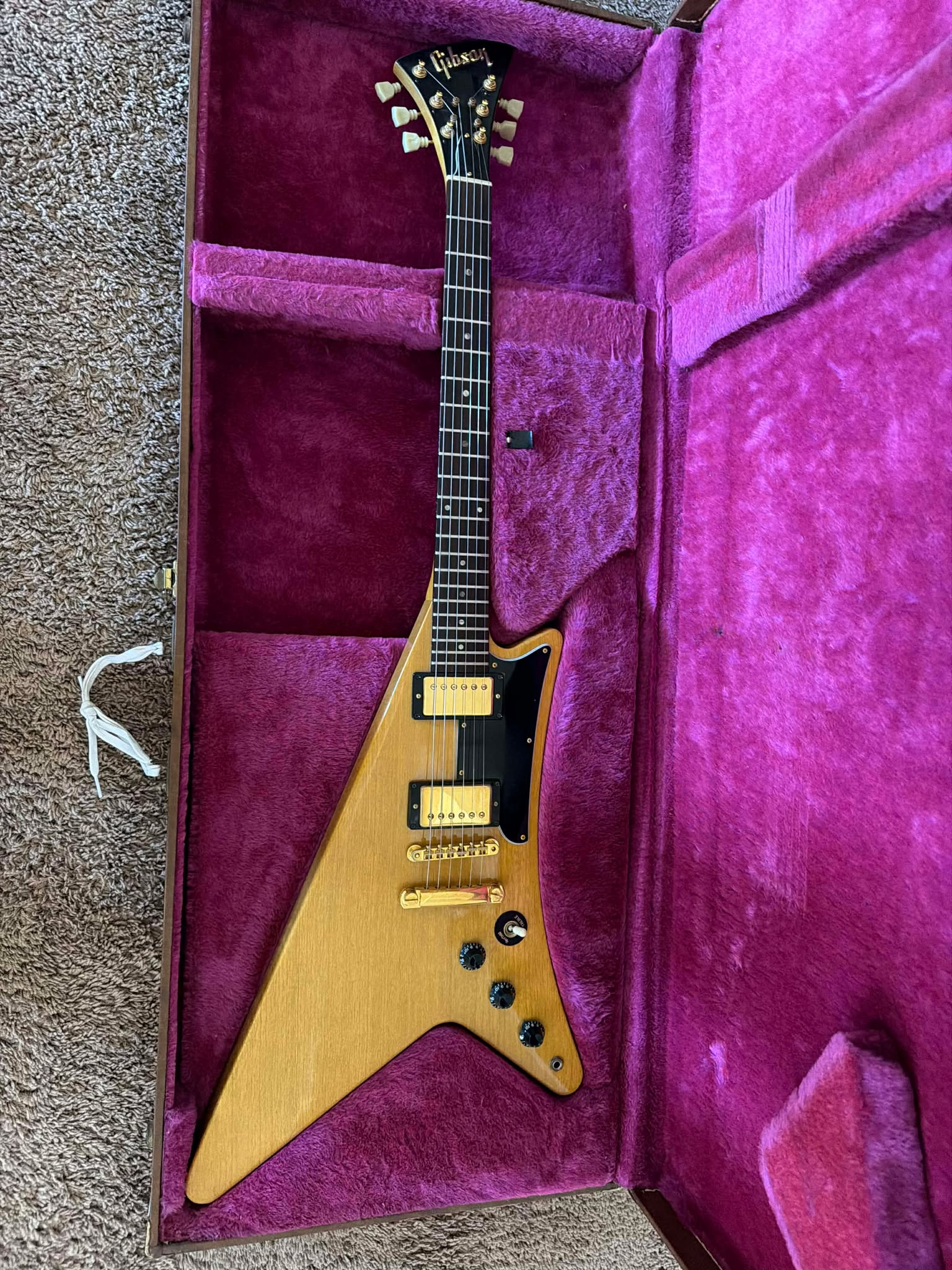
1980s Gibson Korina Moderne, Explorer, and Flying V Reissues: The Legendary Modernistic Series Returns
Why the 1980s Korina Reissues Matter
In the early 1980s, Gibson made a bold decision that would thrill collectors and players alike—reissuing the legendary “Modernistic” series guitars in their original Korina wood. These weren’t standard production guitars but limited runs that attempted to recapture the magic of the rarest vintage Gibson instruments ever made.
The 1980s Korina reissues hold a unique place in guitar history because they represent:
Gibson’s first serious attempt to recreate the ultra-rare 1958-1959 originals
The last time Gibson used genuine Korina (African Limba) wood for these models
Limited production numbers that make them collectible in their own right
A bridge between unobtainable vintage originals and modern reproductions
Superior craftsmanship from Gibson’s Kalamazoo, Michigan facility before the 1984 move to Nashville
What makes these 1980s reissues special is that they were built during a period when Gibson still had access to genuine Korina wood and employed craftsmen who understood the original construction methods. Unlike later reissues that used mahogany or other substitutes, these instruments featured the same blonde African Limba that made the originals legendary.
Historical Context: The Original Modernistic Series
To understand why the 1980s reissues matter, you need to know the story of the originals.
The 1958-1959 Originals:
In 1957, Gibson president Ted McCarty introduced three radical designs—the Flying V, Explorer, and Moderne—that were unlike anything the guitar world had seen. These “Modernistic” series guitars featured:
Korina (African Limba) body and neck construction
Futuristic, angular body shapes
PAF humbucking pickups
Gold-plated hardware
Natural blonde finish showcasing the Korina’s beautiful grain
The problem? They were too radical for 1950s guitarists. The Flying V saw fewer than 100 examples produced in 1958-1959, while the Explorer had even lower production—fewer than 40 instruments. The Moderne, despite appearing in Gibson’s catalog, may never have been produced at all in the 1950s (though this remains a subject of intense debate among vintage guitar experts and historians).
By 1959, Gibson had largely given up on these radical designs, making the originals among the rarest and most valuable vintage guitars in existence today. Original Korina Flying Vs and Explorers command prices that put them out of reach for all but the most serious collectors, while authenticated Modernes (if any original 1950s examples exist) would be priceless museum pieces.
Gibson’s 1980s Revival:
In the early 1980s, as vintage guitar prices soared and the originals became unobtainable for most players, Gibson decided to reissue these legendary instruments. The timing was significant—Korina wood was still available, and the Kalamazoo factory still housed craftsmen who understood vintage Gibson construction methods.
The reissue program began around 1982-1983 and continued in limited numbers through the mid-1980s. These weren’t mass-produced instruments but carefully crafted limited editions meant to appeal to serious collectors and players who wanted to experience the Modernistic designs without the impossible price tags of the originals.
Understanding the Three Models
The Flying V Reissue
The Flying V was the most “successful” of the original Modernistic trio (relatively speaking), and thus became the most commonly reissued model in the 1980s. Gibson’s 1980s Korina Flying V reissue captured the essence of the original with:
Design Features:
Genuine Korina body and neck construction
String-through body design (like the originals)
V-shaped body with pointed “wings”
Gold-plated hardware throughout
Natural finish showcasing Korina grain
Rounded neck joint (not the sharp angle of later mahogany versions)
The Flying V reissue was the most faithful to the original specifications, with Gibson’s craftsmen paying careful attention to body dimensions, neck profile, and hardware placement. The use of genuine Korina was critical—this wood species has distinct tonal properties and a beautiful blonde color with ribbon-striped grain that makes each instrument unique.
The Explorer Reissue
The Explorer reissue represented Gibson’s attempt to recreate what might be the rarest production electric guitar ever made. The 1980s Korina Explorer featured:
Design Features:
Genuine Korina body and neck
Angular, asymmetrical body shape
Gold-plated hardware
Natural Korina finish
String-through or stop tailpiece (varied during production)
Droopy headstock shape closer to the original split-headstock design
The Explorer presented unique challenges for Gibson. The original 1958 prototypes had a “split-headstock” design that was later changed to a more conventional shape for the few production models. Gibson’s 1980s reissue used a headstock shape that referenced the originals while remaining practical for modern players.
The Moderne Reissue
The Moderne is perhaps the most interesting of the three reissues because it may represent the only time this design was ever actually produced. Whether any original 1950s Modernes were built remains one of guitar history’s great mysteries.
Design Features:
Genuine Korina body and neck
Unique body shape combining elements of both the V and Explorer
Distinctive “shark fin” upper bout
Asymmetrical lower bout
Gold-plated hardware
Natural Korina finish
Unique headstock shape
The Moderne’s rarity in the reissue series—fewer were produced than either the V or Explorer—makes it highly sought after by collectors today. This model represents your only realistic opportunity to own a Moderne, as confirmed original 1950s examples either don’t exist or number in the single digits.
Detailed Identification Guide
Authenticating a 1980s Korina reissue requires examining multiple features:
Serial Numbers
1980s Gibson guitars used an 8-digit serial number format typically stamped on the back of the headstock. The format was:
First digit = decade (8 = 1980s)
Second digit = year within decade (0-9 for 1980-1989)
Remaining digits = production number
Example: 82314567 would indicate 1982 production
However, Gibson’s serial number system in this era had inconsistencies, and some instruments were stamped with ink rather than impressed into the wood. Cross-referencing with other dating features is essential.
Factory Stamps and Markings
Made in USA Stamp: All 1980s reissues should have a “Made in USA” stamp on the back of the headstock, typically below the serial number.
Control Cavity Stamps: Inside the control cavity, you may find:
Pencil dates or inspector marks
Factory order numbers
Model designation stamps
Neck Heel Stamps: When the neck is removed, look for date stamps on the neck heel and in the neck pocket. These often provide more accurate dating than serial numbers.
Potentiometer Codes
The potentiometers (volume and tone controls) provide crucial dating information. 1980s Gibson instruments typically used CTS (Chicago Telephone Supply) potentiometers with codes reading:
Format: 137YYWW
137 = CTS manufacturer code
YY = Year (82 = 1982, 83 = 1983, etc.)
WW = Week of manufacture
Authentic 1980s Korina reissues should have pot codes matching the approximate period of production. Replacement pots or codes from significantly different years indicate modifications.
Wood Identification
Genuine Korina Characteristics:
Blonde to light tan natural color
Ribbon-stripe grain pattern
Medium to coarse grain texture
Distinctive figure that runs in long, straight patterns
Lighter weight than mahogany
Subtle luster when finished
Red Flags:
Dark brown color (indicates mahogany, not Korina)
Very uniform grain without figure
Heavy weight (Korina is relatively lightweight)
Extremely tight or extremely coarse grain (Korina is medium)
The quality of Korina varied during the 1980s production run. Earlier examples often feature more dramatic grain figure, while later examples may have plainer wood as premium Korina became harder to source.
Hardware Specifications
Tuners:
Vintage-style Kluson reproductions
Gold-plated with tulip-shaped buttons
Three-on-a-side configuration
Should be stamped “Kluson Deluxe” or similar marking
Bridge and Tailpiece:
Tune-o-matic bridge (ABR-1 style)
Stop bar tailpiece or string-through body (depending on model and year)
All gold-plated hardware
Should show appropriate aging for a 40+ year old instrument
Pickups:
Tim Shaw-designed humbuckers (early 1980s)
Later production may have different pickup designs
All should be gold-plated covers
Double-cream or zebra bobbins underneath covers
Case and Documentation
Authentic 1980s Korina reissues came with:
Brown hardshell case with pink plush lining
Certificate of Authenticity (many have been lost over time)
Hang tags indicating “Korina” construction
Owner’s manual
The case alone doesn’t prove authenticity, but original cases with matching serial numbers add to provenance and overall collector appeal.
Detailed Physical Specifications
Flying V Specifications
Body:
Korina body with symmetrical V shape
Thickness: Approximately 1.75 inches
Weight: Typically 7.5-8.5 lbs (lighter than mahogany versions)
String-through body construction
Natural finish with clear lacquer
Neck:
One-piece Korina neck
Profile: Medium-chunky “soft V” shape
Scale length: 24.75 inches (Gibson standard)
Nut width: 1-11/16 inches
22 frets
Rosewood fingerboard with dot inlays (early) or pearloid dots (later)
Fretboard radius: 12 inches
Electronics:
Two humbucking pickups
Individual volume and tone controls
Three-way toggle switch
.022 μF capacitors
Explorer Specifications
Body:
Korina body with asymmetrical angular shape
Thickness: Approximately 1.75 inches
Weight: Typically 8-9 lbs
String-through or stop tailpiece (varied)
Natural finish with clear lacquer
Slightly longer body than Flying V
Neck:
One-piece Korina neck
Profile: Medium “rounded” shape
Scale length: 24.75 inches
Nut width: 1-11/16 inches
22 frets
Rosewood fingerboard with dot or pearloid inlays
Fretboard radius: 12 inches
Distinctive “droopy” headstock shape
Electronics:
Two humbucking pickups
Individual volume and tone controls
Three-way toggle switch
.022 μF capacitors
Moderne Specifications
Body:
Korina body with unique asymmetrical shape
“Shark fin” upper bout
Thickness: Approximately 1.75 inches
Weight: Typically 7.5-8.5 lbs
Natural finish with clear lacquer
Most complex body shape of the three models
Neck:
One-piece Korina neck
Profile: Medium “rounded” shape
Scale length: 24.75 inches
Nut width: 1-11/16 inches
22 frets
Rosewood fingerboard with dot or pearloid inlays
Fretboard radius: 12 inches
Unique headstock shape specific to Moderne
Electronics:
Two humbucking pickups
Individual volume and tone controls
Three-way toggle switch
.022 μF capacitors
Tonal Characteristics
The 1980s Korina reissues offer distinctive tonal properties that set them apart from standard mahogany Gibson guitars:
The Korina Sound
Frequency Response: Korina as a tonewood occupies an interesting middle ground between mahogany and maple. Players and experts describe the characteristics as:
Lows: Tight and articulate rather than boomy—less low-end emphasis than mahogany
Mids: Present but not as pronounced as mahogany—clearer and more defined
Highs: Enhanced high-frequency response with excellent clarity and sparkle
Resonance: Strong fundamental with complex overtones and excellent sustain
Attack and Response:
Quick, responsive attack with excellent note definition
Less compression than mahogany—notes retain clarity in complex chords
Enhanced harmonic content that works well with both clean and overdriven tones
Excellent dynamic range—responds well to playing touch
Pickup Interaction
The Tim Shaw-designed humbuckers used in early 1980s reissues were specifically voiced to complement the Korina wood:
Neck Pickup:
Warm but clear jazz tones
Excellent for blues and classic rock
Less muddy than mahogany-bodied guitars
Retains definition even with heavy distortion
Bridge Pickup:
Bright, cutting tone with excellent clarity
Powerful output without harshness
Ideal for rock and hard rock applications
Harmonic complexity that works well for lead playing
Middle Position:
Unique hollow, bell-like quality
Excellent for clean rhythm work
Funky, quacky tones similar to Stratocaster middle position
Great for blues and country applications
Comparison to Other Tonewoods
Korina vs. Mahogany:
Korina offers more high-frequency content and less midrange emphasis
Lighter weight typically results in enhanced resonance
Faster attack and tighter low end
Less warm, more transparent overall character
Korina vs. Maple:
Korina has more body and warmth than maple
Similar high-frequency clarity but with more midrange presence
More complex harmonic structure
Better balance across the frequency spectrum
Aging Characteristics
After 40+ years, these instruments have developed additional tonal complexity:
Nitrocellulose finish has aged and thinned, allowing more wood resonance
Pickups have aged, often developing slightly lower output and more vintage character
Wood has dried and stabilized, often improving resonance and sustain
Overall tonal maturity that can’t be replicated in new instruments
Common Issues and Modifications
Typical Age-Related Issues
Finish Checking: The nitrocellulose finish on these instruments will show checking (fine cracks in the finish) after 40+ years. This is normal and actually desirable to collectors as it indicates an original finish. Look for:
Fine spider-web patterns across the body
More pronounced checking in areas of stress (back of neck, body edges)
Natural darkening of the finish to a slight amber tone
Hardware Tarnishing: Gold-plated hardware naturally wears over time:
Gold plating may show wear on tuning keys and bridge saddles
Brass showing through in high-contact areas is normal
Complete replating reduces collector value—original worn gold is preferred
Fret Wear: After decades of playing, many examples show:
Groove wear in the first few frets
Flattening of fret crowns
Some examples may have had professional refret work
Original frets in good condition are preferred but refrets don’t significantly impact value if done professionally
Electronic Issues: Original potentiometers and wiring may exhibit:
Scratchy or intermittent pots requiring cleaning or replacement
Oxidized switch contacts
Worn output jack
Original electronics are highly desirable even if they require servicing
Modifications to Watch For
Pickup Replacements: Many players have installed aftermarket pickups such as:
Seymour Duncan pickups
DiMarzio pickups
Modern Gibson pickups
While these may improve tone for some players, original Tim Shaw pickups are highly collectible. If purchasing an instrument with replacement pickups, ask if the originals are included.
Tuner Upgrades: Some owners have replaced the vintage-style Kluson tuners with:
Modern locking tuners
Grover Rotomatics
Gotoh tuners
Original Kluson-style tuners are essential for collector value. Keep any original parts if modifications are made.
Finish Touch-Ups: Look carefully for:
Areas of overspray indicating touch-up work
Color mismatches in repaired areas
Filled dings or chips
Complete refinishing (major value impact)
Case Modifications: Some owners have modified or replaced cases:
Non-original cases significantly impact collectibility
Modified interior foam or coverings
Removed or replaced case candy (paperwork, accessories)
Production Variations and Years
Early Production (1982-1983)
The earliest examples often feature:
Higher-quality Korina wood with dramatic grain
Tim Shaw-designed pickups
More attention to vintage-accurate details
Kalamazoo factory production
Brown cases with pink plush lining
More comprehensive documentation packages
These early examples are particularly desirable to collectors as they represent Gibson’s first serious attempt to recreate the originals with the best available materials.
Mid-Production (1984-1985)
The 1984 move from Kalamazoo to Nashville marked a transition:
Some examples built in Kalamazoo, others in Nashville
Slight variations in quality control during the factory transition
Continued use of genuine Korina wood
Pickup specifications may vary
Documentation may be less comprehensive
Late Production (1986-1989)
Later examples show:
Korina quality becoming more variable as premium wood became scarcer
Some production differences from earlier models
Nashville factory production standard
Possible hardware variations
Some examples may have less dramatic grain figure
Why Collectors Value These Instruments
Historical Significance
The 1980s Korina reissues represent a unique moment in Gibson’s history:
Last True Korina Instruments: These guitars represent the last time Gibson used genuine African Limba (Korina) for the Modernistic series. Subsequent reissues have used mahogany or other substitute woods, making the 1980s versions the closest you can get to the original 1950s experience.
Kalamazoo Connection: Early examples were built in Gibson’s legendary Kalamazoo factory, connecting them to the golden era of American guitar manufacturing. This factory produced some of Gibson’s most revered instruments from the 1940s through the early 1980s.
Bridge to the Originals: For players and collectors who appreciate the Modernistic designs but can’t access original 1950s examples, these reissues provide an authentic experience at a fraction of the cost.
Playing Qualities
Beyond collectibility, these instruments are exceptional players:
Ergonomics:
The angular designs, while unconventional, are remarkably comfortable
Well-balanced despite unusual shapes
Excellent access to upper frets
Comfortable seated or standing
Versatility:
Capable of everything from jazz to hard rock
The Korina tonewood provides versatility across genres
Responds well to different playing styles and techniques
Stage Presence:
Unmistakable visual impact
Associated with legendary players (Albert King, Jimi Hendrix used Flying Vs)
Conversation-starter instruments with serious tone to back up the looks
Investment Perspective
These instruments have shown consistent appreciation:
Limited Production: The relatively small number produced in the 1980s means supply is finite while demand continues to grow.
Wood Scarcity: Genuine Korina is no longer readily available, making these instruments irreplaceable.
Collector Recognition: As the vintage guitar market has matured, collectors increasingly recognize these reissues as significant instruments in their own right.
Generational Transfer: Baby Boomer collectors who purchased these instruments new in the 1980s are beginning to sell or pass down their collections, creating both supply and renewed interest.
Authentication Red Flags
Be cautious of instruments claiming to be 1980s Korina reissues that show:
Wrong Wood:
Dark brown mahogany instead of blonde Korina
Very heavy weight (Korina is relatively light)
No ribbon-stripe grain figure
Extremely uniform, plain grain
Serial Number Issues:
Serial numbers that don’t match 1980s format
Missing serial numbers
Obvious re-stamping or alteration
Serial numbers that don’t correlate with pot codes
Hardware Inconsistencies:
Chrome or nickel hardware (should be gold)
Modern tuner styles
Wrong bridge type
Metric measurements (vintage specs are imperial)
Finish Problems:
Thick polyurethane finish (should be nitrocellulose)
Modern finishes without checking
Unusual colors or stains
Obvious refinishing work
Documentation Red Flags:
Photocopied or reprinted certificates
Case with wrong interior color (should be pink)
Modern hang tags or paperwork
Mismatched case serial numbers
The Moderne Mystery
The Moderne deserves special attention because of its unique place in guitar history.
The Original Question: Whether any Modernes were actually produced in the 1950s remains one of vintage guitar collecting’s great mysteries. Gibson featured the design in 1957 catalog materials, but no confirmed original examples have ever been authenticated. This makes the 1980s reissue potentially the only production Moderne that has ever existed.
Collecting the Unobtainable: For players and collectors fascinated by the Moderne design, the 1980s reissue is likely your only opportunity to own one. This unique status makes the Moderne reissue particularly collectible.
Production Numbers: Fewer Moderne reissues were produced than Flying Vs or Explorers, adding to their scarcity. The unusual body shape also means fewer have survived in excellent condition—the distinctive “shark fin” is vulnerable to damage.
Selling Your 1980s Korina Reissue
If you own one of these remarkable instruments, understanding your selling options is important.
Why These Instruments Command Premium Values
Scarcity Factors:
Limited production in the 1980s
Last genuine Korina instruments Gibson produced
Many have been modified, making all-original examples increasingly rare
Time continues to reduce the number of excellent-condition survivors
Market Trends:
Growing recognition of 1980s Gibson quality
Increasing appreciation for pre-Nashville Kalamazoo production
Korina wood scarcity driving interest
Strong demand from both players and collectors
What Affects Your Instrument’s Value
Critical Factors:
Originality: All-original instruments with no modifications command significant premiums
Condition: Excellent condition with minimal wear, all original parts, and no repairs
Documentation: Original case, certificate of authenticity, and hang tags
Wood Quality: Examples with exceptional Korina grain figure are particularly desirable
Production Year: Earlier Kalamazoo examples often command premiums
Model: Moderne reissues are rarest, followed by Explorer, then Flying V
Condition Grading:
Excellent: Light play wear, all original parts, minor finish checking, fully functional
Very Good: Moderate play wear, all original parts, normal aging for 40+ years
Good: Heavy play wear, possible minor modifications, some finish issues
Fair: Significant wear, modifications, repairs needed
The Edgewater Guitars Advantage
When you’re ready to sell your 1980s Korina reissue, Edgewater Guitars offers distinct advantages:
Expert Authentication:
Thorough evaluation of originality
Accurate identification of year and specifications
Assessment of wood quality and figure
Verification of all components
Premium Valuations: We specialize in collectible Gibson instruments and understand the market for 1980s Korina reissues. Our offers typically exceed local guitar shops by substantial margins because we recognize the true collector value of these instruments.
Streamlined Process:
Free authentication and evaluation
Immediate offers on qualified instruments
We travel to you for valuable instruments
Cash payment or bank transfer available
All paperwork handled professionally
Geographic Service: Edgewater Guitars serves collectors throughout Ohio, Michigan, Pennsylvania, Indiana, and West Virginia. We’ll travel to evaluate high-quality examples of these rare instruments.
Preparing Your Instrument for Sale
Gather Documentation:
Original certificate of authenticity
Original case and case candy
Any purchase receipts or documentation
Service records if applicable
Photographs showing the instrument’s history
Assessment Points:
Serial number and location
Pot codes in control cavity
Condition of gold plating on hardware
Quality and figure of Korina wood
Any modifications or repairs
Overall condition and playability
Professional Photography: Consider having professional photos taken showing:
Overall instrument from multiple angles
Close-ups of grain figure
Serial number and markings
Hardware details
Any unique characteristics
Any wear or condition issues
Common Seller Questions
Q: Should I have my instrument refretted before selling? A: No—collectors prefer original frets even with wear. Professional refrets don’t significantly impact value if needed, but original frets are preferred.
Q: Will replacing worn gold hardware increase value? A: No—original hardware, even with wear, is preferred by collectors. Replacement hardware actually reduces collectibility.
Q: Should I have my instrument professionally appraised? A: A professional appraisal can provide documentation, but Edgewater offers free expert evaluation as part of our buying process.
Q: How important is the original case? A: Very important—original cases with matching serial numbers add significant value and authenticity.
Comparison to Other Gibson Reissues
1990s Korina Reissues
Gibson attempted additional Korina reissues in the 1990s, but these differ significantly:
Often used substitute woods rather than genuine Korina
Different pickup specifications
Nashville production throughout
Generally less collectible than 1980s examples
Different case designs and documentation
2000s Historic Collection
Gibson’s Historic Collection has produced various Modernistic reissues:
Higher-quality reproductions with better accuracy
Mahogany construction (not Korina)
Excellent instruments but different category
More expensive when new but different collector market
Custom Shop production with higher build quality
Why the 1980s Korina Reissues Stand Apart
The 1980s examples occupy a unique market position:
Genuine Korina wood (irreplaceable)
Historical significance as first serious reissues
Bridge between vintage and modern
Increasingly recognized as collectible in their own right
More affordable entry point than originals while retaining authentic materials
Famous Players and the Modernistic Designs
While the 1980s reissues themselves haven’t achieved the iconic status of the originals, understanding the legacy of these designs adds context:
Flying V Legacy:
Albert King’s iconic upside-down Flying V playing
Jimi Hendrix’s psychedelic painted Flying V
Lonnie Mack’s early adoption of the design
Dave Davies of The Kinks
Michael Schenker’s black and white Flying V
Explorer Legacy:
The Edge (U2) made Explorers iconic in the 1980s
Allen Collins (Lynyrd Skynyrd)
James Hetfield (Metallica)
Rick Nielsen (Cheap Trick)
Moderne’s Unrealized Potential: The Moderne never achieved iconic player status because it was never widely available, making the 1980s reissue your opportunity to explore this “what if” of guitar history.
Preservation and Care
Storage Recommendations
Climate Control:
Maintain 45-55% relative humidity
Avoid temperature extremes (65-75°F ideal)
Use room humidifiers/dehumidifiers as needed
Monitor with a hygrometer
Case Storage:
Always store in original case when not in use
Keep case latched to maintain shape
Check case periodically for deterioration
Replace deteriorating foam or lining carefully
Display Considerations: If displaying your instrument:
Avoid direct sunlight (can fade Korina wood)
Use quality wall hangers designed for weight
Maintain climate control
Regular inspection for changes
Maintenance Best Practices
Cleaning:
Use only vintage-safe polish (no silicone)
Microfiber cloths for wiping down
Preserve the aged patina—don’t over-clean
Clean gold hardware gently to avoid removing plating
String Changes:
Regular string changes prevent corrosion
Use proper gauges for the instrument
Stretch strings properly during installation
Clean under strings when changing
Setup Maintenance:
Professional setups recommended
Document any work performed
Keep original parts if replacements needed
Reversible modifications only
Electronic Maintenance:
Clean pots with quality contact cleaner
Test output jack regularly
Address scratchy pots before they fail
Keep original electronics even if replaced
Long-Term Preservation
Documentation:
Photograph your instrument regularly
Keep all paperwork organized
Document any work or modifications
Maintain provenance records
Insurance: Consider specialized musical instrument insurance that covers:
Agreed value (not depreciated value)
Worldwide coverage if you travel
Replacement of vintage parts
Professional appraisal documentation
Preventive Care:
Annual professional inspection
Humidity monitoring
Regular playing (instruments benefit from use)
Proper storage when not in use
Related Resources
Serial Number and Dating Resources
For comprehensive Gibson serial number information:
Gibson Serial Number Lookup Tool - Complete database for all Gibson guitars
Gibson Factory Order Numbers Explained - Understanding FON codes
Dating Gibson Guitars by Potentiometer Codes - Essential pot code guide
Authentication Guides
Learn more about authenticating vintage and collectible Gibson guitars:
Spotting Fake Gibson Guitars - Red flags and authentication tips
Gibson Vintage Reissue Guide - Comprehensive overview of all reissue programs
Korina vs Mahogany Identification - Wood identification tips
Modernistic Series Resources
Explore more about the legendary Modernistic designs:
Original 1958-1959 Flying V Guide - Everything about the originals
Original Explorer Identification - Rare vintage Explorer authentication
The Moderne Mystery: Fact or Fiction? - Deep dive into whether originals exist
Contact Edgewater Guitars
Ready to discuss your 1980s Korina reissue? We’re here to help.
Free Evaluation Services:
Expert authentication of your instrument
Detailed condition assessment
Current market analysis
Immediate purchase offers for qualified instruments
How to Reach Us:
Phone: (440) 219-3607 (call or text)
Service Area: Ohio, Michigan, Pennsylvania, Indiana, West Virginia
Specialty: Premium vintage and collectible Gibson guitars
What to Have Ready:
Serial number and location
Photographs of the instrument
Original case and documentation if available
Description of condition and any modifications
Your location for potential in-person evaluation
Conclusion: The Last True Korina Instruments
The 1980s Gibson Korina Moderne, Explorer, and Flying V reissues represent a unique chapter in guitar history—a moment when Gibson successfully recreated the legendary Modernistic series with authentic materials and traditional craftsmanship. As the last instruments Gibson produced using genuine Korina wood, these guitars bridge the gap between the impossibly rare and valuable originals and modern reissues that use substitute materials.
Whether you’re a player seeking the distinctive Korina tone, a collector building a comprehensive Gibson collection, or an owner considering selling, these instruments deserve recognition as significant pieces of guitar history. Their limited production, authentic construction, and increasing scarcity make them notable instruments that will continue to appreciate among knowledgeable collectors.
At Edgewater Guitars, we understand the unique position these instruments occupy in the vintage guitar market. With over 20 years of experience authenticating and evaluating collectible Gibson guitars, we provide expert service throughout Ohio and the surrounding region. If you own one of these remarkable instruments, we’d welcome the opportunity to discuss its history, authenticity, and current market position.
Contact Edgewater Guitars today at (440) 219-3607 to discuss your 1980s Korina reissue.
Edgewater Guitars specializes in purchasing premium vintage and collectible guitars throughout Ohio, Michigan, Pennsylvania, Indiana, and West Virginia. Our expertise in Gibson’s collectible instruments, combined with our understanding of the vintage guitar market, allows us to offer fair valuations that consistently exceed local guitar shop offers. We travel to you for high-value instruments and provide immediate purchase decisions backed by decades of experience in the vintage guitar market.
Article