DATE :
1974 Fender Telecaster Thinline: The Evolved Semi-Hollow Classic
1974 Fender Telecaster Thinline: The Evolved Semi-Hollow Classic
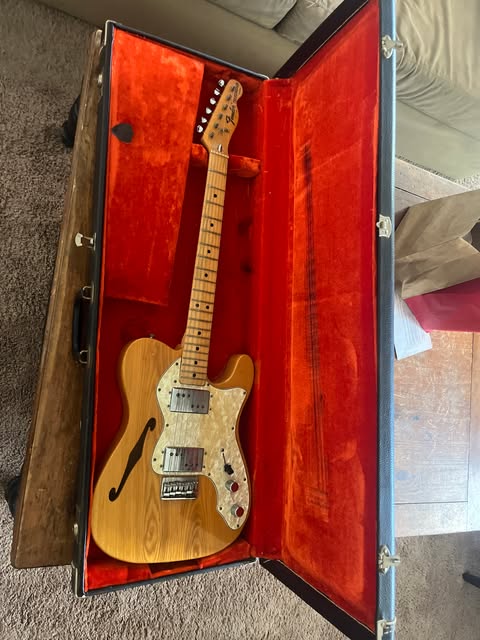
The 1974 Fender Telecaster Thinline is the semi-hollow Tele of the CBS era, fitted with Seth Lover’s CuNiFe Wide-Range humbuckers and a distinctive f-hole body. Originality of the pickups, finish, and overall condition drive value. Edgewater Guitars buys vintage Fender Telecasters nationwide with free expert appraisals and same-day cash offers. Call or text (440) 219-3607.
Why the 1974 Telecaster Thinline Matters
The 1974 Fender Telecaster Thinline represents a fascinating chapter in Fender’s history—a bridge between the company’s pre-CBS golden era and the modern era of electric guitar design. While purists often focus on pre-1965 Fenders, the 1974 Thinline offers something unique: Seth Lover’s wide-range humbucking pickups in a semi-hollow Telecaster body, creating a tonal palette unlike any other Fender instrument.
What makes 1974 Thinlines special:
Wide-Range Humbuckers: Seth Lover’s final pickup design for Fender, featuring CuNiFe (copper-nickel-iron) magnets that produce a distinctively clear, articulate tone
Semi-Hollow Construction: Ash body with three strategically placed f-holes reducing weight and adding acoustic resonance
Transitional Era: CBS-era manufacturing with unique specifications that would change by 1975
Maple Neck Standard: The thick, comfortable 1970s “U” profile neck that many players prefer
Distinctive Aesthetic: The three f-hole design with pearloid pickguard created an unmistakable visual signature
Historical Context
By 1974, Fender had been under CBS ownership for nearly a decade. While some enthusiasts criticize this era, CBS brought significant resources and technological innovation to Fender. The Telecaster Thinline had been introduced in 1968 as a semi-hollow body alternative to the standard Telecaster, initially with traditional single-coil pickups.
The major transformation came in 1971 when Fender redesigned the Thinline with Seth Lover’s new Wide-Range humbucking pickups. Lover, who had invented the PAF humbucker for Gibson in the 1950s, brought his expertise to Fender and created pickups specifically voiced for the Telecaster’s bright, cutting character. The result was a pickup that combined humbucker thickness with Telecaster clarity.
During 1974, Fender was producing these instruments at the Fullerton, California facility with materials and specifications that would soon change. The CuNiFe magnets used in the Wide-Range humbuckers were becoming increasingly expensive, and by the early 1980s, Fender would switch to ceramic magnets, fundamentally altering the pickup’s tonal character. This makes 1974 Thinlines particularly desirable to players seeking the original Seth Lover vision.
Notable artists who embraced Thinline Telecasters during this era included Robbie Robertson of The Band, Danny Gatton, and later Ed O’Brien of Radiohead, though they often used earlier 1972-1973 models.
How to Identify a Genuine 1974 Telecaster Thinline
Serial Numbers
1974 Telecaster Thinlines feature serial numbers with either a “500000” to “600000” prefix range or bold “S” prefix numbers (S500000-S700000 range). However, Fender’s 1970s serial number system was inconsistent, with significant overlap between years. The serial number is stamped on the neck plate on the back of the guitar.
Important Note: Serial numbers alone cannot definitively date a 1974 Fender. Always cross-reference with neck dates and potentiometer codes.
Neck Date
The most reliable dating method is the pencil or stamp marking on the heel of the neck (visible when the neck is removed from the body). 1974 necks typically show notations like “1 FEB 74 B” or similar formats indicating month, year, and sometimes inspector initials.
Potentiometer Codes
1974 Thinlines used potentiometers that can be decoded to verify the build date:
CTS Potentiometers: Code format “137 YYWW” where 137 = CTS manufacturer code, YY = year (74), WW = week of manufacture
Example: “137 7420” = CTS pot manufactured in the 20th week of 1974
Potentiometers dated late 1973 or early 1974 are consistent with a 1974 guitar. Pots dated significantly later than the supposed year suggest replacement or incorrect dating.
Key Visual Identifiers
Three F-Holes: The distinctive design feature—two on the bass side, one on the treble side
Wide-Range Humbuckers: Large rectangular pickups with chrome covers, “FENDER WIDE RANGE HUMBUCKER” stamped on the bottom plate
Pearloid Pickguard: White pearloid (not plain white) with eight mounting screws
Bullet Truss Rod: Accessible at the headstock with distinctive “bullet” style adjustment nut
Large CBS Headstock: Slightly larger than pre-CBS headstocks (approximately 10% bigger)
Three-Bolt Neck Attachment: Micro-tilt adjustment system with three bolts and triangular neck plate
Maple Neck: One-piece maple neck standard (rosewood fingerboards were optional special orders)
CuNiFe Pickup Verification
Verifying original CuNiFe pickups is critical:
Magnet Test: CuNiFe magnets are much weaker than ceramic replacements—a screwdriver should barely stick to the polepieces
Visual Inspection: Remove pickups and check for “FENDER WIDE RANGE HUMBUCKER” stamp and visible CuNiFe magnet slugs
Resistance Readings: Original CuNiFe Wide-Range humbuckers typically measure 10.5k-11.5k ohms
Patent Numbers: Check for patent numbers stamped on the pickup bases
Detailed Physical Specifications
Body Construction:
Ash body (occasionally poplar on some examples)
Semi-hollow design with routed chambers
Weight: Typically 6.5-7.5 lbs (lighter than solid-body Telecasters)
Natural finish shows ash grain clearly
Neck Specifications:
One-piece maple neck (standard)
Scale length: 25.5 inches
Nut width: 1.650 inches (slightly wider than modern standards)
Neck profile: Thick “U” shape, approximately .90-.95 inches at first fret
Fretboard radius: 7.25 inches (vintage spec)
Frets: 21 medium-jumbo frets
Truss rod: Bullet-style adjustment at headstock
Hardware:
Bridge: Three-saddle “ashtray” bridge with chrome plating
Tuners: Fender-stamped “F” logo tuning machines
Nut: Synthetic material (not bone)
Control plate: Chrome-plated steel
Output jack: Cup-style mounted on control plate
Electronics:
Two Wide-Range Humbucking pickups with CuNiFe magnets
Three-way selector switch
Volume and tone controls (250k potentiometers)
.047μF capacitor
Case:
Original brown Tolex hardshell case with orange plush interior
Black Fender logo on case exterior
Tonal Characteristics
The 1974 Telecaster Thinline with original CuNiFe Wide-Range humbuckers occupies a unique sonic space in the Fender catalog. These instruments don’t sound like traditional Telecasters, nor do they sound like Gibson humbucking guitars—they exist in their own tonal category.
Pickup Response:
Seth Lover’s Wide-Range humbuckers use CuNiFe (copper-nickel-iron) magnets that produce a distinctly different magnetic field than AlNiCo or ceramic magnets. The result is extraordinary clarity and articulation—each note in a chord remains distinct even with overdrive. The treble response is glassy and detailed without harshness, while the bass frequencies remain tight and defined.
Players often describe the tone as “hi-fi” compared to vintage single-coils or PAF-style humbuckers. The pickups have less midrange honk than traditional humbuckers, creating a flatter, more balanced frequency response that sits well in mixes without fighting for space.
Semi-Hollow Body Contribution:
The chambered ash body adds acoustic resonance and warmth that solid-body Telecasters lack. When played acoustically, these guitars produce surprising volume and sustain. Plugged in, the semi-hollow construction contributes harmonic complexity and a slightly compressed attack that enhances clean tones.
Comparison to Other Models:
Vs. Standard Telecaster: Much warmer, less aggressive in the treble, more balanced frequency response
Vs. Gibson ES-335: Brighter, tighter bass response, more articulate note separation
Vs. Later Thinlines with Ceramic Pickups: Original CuNiFe versions have notably clearer highs and more responsive dynamics
Notable Recordings:
While specific 1974 Thinline recordings are difficult to document, the Wide-Range humbucker sound can be heard throughout 1970s rock and country recordings. Danny Gatton’s virtuosic playing showcased the versatility of Thinline Telecasters, demonstrating their ability to handle everything from jazz to rockabilly with equal facility.
Common Issues & Modifications
When evaluating a 1974 Telecaster Thinline, careful inspection is essential:
Critical Issues
1. Pickup Replacement: The most common and value-destroying modification is replacement of the original CuNiFe Wide-Range humbuckers with modern ceramic versions or other aftermarket pickups. Original CuNiFe pickups are highly sought after and can be valuable on their own if removed and sold separately. Always verify pickup originality before purchasing.
2. Refinishing: Many 1970s Fenders were refinished in the 1980s and 1990s when these guitars were considered less valuable. Look carefully for:
Overspray in the neck pocket, control cavity, and around the f-holes
Filled screw holes or nail holes (indicators of body work)
Inconsistent finish checking or artificial aging
Paint buildup along edges and in cavities
3. Neck Issues:
The three-bolt neck attachment system is often criticized but functions well when properly adjusted
Check for cracks or splits in the neck pocket area
Inspect the bullet truss rod for stripped threads
Look for headstock repairs (less common on Telecasters but possible)
4. Electronics Modifications:
Replaced potentiometers are common (check date codes)
Modified wiring or additional tone controls
Replaced switches or output jacks
Missing original capacitors
5. Hardware Replacement:
Bridge saddles often replaced with modern brass or steel versions
Tuning machines upgraded to modern locking tuners
Missing or replaced control knobs
Refinished or replaced control plates and pickguards
Condition Factors
Fret Wear: Many 1974 Thinlines have had refret jobs by now. Original narrow frets are rare, but a professional refret with period-correct wire doesn’t significantly impact value if done well.
Finish Checking: Natural finish ash bodies typically show extensive finish checking by now, which is expected and doesn’t reduce value if the finish is otherwise original.
Hardware Patina: Original chrome hardware should show age-appropriate wear and patina. Overly shiny hardware suggests replacement.
Why Players and Collectors Value 1974 Thinlines
Playing Characteristics
Despite the reputation of CBS-era Fenders, 1974 Thinlines offer exceptional playability that many guitarists prefer to earlier models:
Comfortable Weight: At 6.5-7.5 lbs, these guitars are lighter than solid-body Telecasters, reducing shoulder fatigue during long playing sessions
Neck Profile: The thick 1970s “U” profile provides substantial palm support that many players find more comfortable than slimmer profiles
Versatility: The Wide-Range humbuckers excel at clean jazz tones, country twang, blues overdrive, and rock distortion—unusual versatility for a Telecaster-shaped instrument
Balance: The semi-hollow body balances perfectly on a strap without neck dive
Collector Appeal
Collectors increasingly appreciate 1974 Thinlines for several reasons:
Original CuNiFe Pickups: These pickups cannot be replicated with modern materials, making original examples essentially irreplaceable
Historical Significance: Represents Fender’s experimentation during the CBS era when they had resources to develop innovative designs
Transitional Specifications: Built during a specific window before significant cost-cutting measures changed materials
Growing Recognition: The vintage market is increasingly recognizing the quality of 1970s Fenders as pre-CBS instruments become prohibitively expensive
Investment Potential
While 1974 Thinlines haven’t experienced the dramatic appreciation of pre-CBS Fenders, they represent solid investment potential. As collectors exhaust the supply of affordable pre-1965 instruments, attention naturally shifts to later eras. The unique specifications of CuNiFe-equipped Thinlines—particularly the pickups that cannot be authentically reproduced—position these guitars for continued appreciation.
Market data shows 1970s Fenders with desirable specifications have appreciated 50-80% over the past decade, and this trend appears likely to continue.
Selling Your 1974 Telecaster Thinline
If you own a 1974 Telecaster Thinline, particularly one with original CuNiFe Wide-Range humbuckers, you have a valuable instrument that deserves expert evaluation.
Why Choose Edgewater Guitars:
Premium Valuations: We understand the significance of original CuNiFe pickups and pay accordingly. Our offers typically exceed guitar shop quotes by 30-40% because we recognize the true market value of these specific components.
Expert Authentication: Our team can verify originality of pickups, finish, and hardware—critical factors that determine value. We know the difference between original CuNiFe pickups and later ceramic replacements, and we price accordingly.
Immediate Cash Offers: No consignment fees, no waiting for buyers, no dealing with tire-kickers on online marketplaces. We make cash offers on the spot for guitars we want to purchase.
Streamlined Process: For high-value instruments like all-original Thinlines, we travel to you throughout Ohio, Michigan, Pennsylvania, Indiana, and West Virginia. We handle all logistics and documentation.
Comparison to Other Options:
Local Guitar Shops: Typically offer 40-50% of retail value and may not recognize the significance of original CuNiFe pickups
Online Marketplaces: Involve photography, listing fees, shipping risks, and dealing with numerous inquiries from unqualified buyers
Consignment: Requires months of waiting with no guarantee of sale, plus 20-30% commission fees
Private Sales: Risk of fraud, complicated payment methods, and potential disputes
Ready to sell your vintage Fender? Get your free valuation or call us directly at (440) 219-3607.
Authentication and Dating Resources
Useful next reads and tools for this guitar:
Contact Edgewater Guitars
Edgewater Guitars specializes in purchasing premium vintage guitars throughout Ohio, Michigan, Pennsylvania, Indiana, and West Virginia. We travel to you for high-value instruments like 1974 Telecaster Thinlines with original CuNiFe pickups.
Whether you’re downsizing your collection, liquidating an estate, or simply ready to sell a vintage instrument you’re no longer playing, we offer fair market valuations backed by genuine expertise in vintage Fender authentication.
Contact us today for your free, no-obligation valuation:
Phone: (440) 219-3607
Website: Free Valuation Form
Email: info@edgewaterguitars.com
Service Area: Ohio, Michigan, Pennsylvania, Indiana, and West Virginia—we travel to you for valuable vintage instruments.
About the Author: The Edgewater Guitars team has over 30 years of combined experience in vintage guitar authentication, appraisal, and acquisition. We specialize in American-made instruments from the golden era of guitar manufacturing and maintain extensive databases of specifications, serial numbers, and market values. Our expertise ensures fair, accurate valuations for sellers throughout the Midwest.
Sell your 1974 Fender Telecaster Thinline
Edgewater Guitars buys vintage Fender Telecasters and other vintage Fenders nationwide. We give free, honest appraisals and fair same-day cash offers, with local pickup or insured nationwide shipping. Call or text (440) 219-3607 or request a free estimate.
How much is a 1974 Fender Telecaster Thinline worth?
As a real reference point, Edgewater recently paid $3,500 for a clean, all-original 1974 Fender Telecaster Thinline. Condition, originality, and finish move that figure up or down, so the most accurate number for your specific guitar is a free appraisal. Send a few photos and the serial number and we will give you an honest assessment.
Where can I sell a 1974 Fender Telecaster Thinline?
Edgewater Guitars buys them directly, nationwide, with same-day cash offers and no obligation. You can also date yours with our Fender serial number lookup.