DATE :
1965 Gibson SG Standard: The Peak Year of Original SG Design
1965 Gibson SG Standard: The Peak Year of Original SG Design
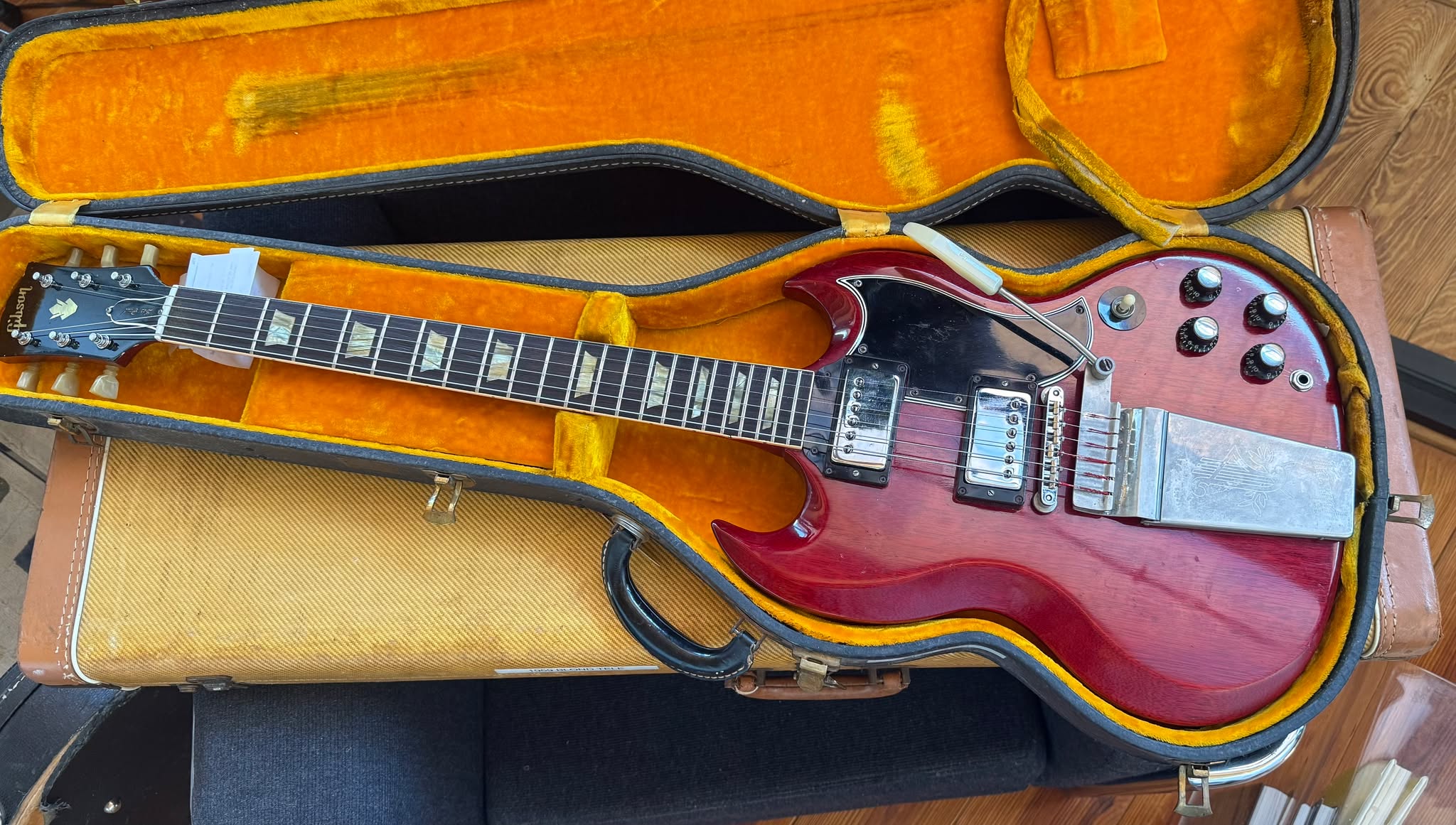
The 1965 Gibson SG Standard represents the final year of the original SG era before significant changes altered the model’s character. This was the last year before Gibson transitioned to larger frets, different inlay patterns, and the controversial wider beveled body edges that would define the later 1960s models. For collectors and players alike, the 1965 SG Standard captures the pure essence of what made the SG design revolutionary—lightweight mahogany, powerful patent-number humbuckers, and the slim, fast neck profile that became a rock and roll icon.
Why 1965 Stands Out in SG History
The 1965 Gibson SG Standard sits at a crucial crossroads in the model’s evolution. By 1965, Gibson had fully refined the SG design after its introduction in 1961 as a replacement for the Les Paul. The awkward transitional features of the early ‘61-‘62 models were long gone, replaced by a mature, confident design that balanced playability with Gibson’s premium craftsmanship.
What makes 1965 particularly significant:
Last year of the “small fret” era before Gibson switched to larger wire in 1966
Refined patent-number humbuckers with exceptional clarity and output
Traditional narrow bevel edges on the body (1967-1969 models had exaggerated bevels)
Consistent quality control before cost-cutting measures of the late 1960s
Lighter weight due to carefully selected mahogany (often 6-7 lbs)
The sweet spot between early transitional models and later CBS-era compromises
Historical Context: Gibson in 1965
By 1965, Gibson was at the height of its powers as a guitar manufacturer. The SG had proven itself as a serious alternative to the discontinued Les Paul, finding favor with blues and rock players who appreciated its aggressive tone and comfortable body. The British Invasion had made American guitars incredibly desirable overseas, and Gibson was producing instruments at a steady clip to meet demand.
The SG Standard in 1965 featured Gibson’s patent-number humbuckers (the patent was finally granted in 1962, ending the PAF “Patent Applied For” era). These pickups represented the culmination of Gibson’s pickup development—consistent manufacturing, reliable output, and the signature thick midrange that defined the Gibson sound.
Notable artists using SG Standards during this period included Eric Clapton (during his time with The Yardbirds and early Cream), Pete Townshend, and Robby Krieger. The SG’s aggressive tone and lightweight design made it perfect for the increasingly loud, energetic rock music emerging in the mid-1960s.
Key Value Factors:
Originality: All-original examples command 40-50% premiums over modified instruments
Stop Tailpiece vs. Vibrola: Stop tailpiece models typically worth 15-20% more
Electronics Condition: Original untouched wiring adds significant value
Finish Condition: Cherry finish that hasn’t faded to pink brings premium pricing
Neck Condition: Straight, unrepaired necks are essential (many SGs suffered breaks)
Headstock Integrity: No cracks or repairs (this is critical for SG values)
Important Note: At Edgewater Guitars, we consistently pay 30-40% more than typical guitar shops for premium 1965 SG Standards. We understand the nuances that make certain examples more valuable and can recognize quality that less specialized buyers might miss.
Detailed Identification Guide
Serial Numbers
1965 Gibson SG Standards typically feature serial numbers in the 300000-400000 range, stamped into the back of the headstock. However, Gibson’s serial number system during this period had significant overlap between years, so serial numbers alone aren’t definitive for dating.
Common 1965 serial ranges:
Early 1965: 300000-330000
Mid 1965: 330000-360000
Late 1965: 360000-400000
Potentiometer Codes
1965 SG Standards used CTS (Chicago Telephone Supply) or Centralab potentiometers with date codes:
CTS Format: 137-65XX (where 137 = CTS, 65 = year, XX = week) Centralab Format: 134-65XX (where 134 = Centralab, 65 = year, XX = week)
Pots dated between late 1964 (64-40 through 64-52) and early 1965 (65-01 through 65-52) are correct for 1965 guitars. Gibson often used pots from previous years’ stock, so finding late ‘64 dated pots in a 1965 guitar is normal.
Patent Number Pickups
1965 SG Standards came equipped with patent-number humbuckers featuring:
“PATENT NO. 2,737,842” stamped on the baseplate
DC resistance typically 7.5k-8.5k ohms (neck pickup often slightly lower)
Short A5 Alnico magnets
Nickel-plated covers (not gold)
These pickups were fully potted in wax by 1965, reducing microphonic feedback compared to earlier PAF pickups.
Detailed Physical Specifications
Body Construction
Wood: Select Honduran mahogany (single piece or two-piece book-matched)
Weight: Typically 6-7.5 lbs (significantly lighter than Les Pauls)
Finish: Thin nitrocellulose lacquer in Cherry Red or rare custom colors
Binding: Single-ply white binding on body top edge
Bevels: Narrow, tasteful bevels (approximately 1/4”)
Neck Specifications
Profile: Slim taper (often called “fast” or “slim ‘60s”)
Width at Nut: 1-11/16” (1.6875”)
Scale Length: 24.75” (Gibson standard)
Fretboard: Bound Brazilian rosewood
Frets: Small vintage wire (approximately .078” wide)
Inlays: Pearloid trapezoid markers
Headstock Angle: 17 degrees (traditional Gibson pitch)
Hardware
Bridge: ABR-1 Tune-O-Matic with nickel plating
Tailpiece: Stopbar (standard) or Maestro Vibrola (optional)
Tuners: Single-line Kluson Deluxe with single-ring plastic buttons
Knobs: Gold “top hat” knobs with silver reflector inserts
Switch: Cream-colored pickup selector toggle (CRL brand)
Pickguard: Small white pickguard with beveled edge (5 screws)
Control Layout
Two volume controls (neck and bridge)
Two tone controls (neck and bridge)
Three-way toggle switch in upper bout
All pots are 500k ohms
.022 mfd “bumblebee” capacitors (yellow/black)
Tonal Characteristics
The 1965 Gibson SG Standard delivers one of the most aggressive, focused electric guitar tones ever produced:
Neck Pickup: Warm but clear, with excellent articulation. The patent-number humbuckers of 1965 had slightly more treble response than earlier PAFs, making them perfect for cutting through band mixes. The neck pickup excels at vocal-like sustain and smooth lead tones.
Bridge Pickup: Powerful, cutting midrange with excellent bite. The combination of mahogany body, long neck tenon, and patent-number humbucker creates a thick, compressed tone that drives amplifiers into natural overdrive beautifully. This is the sound of classic rock—from Cream’s “Sunshine of Your Love” to Led Zeppelin’s early recordings (Jimmy Page used an SG before switching to Les Pauls).
Middle Position: Combining both pickups creates a scooped, hollow tone perfect for rhythm playing and clean passages. The out-of-phase quality adds shimmer and dimension.
Why It Sounds Different from Les Pauls: The all-mahogany construction (no maple cap) and lighter weight create faster attack and more prominent midrange. SGs are more aggressive and cutting, while Les Pauls are thicker and more compressed. The SG’s thinner body also resonates differently, contributing to its distinctive character.
Common Issues & Modifications
Headstock Breaks
The SG’s slim mahogany neck and angled headstock make it vulnerable to headstock breaks. This is the single most common issue affecting SG values:
Clean professional repairs reduce value by 30-40%
Poor repairs or multiple breaks reduce value by 50-70%
Unrepaired necks are increasingly rare and command significant premiums
Warning Signs: Look for finish cracks behind the nut, slightly misaligned tuners, or finish touch-up around the headstock area. Use a UV flashlight to detect glue repairs.
Electronics Modifications
Many 1965 SGs have had their electronics modified over the years:
Replaced pots: Common—look for date codes that post-date 1965
Replaced capacitors: Very common—original “bumblebee” caps are valuable
Rewiring: Many have been rewired with modern wire (original was cloth-covered)
Added coil-splitting: Some have mini-switches added
Impact: All-original electronics can add $1,000-$2,000 to value.
Replaced Parts
Tuners: Grover replacements are extremely common (reduces value by $300-500)
Bridge: ABR-1 bridges are often replaced with modern bridges (reduces value significantly)
Pickguard: Reproductions are common but usually identifiable
Pickups: Replacement pickups are deal-breakers for serious collectors
Refinishing
Cherry nitrocellulose naturally fades to a pinkish hue over decades, especially with UV exposure. Some owners have had their SGs refinished to restore the original cherry color—this drastically reduces value (typically 50-60% reduction).
Refinish Warning Signs:
Overspray in control cavities or pickup routes
Modern polyurethane finish (too thick and glossy)
Lack of natural aging patterns and checking
Inconsistent color in hard-to-reach areas
Vibrola vs. Stop Tailpiece
Some 1965 SG Standards came with Maestro Vibrola tremolo systems. While original vibrolas don’t reduce value, many owners later converted to stop tailpieces, requiring new mounting holes. Guitars with vibrola mounting holes but stop tailpieces installed show this modification and are worth 10-15% less.
Why Players Love 1965 SG Standards
Playing Comfort
The SG remains one of the most comfortable electric guitars ever designed:
Lightweight: At 6-7 lbs, it’s dramatically lighter than Les Pauls
Perfect balance: The body design prevents neck dive
Fast neck: The slim profile allows rapid playing
Upper fret access: The double cutaway provides unparalleled high-fret reach
Tonal Versatility
Despite its reputation for heavy rock tones, the 1965 SG Standard excels across genres:
Blues players appreciate the vocal-like neck pickup
Rock players love the aggressive bridge pickup
Jazz players (like John Scofield) use the neck pickup for warm, articulate tones
Country players appreciate the pickup clarity and twang
Sonic Power
The 1965 SG’s patent-number humbuckers perfectly match the aggressive rock tones emerging in the mid-1960s. The pickups drive amplifiers hard while maintaining clarity—essential for the louder stages and larger venues that rock bands were playing.
Investment Value
While 1965 SG Standards haven’t appreciated as dramatically as ‘59 Les Paul Bursts, they represent excellent investment potential:
Increasing recognition as peak-year instruments
Growing collector interest in 1960s solidbodies
More affordable than Les Pauls but comparable playability
Limited production numbers (exact figures unknown but estimated at several thousand)
Selling Your 1965 Gibson SG Standard
If you own a 1965 Gibson SG Standard, now is an excellent time to consider selling. These guitars have appreciated significantly, and collector demand remains strong.
Why Choose Edgewater Guitars?
Premium Valuations: We specialize in 1960s Gibson solidbodies and understand the subtle factors that determine value. Our offers typically exceed local guitar shop quotes by 30-40% because we recognize quality that generalist buyers miss.
Expert Authentication: Our team can verify originality, date components, and assess condition factors that affect value. We provide detailed documentation of our findings.
Immediate Payment: No consignment fees, no waiting for buyers, no auction uncertainties. We make immediate cash offers on premium instruments.
White-Glove Service: For high-value guitars like 1965 SG Standards, we travel throughout Ohio, Michigan, Pennsylvania, Indiana, and West Virginia for in-person evaluations.
Transparent Process: We explain our valuation methods and show you comparable sales data so you understand exactly how we determined our offer.
Ready to sell your 1965 Gibson SG Standard? Get your free valuation or call us directly at (440) 219-3607.
Related Resources
Need help identifying or dating your vintage Gibson SG?
Complete Gibson Serial Number Lookup Tool
Gibson Factory Order Number (FON) Guide
How to Date Gibson Potentiometers
Gibson Patent Number Pickup Identification
Spotting Refinished Gibson Guitars
Contact us today for your free, no-obligation valuation: (440) 219-3607
Gavin Coe, Vintage Guitar Specialist
Edgewater Guitars
Serving the Midwest Since 2018
See also: Vintage Gibson SG Standard Value Guide (1961-1965)