DATE :
1964 Sonic Blue Fender Jaguar: The Ultimate Guide to Pre-CBS Custom Color Rarity
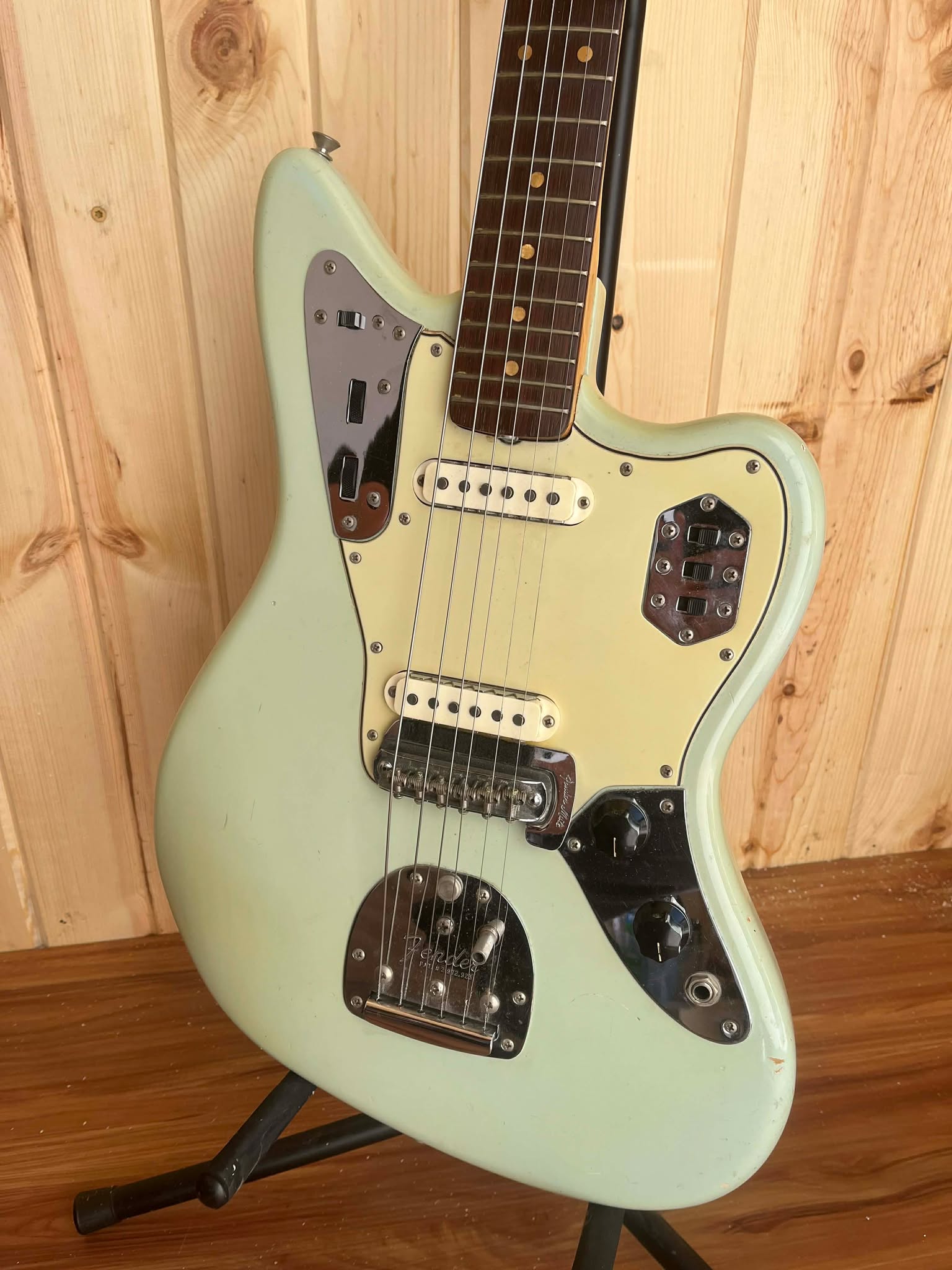
The 1964 Fender Jaguar in Sonic Blue is a pre-CBS offset in a rare factory custom color, with a short 24-inch scale, dual single-coils, and its signature multi-switch circuit. Pre-CBS originality, an authentic custom-color finish, and condition drive value. Edgewater Guitars buys vintage Fender Jaguars nationwide with free expert appraisals and same-day cash offers. Call or text (440) 219-3607.
What Makes a 1964 Sonic Blue Jaguar Special?
The 1964 Fender Jaguar in Sonic Blue represents the convergence of Fender’s most innovative offset design with one of their most sought-after custom colors during the final year before the CBS acquisition. This combination of Fender’s complex, feature-rich Jaguar platform finished in the distinctive pale pastel blue custom color creates one of the most collectible instruments from the pre-CBS era.
Quick Identification: A genuine 1964 Sonic Blue Jaguar features an L-series serial number on the neck plate (L ranges overlap from year to year, so read it as a range), slab or veneer rosewood fingerboard with clay dot inlays, a white pickguard that ages toward a mint green tint, and a solid pale blue finish over a Desert Sand (yellow) undercoat visible in neck pockets and control cavities.
Historical Context: 1964 and the Jaguar’s Golden Year
The Pre-CBS Transition Period
1964 marked a pivotal moment in Fender’s history: the final full year of Leo Fender’s independent ownership before CBS purchased the company in January 1965. This makes every 1964 instrument particularly significant to collectors, as they represent the last complete production year of what enthusiasts consider “true” Fender craftsmanship.
The Jaguar itself was only in its third production year in 1964, having been introduced in 1962 as Fender’s top-of-the-line offset model. Unlike the Jazzmaster (introduced 1958) or the Stratocaster and Telecaster, the Jaguar was still a relatively new design, making early examples particularly rare today.
Why Sonic Blue Matters Across Fender’s Lineup
Sonic Blue was one of Fender’s most popular custom colors during the early 1960s, appearing across their entire instrument line. While collectors often focus on Sonic Blue Stratocasters from this era, the color’s application to the Jaguar, Sonic Blue Jazzmaster, Sonic Blue Jazz Bass, and Precision Bass models creates an interconnected family of highly collectible instruments.
The color itself, a light pastel blue with no metallic flake, was derived from DuPont automotive finishes and represents Fender’s innovative approach to guitar aesthetics during the custom color era (approximately 1956-1969).
Comprehensive Identification Guide
Serial Number Verification
1964 Jaguar Serial Number Range:
L-series numbers, which overlap from year to year: read the serial as a range and confirm with the neck date and pot codes
Located on the neck plate (4-bolt configuration)
“L” prefix indicating Leo Fender era production
Important Note: Serial numbers alone don’t definitively date a Fender. Always cross-reference with neck dates and potentiometer codes.
Neck Date Authentication
The most reliable dating method for vintage Fender instruments is the pencil-written or stamped date on the neck heel:
1964 Neck Date Formats:
“1-64” through “12-64” (month-year format)
Sometimes includes additional notations like “XB” or other codes
Visible when neck is removed from body
May be faint or partially obscured by finish
Potentiometer Code Dating
1964 Jaguars typically feature potentiometers with date codes that can verify period-correct electronics:
Code Format: XXX-YY-ZZ
XXX = Manufacturer (304 = Stackpole, 137 = CTS)
YY = Year (63 or 64)
ZZ = Week of manufacture
Example: A pot coded “304-6412” indicates Stackpole manufacture in the 12th week of 1964.
Sonic Blue Finish Authentication
Authenticating original Sonic Blue finish requires examining multiple indicators:
Desert Sand Undercoat:
Yellow/tan primer visible in:
Neck pocket edges
Control cavity routes
Tremolo cavity
Body edge chips (if present)
Absence of this undercoat suggests refinish
Sonic Blue Color Characteristics:
Solid pale pastel blue with no metallic flake
Even, translucent application over undercoat
Natural aging to slightly darker or greener tones
Different from later “Daphne Blue” (darker, more saturated)
Matching Headstock:
Custom color Jaguars often featured matching painted headstocks
Paint should show same aging characteristics as body
Decal placement under clear coat (not on top of paint)
Physical Specifications: 1964 Jaguar Features
Specification | 1964 Detail |
|---|---|
Scale Length | 24 inches (shorter than Stratocaster/Jazzmaster) |
Fingerboard | Slab rosewood (early ‘64) or veneer rosewood (late ‘64) |
Fret Markers | Clay dot inlays (pearloid dots appear only at the very end of 1964) |
Nut Width | 1-5/8 inches |
Pickguard | 3-ply white celluloid on custom colors, aging toward mint green (tortoiseshell is the sunburst guard) |
Bridge | Floating tremolo with bridge mute |
Pickups | Single-coil with metal “teeth” surrounds |
Controls | Lead/Rhythm circuit switching system |
Neck Profile | C-shape, medium thickness |
The Jaguar’s Unique Feature Set
The 1964 Jaguar included several features not found on other Fender models:
Switching System:
Upper control plate (Rhythm Circuit): Volume and tone for warm jazz tones
Lower control plate (Lead Circuit): Individual pickup on/off switches, master volume, master tone
3-position toggle switches for each circuit
String Mute Mechanism:
Foam rubber mutes mounted on bridge plate
Activated via sliding switch on upper bout
Often removed by players (originality affects collectibility)
Floating Tremolo:
Separate bridge and tailpiece assembly
Lock button to disable vibrato
Complex setup requiring precise adjustment
Sonic Blue Across Fender’s 1964 Lineup
Comparing Sonic Blue Models from 1964
Understanding how Sonic Blue appears across different Fender models helps authenticate and contextualize your specific instrument:
Sonic Blue Stratocaster (1964):
Same finish application process and undercoat
25.5” scale length vs. Jaguar’s 24”
Simpler control layout (3-way switch, volume, two tones)
Typically commands slightly higher collector interest due to Stratocaster popularity
L-series serial numbers matching Jaguar production
Sonic Blue Jazzmaster (1964):
Closest relative to the Jaguar in body design and construction
Same 25.5” scale as Stratocaster
Different pickup design (wider single coils without metal surrounds)
Lead/Rhythm switching similar in concept but different in layout
Often considered the Jaguar’s more mainstream sibling
Sonic Blue Jazz Bass (1964):
Same custom color finish and Desert Sand undercoat
Bass-scale instrument (34”)
Offset body design similar aesthetic to Jaguar/Jazzmaster
Two single-coil pickups with stacked knob controls (early ‘64) or side-by-side knobs (late ‘64)
Demonstrates Fender’s consistent custom color application across instrument families
Color Consistency Across Models: All 1964 Sonic Blue instruments should exhibit:
Identical solid pale blue hue
Same Desert Sand yellow undercoat
Similar aging patterns (slight darkening/greening)
Matching headstock option available on all models
Same nitrocellulose lacquer finish chemistry
Tonal Characteristics of the 1964 Jaguar
Pickup Design and Output
The Jaguar’s single-coil pickups differ significantly from Stratocaster and Jazzmaster designs:
Pickup Specifications:
Narrower coil width than Jazzmaster pickups
Metal “claw” or “teeth” surrounds (shielding)
Shorter magnetic field due to 24” scale
Brighter, more focused tone than Jazzmaster
Output resistance typically 6.5k-7.5k ohms
Tonal Character:
Bright, cutting treble response
Articulate note definition
Less bottom-end than Jazzmaster or Stratocaster
Responsive to rhythm circuit’s rolled-off tone
Quick attack suitable for surf and indie rock
How Finish Affects Tone
While controversial among players, vintage Fender enthusiasts often note tonal differences in custom color instruments:
Potential Tonal Factors:
Thicker paint layers than sunburst finishes (primer + color + clear)
Possible resonance dampening from additional finish weight
Some players prefer the slightly muted high-end of custom colors
Sonic Blue typically applied over alder bodies (same as sunburst Jaguars)
Common Issues and Modifications
Original Parts Verification
When evaluating a 1964 Sonic Blue Jaguar, examine these commonly replaced components:
Frequently Modified Elements:
String Mute Removed: Most players found this feature impractical; original mutes significantly enhance collectibility
Tremolo Lock Button: Often missing or replaced with incorrect hardware
Rhythm Circuit Wiring: Sometimes bypassed by players who found it unnecessary
Pickups: Replaced with humbuckers or other aftermarket options
Pickguard: Celluloid shrinks and warps over time; replacements common
Finish Condition Considerations
Natural Aging vs. Damage:
Nitrocellulose checking (fine hairline cracks) is normal and expected
Color fading or darkening varies by UV exposure
Edge wear revealing Desert Sand undercoat is common
Buckle rash on back is typical player wear
Refinish Red Flags:
Wrong undercoat color (white, gray, or no undercoat)
Paint inside screw holes or under hardware
Overspray in control cavities
Inconsistent aging patterns
Modern polyurethane texture (vintage was nitrocellulose lacquer)
Electronics Issues
Original 1964 Jaguar electronics can develop problems:
Cloth-covered wiring becomes brittle
Potentiometers may be scratchy or intermittent
Capacitors drift from original values
Switch contacts corrode or fail
Output jack may be loose or damaged
Important: Period-correct replacement parts maintain value better than modern upgrades.
Why Collectors Value Sonic Blue Jaguars
Rarity Factors
Several elements make 1964 Sonic Blue Jaguars particularly scarce:
Production Numbers:
Sonic Blue was popular but still uncommon
Jaguar was less popular than Stratocaster, resulting in lower total production
Survival rate affected by:
Players modified instruments heavily
Surf music decline reduced Jaguar popularity
Many refinished in different colors
Collectibility Drivers:
Pre-CBS Provenance: Final year of independent Fender ownership
Custom Color Appeal: Sonic Blue ranks among most desirable Fender finishes
Model Significance: Jaguar represents Fender’s most complex design
Matching Headstock: If present, significantly enhances desirability
Complete Originality: Unmodified examples increasingly rare
Playing Characteristics
Beyond collector appeal, 1964 Jaguars offer distinct playing advantages:
Playability Features:
Shorter 24” scale easier for smaller hands
Comfortable offset body design
Smooth rosewood fingerboard with vintage radius
Lightweight alder body (typically under 8 lbs)
Balanced neck dive characteristics
Musical Applications:
Surf rock (original intended market)
Indie and alternative rock (1990s revival)
Shoegaze and noise rock (tremolo manipulation)
Vintage jazz tones (via rhythm circuit)
The Sonic Blue Family: Context and Comparisons
1964 Custom Color Landscape
Understanding the full context of 1964 Fender custom colors helps appreciate Sonic Blue’s position:
Custom Color Options in 1964:
Lake Placid Blue: Darker, more saturated blue
Daphne Blue: Medium blue, introduced later
Sonic Blue: Pale pastel blue, non-metallic (our focus)
Foam Green: Pale solid (non-metallic) green
Surf Green: Brighter, more vivid green
Olympic White: Cream-white, ages to yellow
Candy Apple Red: Translucent red over gold base
Dakota Red: Opaque orange-red
Sonic Blue’s Distinguishing Characteristics:
Palest of the blue finishes
Solid color with no metallic flake
Closest to actual automotive finishes
Ages more subtly than Daphne Blue
Factory-paired with a white pickguard that ages toward mint green
Cross-Model Custom Color Consistency
Fender’s custom color program maintained remarkable consistency across their lineup, meaning authentication techniques for Sonic Blue Jaguars apply to other models:
Shared Authentication Points:
Desert Sand undercoat universal across body types
Matching headstock application identical
Color mixing and application procedures consistent
Aging characteristics similar across Stratocaster, Jazzmaster, Jaguar, Jazz Bass
Finish thickness and texture comparable
This consistency means expertise in identifying one Sonic Blue Fender model transfers to others, which is valuable knowledge for collectors and sellers.
Selling Your 1964 Sonic Blue Jaguar (or Other Sonic Blue Fender)
Why Work with Edgewater Guitars
At Edgewater Guitars, we specialize in authenticating and purchasing premium vintage Fender instruments, including rare custom colors like Sonic Blue:
Our Expertise:
Advanced knowledge of 1964 Fender specifications and variations
Understanding of custom color authentication techniques
Experience with Jaguar, Jazzmaster, Stratocaster, and Jazz Bass models
Familiarity with Sonic Blue across all Fender instrument types
Our Value Proposition:
Fair Purchase Offers: Based on documented market sales
Expert Authentication: Free verification of originality and year
Immediate Cash Payment: No consignment waiting periods
Hassle-Free Process: We handle all logistics and documentation
Geographic Convenience: Serving Ohio, Michigan, Pennsylvania, Indiana, and West Virginia
Why Edgewater vs. Other Options
Compared to Local Guitar Shops:
Shops need significant resale margins; we’re direct buyers
Most shops lack expertise in rare custom colors
We travel to you for high-value instruments
Immediate payment vs. lengthy consignment
Compared to Online Marketplaces:
No fees, shipping hassles, or scam risks
No waiting for the “right buyer”
Expert evaluation prevents undervaluing rare features
Discretion and security for valuable instruments
Compared to Auction Houses:
No seller’s commission
Immediate payment vs. 60-90 day wait
No public exposure if you prefer privacy
Personal service vs. impersonal process
Contact Edgewater Guitars:
Phone: (440) 219-3607
Get Your Free Valuation: request a free estimate
Service Area: Ohio, Michigan, Pennsylvania, Indiana, West Virginia
Authentication Resources for Sonic Blue Fenders
Free Identification Tools
Edgewater’s Serial Number Resources:
Related Model Guides:
1964 Fender Jazz Bass Authentication
Sonic Blue vs. Daphne Blue: Identifying Fender’s Blue Finishes
Custom Color Verification Checklist
When authenticating any Sonic Blue Fender from 1964:
Visual Inspection:
[ ] Desert Sand undercoat visible in neck pocket
[ ] Desert Sand visible in control cavity routes
[ ] Consistent solid pale blue across all surfaces
[ ] Natural nitrocellulose checking and crazing
[ ] Appropriate aging for 60-year-old finish
[ ] No overspray on hardware or in cavities
Hardware Verification:
[ ] Correct L-series serial number on neck plate
[ ] Period-correct tuners (Kluson Deluxe with “Kluson Deluxe” stamps)
[ ] Original tremolo assembly with correct spring configuration
[ ] Proper pickguard material and aging (white celluloid aging toward mint green on a custom color)
[ ] Correct pickup surrounds and shielding
Electronics Authentication:
[ ] Potentiometer codes show 1963-1964 dates
[ ] Cloth-covered wiring throughout
[ ] Original capacitor types (paper-in-oil or ceramic disc)
[ ] Correct switch types for Jaguar’s complex circuit
[ ] No modern components or wiring methods
Frequently Asked Questions
Q: How can I tell if my Sonic Blue Jaguar is original or refinished?
A: Check the neck pocket and control cavities for Desert Sand (yellow) undercoat. Original Sonic Blue Fenders were sprayed over this yellow primer. Also examine edges and any chips: they should reveal yellow underneath the blue. Refinishes typically use white primer or skip the undercoat entirely.
Q: What’s the difference between Sonic Blue and Daphne Blue?
A: Sonic Blue is paler, a solid non-metallic color, and has a cooler (less green) undertone. Daphne Blue is darker, more saturated, and leans slightly warmer. Sonic Blue was available throughout the 1960s, while Daphne Blue was introduced later in the decade.
Q: Should my 1964 Jaguar have a matching headstock?
A: Not necessarily. Matching painted headstocks were optional on custom color guitars. Both matching and natural wood headstocks are correct for 1964 Sonic Blue Jaguars. Matching headstocks are rarer and typically more sought after by collectors.
Q: How do I verify the neck date on my Jaguar?
A: You’ll need to remove the neck from the body (requiring removal of four neck bolts). The date is pencil-written or stamped on the neck heel. Look for formats like “3-64” (March 1964). Be careful during removal and consider having a qualified technician perform this if you’re uncomfortable with the process.
Q: Is the string mute important for value?
A: Yes. The original foam mute mechanism is a rare survivor feature, as most players removed it. If your Jaguar retains the original, functional mute system, it significantly enhances collectibility and originality.
Q: Will cleaning or polishing my Sonic Blue Jaguar affect its value?
A: Be extremely cautious. Original nitrocellulose finishes are delicate, and aggressive cleaning can remove patina and thin the finish. Use only products specifically designed for vintage nitrocellulose finishes, or consult with a vintage guitar expert before attempting any cleaning. Original “grime” and patina are often valued by collectors.
Q: How do Sonic Blue Jaguars compare in value to Sonic Blue Stratocasters from the same year?
A: While we don’t quote specific prices, Stratocasters typically command slightly higher values due to broader market demand. However, Jaguars are rarer in custom colors and appeal strongly to collectors of offset guitars. Condition, originality, and provenance matter more than model type for high-grade examples.
Understanding Your 1964 Sonic Blue Fender’s Significance
Whether you own a Sonic Blue Jaguar, Jazzmaster, Stratocaster, or Jazz Bass from 1964, you possess an increasingly rare artifact from American manufacturing history. These instruments represent:
Final year of independent Fender ownership under Leo Fender
Peak of custom color craftsmanship before quality changes
Sonic Blue’s golden era of availability and application
Pre-CBS premium materials and construction
60 years of survival in collectible condition
As these instruments age, original examples become scarcer. Modifications, refinishes, and natural attrition reduce the surviving population of authentic 1964 Sonic Blue Fenders annually.
If you’re considering selling, now represents an excellent time to connect with serious buyers who understand and value these instruments appropriately.
Take the Next Step
Ready to have your vintage Fender evaluated?
Edgewater Guitars provides:
Free authentication and identification services
Expert analysis of originality and condition
Fair market valuations based on current demand
Immediate cash offers for instruments we purchase
Zero-obligation consultations
Contact Methods:
Call directly: (440) 219-3607
Request online valuation: [Free Evaluation Form]
Email photos: edgewatergearvault@gmail.com
Service Coverage: Ohio • Michigan • Pennsylvania • Indiana • West Virginia
For premium instruments like 1964 Sonic Blue Fenders, we travel to you for in-person evaluation and immediate transaction completion.
About the Author:
Stephen Pedone specializes in vintage Fender authentication and valuation with particular expertise in pre-CBS custom color instruments. Through Edgewater Guitars, he has evaluated and purchased hundreds of vintage Fenders across the Midwest, helping sellers navigate the complex vintage guitar market while ensuring fair compensation for their instruments.
His dedication to education through comprehensive guides like this helps guitar owners understand what they have and make informed decisions about preservation or sale.
Sell your 1964 Fender Jaguar
Edgewater Guitars buys vintage Fender Jaguars and other vintage Fenders nationwide. We give free, honest appraisals and fair same-day cash offers, with local pickup or insured nationwide shipping. Call or text (440) 219-3607 or request a free estimate.
How much is a 1964 Fender Jaguar worth?
As a real reference point, Edgewater recently paid $16,000 for a clean, all-original 1964 Fender Jaguar in Sonic Blue. Condition, originality, and an authentic custom-color finish move that figure up or down, so the most accurate number for your specific guitar is a free appraisal. Send a few photos and the serial number and we will give you an honest assessment.
Where can I sell a 1964 Fender Jaguar?
Edgewater Guitars buys them directly, nationwide, with same-day cash offers and no obligation. You can also date yours with our Fender serial number lookup.