DATE :
1963 Fender Custom Telecaster: Bound Body Veneer Rosewood with L-Series Serial Introduction
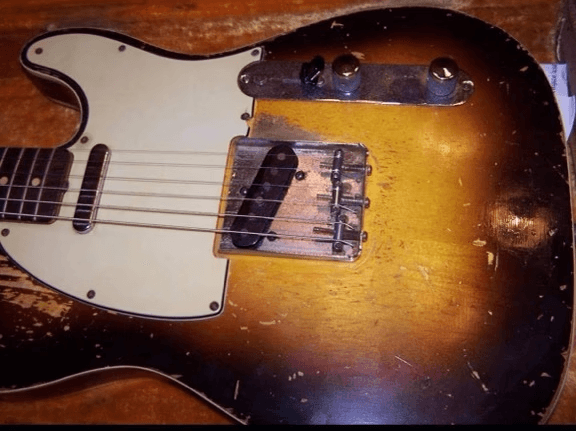
1963 Fender Custom Telecaster: Bound Body Veneer Rosewood with L-Series Serial Introduction
The 1963 Fender Custom Telecaster pairs the double-bound body with the veneer rosewood board and the early L-series serial era, a desirable late pre-CBS specification. Originality, finish, and a clean, unmodified neck and electronics drive value the most. Edgewater Guitars buys vintage Fender Custom Telecasters nationwide with free expert appraisals and same-day cash offers. Call or text (440) 219-3607.
Last Updated: May 2026
What Makes the 1963 Custom Telecaster Significant?
The 1963 Fender Custom Telecaster combines the premium bound-body Telecaster specification with the first full year of veneer rosewood fingerboard production, the introduction of L-series serial numbers, clay dot markers, and Fullerton factory craftsmanship two years before the CBS acquisition. As the rarer Custom variant within an already limited 1963 Telecaster production run, the 1963 Custom Telecaster is one of the most scarce pre-CBS Fender configurations — a premium-tier instrument that many shops fail to identify correctly.
What makes the 1963 Custom Telecaster special:
Bound Body: Top binding continuing as the Custom Telecaster’s defining premium appointment — the single feature that distinguishes it from the standard unbound Telecaster
First Full Veneer Rosewood Year: 1963 is the first complete year of veneer rosewood fingerboard production (approximately 3mm, curved bottom) — slab rosewood ended mid-1962
L-Series Serial Numbers Introduced: Late 1963 introduces the “L” prefix serial number system on bridge plates — both standard five/six-digit and L-prefix authentic for 1963
Clay Dot Markers: Matte clay dots in veneer rosewood — essential pre-CBS authentication (pearl dots indicate later production)
Pre-CBS Quality: Two years before CBS acquisition (January 1965) under Leo Fender’s direct ownership at the Fullerton factory
Extremely Low Production Numbers: Custom Telecasters produced in significantly fewer quantities than standard Telecasters — the Custom was a premium upcharge option fewer buyers selected
Hand-Wound Formvar Pickups: Bridge and neck pickups wound with Formvar-insulated wire, black fiber flatwork — identical quality to standard Telecaster
Three-Saddle Brass Bridge: Classic Telecaster bridge with serial number on bridge plate
Sunburst Standard: Three-tone sunburst as standard Custom finish — custom DuPont colors available at additional upcharge (extraordinarily rare)
IMPORTANT: The 1963 “Custom Telecaster” is NOT the same as the 1972 “Telecaster Custom.” The later model had a humbucker in the neck position and completely different specifications. The pre-CBS Custom Telecaster is a bound-body instrument with standard Telecaster pickups.
In Edgewater’s experience buying pre-CBS Fender guitars across Ohio and the Midwest, 1963 Custom Telecasters are among the rarest pre-CBS Fenders we encounter — most owners and shops don’t recognize the binding as a factory Custom designation. We’ve purchased Custom Telecasters that had been evaluated by multiple shops as “standard Telecasters with aftermarket binding” — missing the premium designation entirely. The binding IS the Custom. It’s factory-original, and it represents a higher-tier model with genuine rarity.
If you own a 1963 Custom Telecaster, Edgewater Guitars provides free, no-obligation valuations. Call (440) 219-3607 or visit our website.
What Is a 1963 Custom Telecaster Worth? (2026 Market Values)
Value by Finish and Condition
Condition | Sunburst (Standard Custom) | Custom Color | Modified |
|---|---|---|---|
Excellent (8-9/10) | Premium tier | Extraordinary tier | Upper-mid tier |
Very Good (7/10) | Upper-mid tier | Ultra-premium tier | Mid-tier |
Good (6/10) | Mid-tier | Premium tier | Lower-mid tier |
Player Grade | Lower-mid tier | Upper-mid tier | Entry tier |
Value by Feature
Feature/Configuration | Premium/Impact | Notes |
|---|---|---|
Bound Body (Original) | 25-40% premium | Over unbound standard Telecaster — defines Custom model |
Custom Color Finish | 50-100%+ premium | Over sunburst — extremely rare on Custom Telecasters |
All-Original Condition | 70-140% premium | Over modified examples |
Original Formvar Pickups | 30-50% premium | Over replaced pickups — black flatwork essential |
Clay Dot Markers | Authentication essential | Pearl dots indicate later production |
Original Three-Saddle Bridge | 15-25% premium | Over replaced bridge — brass saddles essential |
Original Case | 10-20% premium | Black Tolex with orange-red plush interior |
Refinishing | 50-70% reduction | Destroys custom color premium entirely |
Binding Replaced/Missing | 15-25% reduction | Original factory binding essential |
Replaced Pickups | 25-40% reduction | Original Formvar essential |
Six-Saddle Bridge Replacement | 10-20% reduction | Wrong bridge type for era |
Tuner Replacement | 15-25% reduction | Original Kluson Deluxe essential |
How 1963 Custom Telecaster Compares
Year/Model | Key Difference | Relative Value |
|---|---|---|
1959-1960 Custom Telecaster | Earlier production, slab rosewood | 15-25% higher |
1961 Custom Telecaster | Slab rosewood, full slab year | 10-20% higher |
1962 Custom Tele (early slab) | Final slab rosewood, bound | 10-20% higher |
1962 Custom Tele (late veneer) | First veneer, bound | Similar to 5% higher |
1963 Custom Telecaster | First full veneer year, L-series, bound | Baseline (premium) |
1964 Custom Telecaster | Continuing veneer, bound | Similar |
1965 Custom Telecaster | CBS transition year | 25-40% lower |
1963 Standard Telecaster | Same specs, NO binding | 25-40% lower |
Edgewater consistently pays 30-40% more than typical guitar shops. We specialize in Custom Telecaster binding authentication and pre-CBS verification. Get your free valuation: Call (440) 219-3607.
How to Identify an Authentic 1963 Fender Custom Telecaster
Serial Numbers
Early 1963: Five/six-digit numbers approximately 83000-99999 (on bridge plate)
Late 1963: “L” prefix numbers beginning approximately L00100+ (on bridge plate)
Both formats authentic for 1963 depending on production timing.
Location: Bridge plate — the chrome plate holding the bridge saddles (Telecaster-specific serial location)
Neck Date Stamps
Location: Penciled on neck heel (visible when neck removed)
Format: Month-Year (e.g., “3-63,” “11-63”)
Potentiometer Codes
Manufacturer: Stackpole (304)
Format: 304-YYWW
Expected: 304-6301 through 304-6352
Custom vs Standard Telecaster Identification
Feature | Custom Telecaster | Standard Telecaster |
|---|---|---|
Body Binding | YES — top bound (some double-bound) | NO binding |
Standard Finish | Sunburst | Blonde |
Fingerboard | Rosewood (veneer for 1963) | Rosewood or maple |
Pickups | Same Formvar construction | Same Formvar construction |
Bridge | Same three-saddle brass | Same three-saddle brass |
Controls | Same (volume, tone, selector) | Same |
Price Point (Original) | Higher — premium model | Lower — standard model |
Key Visual Identifiers
Body: Alder, single cutaway, WITH TOP BINDING (defining Custom feature)
Finish: Three-tone sunburst standard — nitrocellulose lacquer
Fingerboard: Veneer rosewood (approximately 3mm, curved bottom), clay dot markers
Pickups: Bridge pickup with metal surround plate, neck pickup with chrome cover
Bridge: Three brass saddles, chrome plate, serial number on bridge plate
Controls: Volume, tone, three-way selector switch on upper bout
Pickguard: White three-ply
Tuners: Kluson Deluxe
Headstock: Spaghetti logo, small pre-CBS headstock
Scale Length: 25.5”
Nut Width: Approximately 1-5/8”
Fingerboard Radius: 7.25”
Veneer Rosewood Confirmation
Veneer (Correct for 1963):
Thin: approximately 2.5-3mm
Curved bottom (conforms to neck contour)
Lighter tonal contribution than slab
Slab on Claimed 1963: Should NOT be present. Slab rosewood (approximately 4.8mm, flat bottom) ended mid-1962. Slab on a claimed 1963 indicates earlier production year or a replacement neck.
Red Flags — How to Spot Fakes and Misidentifications
No binding on claimed Custom: Binding DEFINES the Custom Telecaster. No binding = standard Telecaster, not Custom
Slab rosewood on claimed 1963: Slab ended mid-1962. 1963 should be veneer. Slab = earlier year or replacement neck
Pearl dot markers: Should be clay (matte texture) for 1963. Pearl indicates later production
Humbucker in neck position: That’s the 1972 Telecaster Custom — completely different model
Large headstock: CBS feature (1965+). 1963 has small pre-CBS headstock
Gray flatwork on pickups: Should be black for pre-CBS production
Enamel wire on pickups: Should be Formvar for pre-CBS
Six-saddle bridge: Should be three brass saddles for 1963
Aftermarket binding: Check for inconsistent aging between binding and body finish, wrong adhesive, poor fit at joints
1963 Fender Custom Telecaster Specifications
Specification | Detail |
|---|---|
Body Wood | Alder |
Body Style | Single cutaway, bound top |
Body Finish | Three-tone sunburst nitrocellulose (standard) |
Binding | Top bound (some double-bound top and back) |
Neck | Maple with veneer rosewood fingerboard |
Fingerboard | Veneer rosewood (approximately 3mm, curved bottom) |
Fret Markers | Clay dot position markers |
Fingerboard Radius | 7.25” |
Scale Length | 25.5” |
Nut Width | Approximately 1-5/8” |
Frets | 21, small vintage wire |
Pickups | Bridge (with metal surround) + neck (chrome cover) |
Pickup Wire | Formvar, hand-wound |
Pickup Flatwork | Black fiber |
Controls | Volume, tone, three-way selector |
Pickguard | White three-ply |
Bridge | Three brass saddles, chrome plate |
Tuners | Kluson Deluxe |
Headstock | Spaghetti logo, small pre-CBS |
Serial Numbers | Five/six-digit or L-prefix (both authentic for 1963) |
Serial Location | Bridge plate |
Weight | Approximately 7-8 lbs |
Case | Black Tolex with orange-red plush interior |
What Does a 1963 Custom Telecaster Sound Like?
Pickup Specifications and Tonal Profile
Bridge Pickup: The iconic Telecaster bridge pickup mounted in metal surround plate — bright, cutting “twang” with pronounced treble response enhanced by the metal plate. Formvar wire, hand-wound, approximately 6.5-7.5k ohms. This is THE Telecaster voice that defined country, rockabilly, and rock guitar.
Neck Pickup: Warmer, rounder single-coil under chrome cover — ideal for jazz chord voicings, clean rhythm work, and smooth lead playing. Approximately 6.0-7.0k ohms. The chrome cover provides subtle shielding contributing to mellower character.
Three-Way Selector Positions:
Position 1 (Bridge): Brightest, most cutting — the classic Telecaster “twang”
Position 2 (Both): Blended, full — combining bridge clarity with neck warmth
Position 3 (Neck): Warmest, most mellow — smooth, round character
How Construction Details Affect Tone
Veneer Rosewood: The thinner veneer rosewood (approximately 3mm) contributes slightly brighter character than thicker slab rosewood — more maple influence comes through. The difference is subtle but discernible to experienced players.
Three-Saddle Brass Bridge: The shared brass saddles create the characteristic Telecaster “chorusing” effect between paired strings — a defining element of vintage Telecaster tone. Modern six-saddle replacements provide better intonation but eliminate this vintage character.
Alder Body: Balanced frequency response with focused midrange — the standard Fender tonewood providing the foundation for the Telecaster’s versatile voice.
Common Issues and Modifications That Affect Value
Binding deterioration or replacement: Original 63-year-old celluloid binding naturally shrinks, cracks, or separates. Replacement reduces value 15-25%. Missing binding on a claimed Custom is a major authentication concern. In Edgewater’s experience, binding condition is the most commonly overlooked factor in Custom Telecaster evaluation.
Refinishing: Destroys original nitrocellulose character and eliminates any custom color premium. Value impact: 50-70% reduction.
Replaced pickups: Original Formvar pickups with black flatwork essential for maximum value. Value impact: 25-40% reduction.
Six-saddle bridge replacing three-saddle: Common player modification that destroys original Telecaster bridge tone and vintage character. Value impact: 10-20% reduction.
Neck replacement: Mismatched neck date and pot codes indicate replacement. Value impact: 30-50% reduction.
Tuner replacement: Original Kluson Deluxe tuners essential. Value impact: 15-25% reduction.
Electronics modifications: Wiring changes, pot replacement, capacitor swaps. Value impact: 15-25% reduction.
Pickguard replacement: Correct three-ply white essential for 1963. Value impact: 10-15% reduction.
Selling Your 1963 Custom Telecaster: Your Options Compared
Selling Option | Typical Offer | Timeline | Fees/Costs | Risk Level | Best For |
|---|---|---|---|---|---|
Edgewater Guitars | 30-40% above shop offers | Immediate cash | None | Low — Custom Tele expertise | Owners wanting fair value without hassle |
Local Guitar Shop | Lowest (wholesale pricing) | Same day | None direct, but lowest price | Low | NOT recommended — shops miss Custom designation |
Online Marketplace (Reverb, eBay) | Variable — potentially highest | Weeks to months | 5-15% platform + shipping fees | High — binding authentication complex online | Experienced sellers comfortable with risk |
Vintage Dealer | Premium for authenticated Custom | Days to weeks | None if direct | Medium | Pre-CBS Fender specialists |
Auction House | Variable | Months | 15-25% seller premium | Medium | Custom color examples |
Ready to find out what your 1963 Custom Telecaster is worth? Get your free, no-obligation valuation: visit edgewaterguitars.com or call (440) 219-3607.
Frequently Asked Questions About the 1963 Fender Custom Telecaster
Q: What is a 1963 Fender Custom Telecaster worth in 2026?
A: Sunburst with original binding, veneer rosewood, clay dots, and Formvar pickups in excellent all-original condition commands premium tier. Custom colors command extraordinary tier (50-100%+ premium over sunburst). The Custom designation (bound body) adds 25-40% over equivalent standard Telecaster from the same year.
Q: How do I tell a Custom Telecaster from a standard Telecaster?
A: Body binding on the top edge. The Custom Telecaster has factory binding — the standard does not. This is the primary and often the only visual distinction between the two models. Both share the same pickups, bridge, electronics, and construction.
Q: Is a 1963 Custom Telecaster rare?
A: Yes — genuinely rare. Custom Telecasters were produced in significantly lower quantities than standard Telecasters because the Custom was a premium upcharge option that fewer buyers selected. 1963 Custom examples with original binding, clay dots, and complete originality are increasingly scarce.
Q: Does a 1963 Custom Telecaster have slab or veneer rosewood?
A: Veneer rosewood. The slab-to-veneer transition occurred mid-1962 across all Fender rosewood models. 1963 is the first full year of veneer production (approximately 3mm, curved bottom). Slab rosewood (approximately 4.8mm, flat bottom) on a claimed 1963 indicates earlier production or a replacement neck.
Q: What are L-series serial numbers?
A: Late 1963 introduced “L” prefix serial numbers (e.g., L00100+) on bridge plates, replacing the previous five/six-digit system. L-series continued through 1965. Both standard and L-prefix numbers are authentic for 1963 depending on production timing within the year.
Q: Is a 1963 Custom Telecaster the same as a 1972 Telecaster Custom?
A: No — completely different models from different eras. The 1963 Custom Telecaster is a bound-body Telecaster with standard Telecaster pickups in both positions. The 1972 Telecaster Custom has a humbucker in the neck position and different appointments. Different decades, different specifications, different values.
Q: Where is the serial number on a 1963 Custom Telecaster?
A: On the bridge plate — the chrome plate that holds the three brass saddles. Early 1963 serial numbers are five/six digits (approximately 83000-99999). Late 1963 serial numbers have the “L” prefix (approximately L00100+). Both locations are on the bridge plate.
Q: Does Edgewater buy Custom Telecasters?
A: Yes — Edgewater actively purchases vintage Custom Telecasters from all production years. We provide free binding authentication, veneer rosewood confirmation, pickup assessment, clay dot verification, and complete evaluation. We serve Ohio, Michigan, Pennsylvania, Indiana, and West Virginia. Call (440) 219-3607.
Related Resources
Sell your 1963 Fender Custom Telecaster
Edgewater Guitars buys vintage Fender Custom Telecasters and other vintage Fenders nationwide. We give free, honest appraisals and fair same-day cash offers, with local pickup or insured nationwide shipping. Call or text (440) 219-3607 or request a free estimate.
How much is a 1963 Fender Custom Telecaster worth?
As a real reference point, Edgewater recently paid $24,000 for a clean, all-original 1963 Fender Custom Telecaster. Condition, originality, and finish move that figure up or down, so the most accurate number for your specific guitar is a free appraisal. Send a few photos and the serial number and we will give you an honest assessment.
Where can I sell a 1963 Fender Custom Telecaster?
Edgewater Guitars buys them directly, nationwide, with same-day cash offers and no obligation. You can also date yours with our Fender serial number lookup.