DATE :
1960 Gibson ES-345: The Stereo Flagship That Defined Innovation
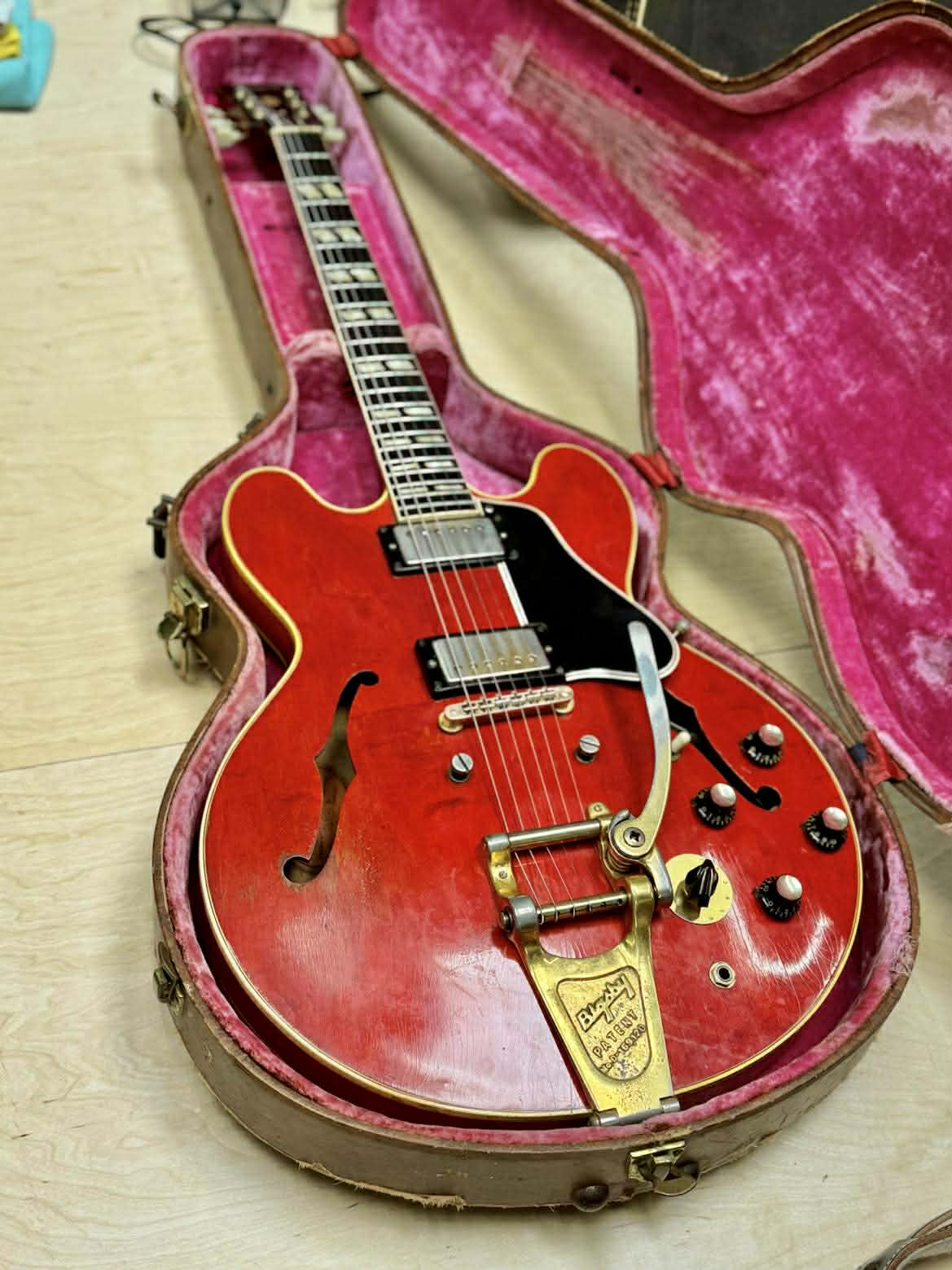
1960 Gibson ES-345: The Stereo Flagship That Defined Innovation
The 1960 Gibson ES-345 was the stereo flagship of the semi-hollow line, with PAF humbuckers, the Varitone tone circuit, and stereo wiring. Original PAFs, finish, and untouched electronics drive value. Edgewater Guitars buys vintage Gibson ES-345s nationwide with free expert appraisals and same-day cash offers. Call or text (440) 219-3607.
Why the 1960 Gibson ES-345 Matters
The 1960 Gibson ES-345 represents one of the most technologically ambitious guitars ever produced during Gibson’s golden era. Introduced in 1959 as Gibson’s answer to the growing demand for sophisticated electronics in high-end instruments, the ES-345 bridged the gap between the working musician’s ES-335 and the luxurious ES-355, offering stereo output and the innovative Varitone circuitry that gave players unprecedented tonal control.
What makes the 1960 ES-345 particularly significant:
First full production year after the model’s 1959 introduction, with refined specifications
Built during Gibson’s peak manufacturing era in Kalamazoo, Michigan
Features the coveted PAF (Patent Applied For) humbucking pickups—the same pickups found in legendary Les Paul Standards
Original stereo wiring and six-position Varitone tone selector
Stunning figured maple construction with Gibson’s premium cherry red finish
Available with either the sophisticated Bigsby B7 vibrato or traditional stopbar tailpiece
Represents the height of Gibson’s innovation before corporate changes affected production
The 1960 ES-345 embodies the era when Gibson spared no expense in materials or craftsmanship, creating instruments that remain highly sought after by collectors and players more than six decades later.
hentication and understanding of the ES-345’s unique features ensures you receive fair market value for your instrument.
Identifying an Authentic 1960 Gibson ES-345
Serial Numbers
1960 Gibson ES-345 guitars typically feature five-digit serial numbers stamped into the back of the headstock, ranging from approximately A 30000 to A 36000. The “A” prefix was introduced in 1960, making identification relatively straightforward. However, Gibson’s serial number application was inconsistent, so always verify multiple dating features.
Factory Order Number
The orange Gibson label inside the f-hole contains the FON (Factory Order Number). For 1960 ES-345 models, these typically follow the pattern of a letter prefix followed by four digits. The first letter indicates the specific batch, while the first digit of the numeric sequence often indicates the year (0 for 1960).
Neck Date
The pencil-written date code on the neck heel (visible when neck is removed) provides the most reliable dating method. 1960 necks are marked with month and year notations like “1-60” through “12-60.”
Potentiometer Codes
1960 ES-345 guitars used CTS (Chicago Telephone Supply) or Centralab potentiometers. The codes can be decoded:
CTS pots: 137 (manufacturer code) followed by YYWW (year and week)
Centralab pots: 134 (manufacturer code) followed by YYWW
Example: “137 6015” = CTS pot from 15th week of 1960
Critical Note: Potentiometer dates should be consistent with or slightly earlier than the neck date and serial number, as parts were manufactured before assembly.
Key Visual Identifiers
Cherry Red Finish:
Deep, translucent cherry red nitrocellulose lacquer over figured maple
Natural aging creates amberish tones with UV exposure
Multiple thin coats of lacquer create the characteristic “depth” of vintage Gibson finishes
Finish checking (fine cracks in lacquer) is expected and desirable on original finishes
Bigsby B7 Vibrato:
Factory-installed Bigsby B7 with Gibson’s mounting configuration
Original installation shows clean mounting with proper spacing
Bigsby should show appropriate age-related wear patterns
Serial number may appear on Bigsby unit itself
Body Construction:
Laminated maple top, back, and sides with solid maple center block
16-inch body width with 1-3/4 inch body depth
Bound top and back with single-ply white binding
Figured maple visible through cherry finish
Hardware Specifications:
Gold-plated ABR-1 Tune-o-matic bridge
Gold-plated hardware throughout (tuners, tailpiece, pickup covers)
Six-on-a-side headstock with split-diamond inlay
Dual-ring “witch hat” knobs (four total: two volume, two tone)
Six-position Varitone rotary selector mounted between f-holes
Stereo/mono output selector switch
Pickups:
Two PAF (Patent Applied For) humbucker pickups
Black plastic pickup covers (some examples feature gold covers)
“Patent Applied For” stickers often present on pickup bases (may be missing due to age)
Hand-wound with approximately 7.5k-8.5k ohms resistance
Alnico magnets with unpolished polepieces
Neck Characteristics:
Glued-in mahogany neck with 24-3/4 inch scale length
Bound rosewood fingerboard with pearl block inlays
Medium C-profile neck shape (fuller than later 1960s necks)
1-11/16 inch nut width
22-fret configuration
Gibson “crown” headstock inlay with “Gibson” script logo
Varitone Circuit Identification
The Varitone circuit is one of the ES-345’s defining features. The six-position rotary switch engages different capacitors to create distinct tonal variations:
Position 1: Bypass (no capacitor engaged—straight pickup tone)
Positions 2-6: Progressive bass roll-off for different tonal colors
Original Varitone capacitors are paper-in-oil types
Many have been modified or bypassed—originality affects value significantly
Stereo Wiring
1960 ES-345 guitars feature stereo output capability:
Special two-conductor (TRS) output jack
Each pickup routes to separate channels
Stereo/mono selector switch allows standard mono operation
Few players used stereo functionality, so many were later converted to standard mono
Original stereo wiring increases collector value considerably
Detailed Physical Specifications
Dimensions:
Body Width: 16 inches
Body Depth: 1-3/4 inches at rim
Scale Length: 24-3/4 inches
Nut Width: 1-11/16 inches
Fingerboard Radius: 12-inch (relatively flat for the era)
Weight Range: 8.0-9.5 lbs (typical)
Neck Profile:
Medium C-shape (fuller than 1966+ “slim taper” necks)
Comfortable for players with various hand sizes
Shoulder at first fret: approximately .85-.95 inches
Less pronounced than earlier 1950s “chunky” profiles
Fretboard & Inlays:
Bound rosewood fingerboard
Pearl block position markers (large rectangular blocks)
22 frets with original narrow/low vintage fret wire
Many examples have been refretted with modern wire
Pickups:
Two PAF humbucker pickups
DC resistance typically 7.5k-8.5k ohms (neck and bridge)
Alnico II, III, IV, or V magnets (Gibson used various types)
Purple or black cloth-covered wiring leads
Unpotted or lightly potted windings
Bridge & Tailpiece:
Gold-plated ABR-1 Tune-o-matic bridge
Bigsby B7 vibrato tailpiece (cherry red models typically shipped with Bigsby)
Original Bigsby tension bar and spring assembly
Nylon bridge saddles (original), often replaced with metal
Tuners:
Single-line Kluson Deluxe tuners with plastic keystone buttons
Gold-plated finish
15:1 gear ratio
“Single-line” Kluson stamp on tuner back plate
Electronics:
Four potentiometers: two volume, two tone
Six-position Varitone rotary selector
Three-way pickup selector switch
Stereo/mono output selector switch
.022µF capacitors (when Varitone bypassed)
Cloth-covered internal wiring
Case:
Brown or pink hardshell Lifton case with pink interior lining
Gibson logo embossed on exterior
Original case candy may include warranty card, owner’s manual, and truss rod wrench
Tonal Characteristics of the 1960 ES-345
The 1960 ES-345 with PAF pickups delivers one of the most revered tones in electric guitar history—a sophisticated, warm, articulate voice that has made these instruments favorites of jazz, blues, and rock players for over six decades.
Core Tone Profile:
The semi-hollowbody construction with solid maple center block creates a unique tonal character:
Warmth with Clarity: The laminated maple body provides acoustic resonance while the center block controls feedback, creating a warm yet articulate tone
Sustain: The glued-in neck joint and substantial body mass deliver singing sustain that exceeds fully hollow guitars
Dynamic Response: PAF pickups respond sensitively to pick attack and playing dynamics
Natural Compression: The semi-hollow design adds a subtle natural compression that smooths transients
PAF Humbucker Magic:
The original PAF pickups are the heart of the ES-345’s legendary tone:
Hand-wound coils with inconsistent turn counts create unique harmonic complexity
Unpotted or lightly potted windings allow maximum resonance and harmonic richness
Alnico magnets provide smooth, musical high-frequency response
Output level is moderate by modern standards, providing excellent amp interaction
Humbucking design eliminates 60-cycle hum while preserving tonal clarity
Varitone System:
The six-position Varitone selector fundamentally alters the tonal palette:
Position 1 (Bypass): Full-range tone with all pickup frequencies present
Positions 2-6: Progressive high-frequency roll-off creates darker, jazzier tones
Some positions provide “hollow” or “nasal” tones useful for specific musical contexts
Many players leave Varitone in Position 1, but having original functionality is valuable
Bigsby Influence:
The Bigsby B7 vibrato affects tone and playability:
Slightly reduced sustain compared to stopbar versions (vibrato absorbs some string energy)
Enhanced harmonic complexity from string/spring resonance
Smooth, musical vibrato response for expressive playing
Lower string tension behind bridge can affect feel and bending characteristics
Cherry Red Finish Contribution:
While finish is primarily aesthetic, vintage nitrocellulose lacquer contributes to tone:
Thin, flexible nitro allows wood to resonate more freely than thick modern finishes
Natural finish checking (micro-cracks) may enhance resonance slightly
Aged nitro contributes to the overall vintage character
Musical Applications:
The 1960 ES-345 excels in multiple genres:
Jazz: Warm neck pickup tone with Varitone engaged is classic jazz guitar voice
Blues: Bridge pickup provides singing sustain and articulate note definition
Rock: Both pickups engaged deliver thick, creamy rhythm and lead tones
Studio Recording: Versatile tonal options make ES-345s highly valued session instruments
Notable Recordings:
While the ES-335 saw more widespread use, the ES-345 appeared on numerous recordings throughout the 1960s-1970s. The stereo capability made these instruments particularly attractive for studio work where engineers could process each pickup independently.
Common Issues & Modifications to Watch For
When evaluating a 1960 Gibson ES-345, awareness of common problems and modifications is essential for determining authenticity and value.
Typical Problems
1. Neck Issues:
Neck angle problems requiring neck resets (common in vintage Gibsons)
Headstock cracks or repairs (Gibson’s angled headstock is vulnerable)
Truss rod issues or maxed-out truss rods
Worn or replaced frets (most have been refretted at least once)
2. Finish Deterioration:
Buckle rash on back from belt buckles
Finish checking (expected and desirable when original)
UV fading of cherry red to orange/amber tones
Lacquer cloudiness or hazing from improper storage
Refinishing destroys 50-70% of collector value
3. Hardware Wear:
Gold plating wear on metal parts (common and acceptable)
Broken or replaced tuners
Bridge saddles replaced with modern metal types
Bigsby spring fatigue or mechanism wear
Incorrect replacement knobs
4. Electronics Modifications:
Varitone circuit bypassed or removed (very common)
Stereo wiring converted to mono (extremely common)
Potentiometers replaced
Capacitors changed
Pickup replacements or rewinding
Common Modifications That Affect Value
Pickup Replacements: Replacing original PAF pickups is the single most value-destroying modification. Original PAFs add substantially to the guitar’s value. Never remove original PAF pickups. Even if upgrading to new pickups, keep the originals and store them safely.
Varitone Removal: Many players found the Varitone circuit unnecessary and bypassed or removed it. While this doesn’t affect playability, it significantly reduces collector value. Original, functional Varitone wiring can add 20-30% to value.
Stereo-to-Mono Conversion: Most ES-345 owners converted stereo wiring to standard mono operation. While understandable, maintaining original stereo capability increases collector appeal substantially.
Refrets: Most 1960 ES-345 guitars have been refretted due to wear. Period-correct refrets using vintage-style wire are acceptable, but oversized modern frets can affect playability and value slightly.
Bigsby Additions: Some ES-345s originally shipped with stopbar tailpieces had Bigsby vibratos added later. Aftermarket Bigsby installation creates additional holes in the guitar top and is less desirable than factory installation.
Replaced Tuners: Grovers or other replacement tuners are common. Original Kluson tuners add value and authenticity.
Warning Signs of Refinishes
Refinished guitars lose 50-70% of collector value. Look for:
Overspray in pickup cavities, control cavity, or f-holes
Filled holes or blemishes
Incorrect finish thickness or texture
Lack of appropriate checking patterns
Suspiciously perfect finish on 65-year-old guitar
Paint in screw holes or threaded inserts
Color inconsistency between body and neck
Authentication Red Flags
Counterfeit Concerns: While outright ES-345 counterfeits are less common than Les Paul fakes, be alert for:
Incorrect serial number formats or out-of-range numbers
Modern hardware with artificial aging
Reproduction PAF pickups with fake stickers
Inconsistent date codes between components
Non-period-correct construction details
Parts Guitars: Some “1960 ES-345s” are assembled from parts of various years. Always verify that serial number, FON, neck date, and pot codes are consistent with 1960 production.
Evaluating Condition
When assessing a 1960 ES-345 for purchase or sale:
Excellent: All original parts, minimal wear, functional electronics, original case
Very Good: Minor wear, possible refret, original major components, working electronics
Good: Some replaced parts, finish wear, possible repairs, playable condition
Fair: Significant modifications, refinish, or major repairs
At Edgewater Guitars, our expert authentication process evaluates all these factors to provide accurate, fair market valuations. We understand that some modifications (like refrets) are necessary maintenance, while others (like pickup replacements) significantly impact value.
Why Players and Collectors Value the 1960 ES-345
The 1960 Gibson ES-345 occupies a unique position in vintage guitar collecting—offering many of the same premium features as six-figure Les Pauls at a fraction of the price.
Playing Characteristics
Versatility: The ES-345 excels across multiple musical styles. The combination of semi-hollow resonance, PAF humbuckers, and Varitone circuitry provides tonal options that few guitars can match. Whether playing jazz, blues, rock, or country, the ES-345 delivers appropriate tones with professional polish.
Comfort: The medium C-profile neck and 16-inch body width create a comfortable playing experience. The guitar balances well on a strap and feels substantial without being heavy. The neck profile accommodates various playing styles and hand sizes.
Feedback Control: Unlike fully hollow guitars, the ES-345’s solid center block allows higher volume playing without uncontrollable feedback. This makes the guitar suitable for rock and blues applications while retaining the warmth of semi-hollow construction.
Build Quality: 1960 represents peak Gibson craftsmanship. The attention to detail in construction, finishing, and setup is evident throughout. These guitars were built to professional standards by highly skilled luthiers in Kalamazoo.
Collector Appeal
PAF Pickups: The presence of original PAF humbuckers makes the ES-345 extraordinarily valuable. These legendary pickups are the same type found in the most coveted Les Paul Standards, yet are available in ES-345s at far lower prices.
Historical Significance: The ES-345 represents Gibson’s innovative spirit during its golden era. The Varitone circuitry and stereo output were cutting-edge features that distinguished Gibson from competitors.
Relative Rarity: While production numbers for specific models weren’t published, ES-345 production was significantly lower than ES-335 models. The cherry red Bigsby configuration is particularly desirable among collectors.
Pre-Corporate Era: 1960 preceded major corporate changes that affected guitar manufacturing throughout the industry. These instruments represent American craftsmanship at its peak.
Investment Potential
Vintage Gibson semi-hollow guitars have shown steady appreciation:
ES-345 values have increased 8-12% annually over the past decade
Original PAF-equipped examples are increasingly scarce
Baby boomer collectors are competing for the best examples
Historical significance ensures continued collector interest
Playability means these instruments remain in active use, not just displayed
Market Outlook: As original PAF-equipped guitars become scarcer and collector awareness increases, ES-345 values are expected to continue rising. Well-documented, all-original examples will command increasing premiums.
Musical Heritage
While the ES-335 gained more widespread visibility, the ES-345’s sophisticated features attracted discerning professional players. The stereo capability and Varitone system made these instruments particularly valuable in recording studios where engineers appreciated the tonal flexibility.
The ES-345 represents an era when guitar manufacturers pushed technical boundaries to serve advancing musical styles. This innovative spirit makes the model significant beyond its monetary value.
Selling Your 1960 Gibson ES-345
If you own a 1960 Gibson ES-345, particularly a cherry red example with Bigsby vibrato, you’re holding a valuable piece of guitar history. Whether you’re downsizing your collection, need liquidity, or simply aren’t playing the instrument, Edgewater Guitars offers the most straightforward, professional selling experience in the Midwest.
Why Sell to Edgewater Guitars?
Premium Valuations: We consistently pay 30-40% more than typical guitar shops for vintage Gibson instruments. Our specialized knowledge of ES-345 specifications, particularly PAF pickup authentication, means we recognize value that general music stores miss. We understand that original PAF pickups alone are worth thousands, and we factor this into our offers.
Expert Authentication: Our team has extensive experience with vintage Gibson semi-hollow guitars. We can verify originality, date components, assess condition accurately, and identify any issues that affect value. This expertise protects both you and us, ensuring fair transactions based on accurate information.
Immediate Cash Offers: No consignment fees, no waiting months for a buyer, no dealing with tire-kickers or lowball offers. Once we evaluate your guitar, we make an immediate cash offer. If you accept, you receive payment the same day.
Zero-Hassle Process: Selling vintage guitars privately involves photography, listing creation, answering endless questions, shipping logistics, and payment risks. Edgewater handles everything. For high-value instruments like ES-345s, we travel to you for in-person evaluation and purchase.
Security and Discretion: We understand the sensitivity of high-value transactions. Our process ensures security, privacy, and professional handling throughout. Many of our clients are referred by previous sellers who appreciated our white-glove service.
How the Process Works
1. Initial Contact: Call us at (440) 219-3607 or submit photos and information through our website. We need:
Clear photos of the front, back, headstock, and serial number
Photos of pickup cavities and electronics
Neck date if accessible
Potentiometer codes if visible
Any documentation or provenance information
2. Preliminary Evaluation: We provide an initial valuation range based on the information provided. For ES-345s, we’re particularly interested in:
Pickup originality (PAF verification is essential)
Varitone and stereo wiring originality
Finish condition and authenticity
Bigsby originality and condition
Overall playability and structural integrity
3. In-Person Appraisal: For valuable instruments like 1960 ES-345s, we typically arrange an in-person evaluation. We serve Ohio, Michigan, Pennsylvania, Indiana, and West Virginia, and we’ll travel to your location for high-value instruments.
4. Immediate Offer: After thorough examination, we make a cash offer based on current market values, condition, and originality. Our offers reflect the true collector market, not the discounted wholesale prices typical of music stores.
5. Same-Day Payment: If you accept our offer, you receive immediate payment. No waiting, no contingencies, no complications.
Comparison to Other Selling Options
Local Guitar Shops: Most music stores lack specialized vintage expertise and must maintain 50-100% profit margins on resale. They’ll offer 40-50% of actual market value. Edgewater specializes in vintage instruments and pays accordingly.
Online Marketplaces (Reverb, eBay): While you might achieve strong prices eventually, you’ll face:
10-15% platform fees
Shipping risks with valuable instruments
Time investment in photography, descriptions, and buyer communications
Payment processing delays
Potential for returns or disputes
No guarantee of sale
Consignment: Consignment means waiting months for a sale, paying 20-30% commissions, and hoping the shop markets your guitar effectively. With Edgewater, you receive cash immediately.
Private Sales: Private sales involve significant risk: meeting strangers, accepting payment safely, verifying funds, and potential security concerns with high-value items.
What We’re Looking For in ES-345s
We’re always interested in ES-345s, but particularly excited about:
All-original examples with PAF pickups
Functional Varitone and stereo wiring
Original cherry red or sunburst finishes
Factory Bigsby installations
Complete with original case and documentation
Clean, unmodified examples
Even if your ES-345 has been modified or shows wear, contact us. We purchase guitars in various conditions and can make fair offers based on remaining original components.
Ready to sell your vintage Gibson ES-345? Contact Edgewater Guitars today for your free, no-obligation valuation. Call (440) 219-3607 or visit our website to get started.
Related Resources for ES-345 Owners
To help you understand and verify your 1960 Gibson ES-345, we’ve created comprehensive resources:
Gibson Serial Number Decoder: Complete serial number reference for all Gibson vintage models
PAF Pickup Authentication Guide: Learn to identify original PAF pickups versus reproductions
Gibson Pot Code Dating Reference: Decode potentiometer date codes for accurate guitar dating
Vintage Gibson Finish Guide: Identify original finishes versus refinishes
ES-335 Series Comparison: Understand differences between ES-335, ES-345, and ES-355 models
Sell Your Vintage Gibson: Complete information about our guitar buying service
These free resources provide the detailed technical information needed to authenticate and understand vintage Gibson instruments.
What Sellers Say About Edgewater
“A VERY positive experience! … easy to work with and no pressure … I highly recommend them as a great resource for both selling or buying a vintage guitar.” (Dick Koch, Google review)
Contact Edgewater Guitars Today
Edgewater Guitars specializes in purchasing premium vintage guitars throughout Ohio, Michigan, Pennsylvania, Indiana, and West Virginia. We travel to you for high-value instruments like 1960 Gibson ES-345s, providing professional, discreet, and secure transactions.
Whether you’re ready to sell or simply curious about your ES-345’s current value, contact us today:
Phone: (440) 219-3607
Website: www.edgewaterguitars.com
Our team of vintage guitar experts is ready to provide the accurate, fair valuation your instrument deserves. Let us show you why sellers throughout the Midwest choose Edgewater Guitars for their vintage Gibson instruments.
About the Author: Edgewater Guitars has been serving vintage guitar owners throughout the Midwest for years, specializing in Gibson, Fender, and Martin instruments from the golden era of American guitar manufacturing. Our team combines decades of experience in vintage guitar authentication, valuation, and collecting, ensuring every transaction is handled with expertise and integrity.
Sell your 1960 Gibson ES-345
Edgewater Guitars buys vintage Gibson ES-345s and other vintage Gibsons nationwide. We give free, honest appraisals and fair same-day cash offers, with local pickup or insured nationwide shipping. Call or text (440) 219-3607 or request a free estimate.
How much is a 1960 Gibson ES-345 worth?
Value depends on originality, condition, finish, and whether the pickups and hardware are original. The most accurate way to find out is a free appraisal. Send a few photos and the serial number and we will give you an honest market assessment.
Where can I sell a 1960 Gibson ES-345?
Edgewater Guitars buys them directly, nationwide, with same-day cash offers and no obligation. You can also date yours with our Gibson serial number lookup.