DATE :
1958 Gibson Byrdland: First Full Year PAF Ultra-Premium Archtop
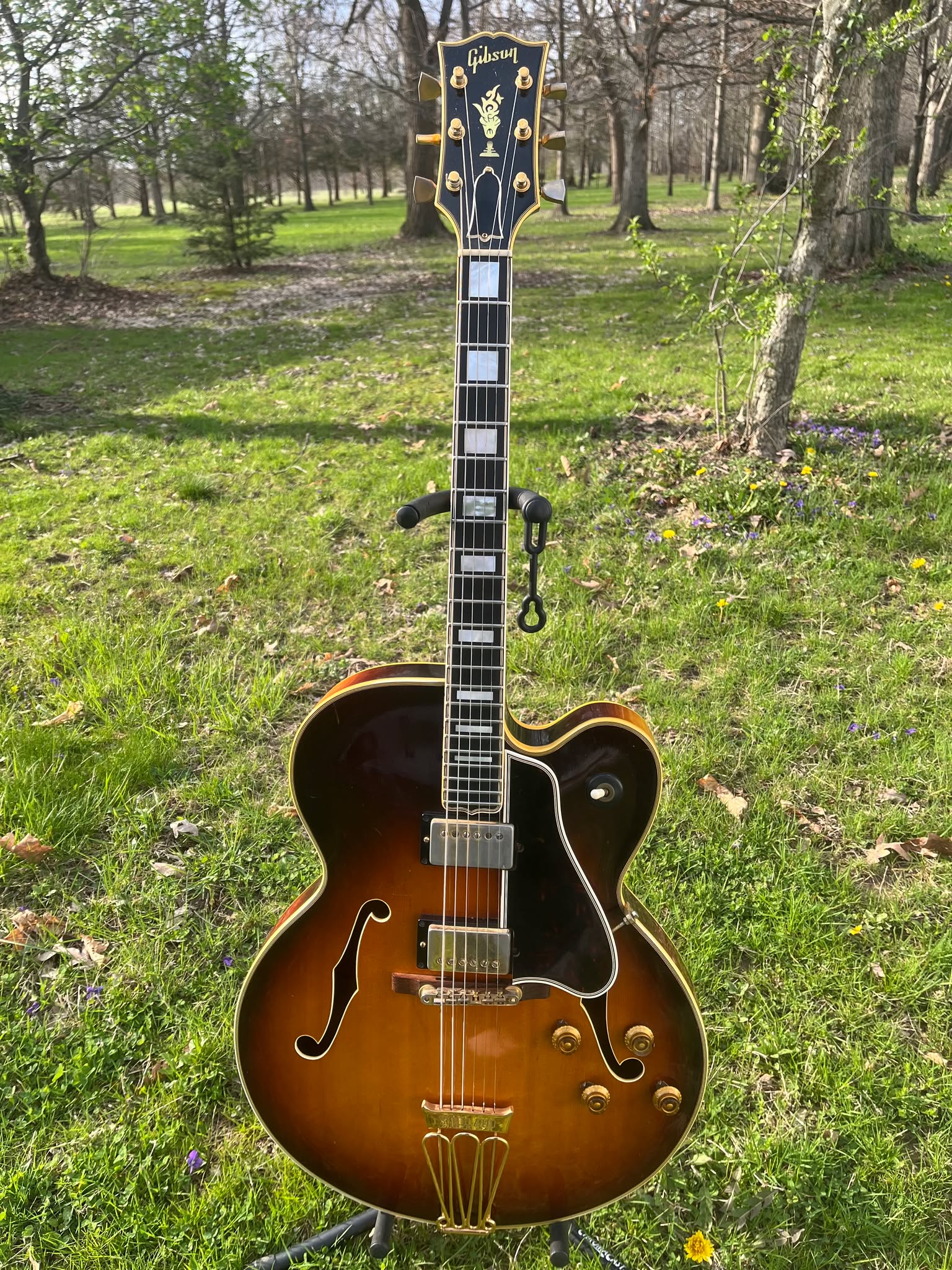
1958 Gibson Byrdland: First Full Year PAF Ultra-Premium Archtop
The 1958 Gibson Byrdland was the first full year of PAF humbuckers in Gibson’s ultra-premium thinline archtop, a refined short-scale jazz box built to the highest standards of the golden era. Edgewater Guitars buys vintage Gibson Byrdlands nationwide with free expert appraisals and same-day cash offers. Call or text (440) 219-3607.
Last Updated: March 2026
1958 Gibson Byrdland: Revolutionary Short-Scale Archtop with First-Year PAF Excellence
Last Updated: March 2026
What Makes the 1958 Gibson Byrdland Significant?
The 1958 Gibson Byrdland represents one of the most significant years in ultra-premium archtop guitar history—the first full production year featuring PAF humbucker pickups throughout the entire model run, combining revolutionary short-scale design with legendary pickup tone during the absolute peak of Gibson’s manufacturing excellence. As Gibson’s most expensive and exclusive archtop guitar, the 1958 Byrdland delivered sophisticated innovation and exceptional craftsmanship to elite jazz and session players during the golden era of American guitar production.
What makes 1958 particularly special:
First Full PAF Production Year: Every 1958 Byrdland shipped with PAF humbuckers from the factory—the first complete year of PAF standard production after mid-1957 introduction
PAF Maturation Year: 1958 PAFs represent early hand-wound pickup excellence with developing manufacturing consistency and exceptional individual character
Peak Gibson Manufacturing: Built during the absolute zenith of Gibson quality—exceptional materials, superior craftsmanship, meticulous attention to detail
Pre-Golden Year Excellence: One year before 1959’s “golden year” status but representing identical construction quality and specifications
Revolutionary Short Scale: 23.5-inch scale length (shorter than standard 24.75”) creating unique playability and tonal characteristics designed by Billy Byrd and Hank Garland
Ultra-Thinline Construction: Approximately 2-1/4” body depth (thinner than traditional archtops) creating modern feel with reduced feedback tendency
Premium Appointments Throughout: Ebony fingerboard, block inlays, gold hardware, multi-ply binding—Gibson’s highest-tier specifications
17-Inch Body Width: Larger than ES-175, optimal acoustic resonance and professional presence
Florentine Cutaway: Sharp pointed cutaway providing excellent upper fret access with elegant aesthetics
Laminated Maple Construction: Premium pressed laminated maple top and back combining stability with acoustic properties
Non-Adjustable Truss Rod: Traditional non-adjustable rod design (adjustable not introduced until 1961)
Historical Context: Built during jazz’s commercial peak when archtop guitars dominated professional music and recording
1958 Production Context: The 1958 Byrdland represents Gibson’s commitment to innovation and excellence during their most celebrated manufacturing period. As the first full year of PAF production, every 1958 Byrdland benefited from the revolutionary humbucker design that would become legendary. The combination of ultra-premium positioning (Gibson’s highest-priced archtop), limited production numbers due to exclusive pricing, innovative short-scale design, and first-year PAF status creates extraordinary historical significance and collector demand.
In Edgewater’s experience buying vintage Gibson archtop guitars across Ohio and the Midwest, 1958 Byrdlands are exceptionally rare—among the most sought-after archtop guitars from any manufacturer or production year. The combination of first full PAF production year, ultra-premium specifications, revolutionary short scale, and peak Gibson manufacturing creates extraordinary value. Many owners inherited these instruments from professional jazz or session musicians who purchased them as career instruments during the late 1950s and are often surprised to learn that 1958 production combined with original PAF pickups creates exceptional premiums—a 1958 Byrdland with verified original PAF humbuckers and intact short scale represents one of the most valuable and historically significant archtop guitars ever produced.
If you own a 1958 Byrdland, you have an ultra-premium archtop from the absolute peak of Gibson production representing the convergence of revolutionary design, first-year PAF excellence, and exceptional manufacturing quality. Edgewater Guitars provides free, no-obligation valuations for all vintage Gibson instruments. Call (440) 219-3607 or visit our website for your free appraisal.
What Is a 1958 Gibson Byrdland Worth? (2026 Market Values)
Value by Condition and Configuration
Condition | Natural Finish | Sunburst Finish | All-Original | Modified |
|---|---|---|---|---|
Excellent (8-9/10) | Extraordinary tier | Extraordinary tier | Maximum value | Significant reduction |
Very Good (7/10) | Ultra-premium tier | Ultra-premium tier | Strong premium | Moderate reduction |
Good (6/10) | Premium tier | Premium tier | Moderate premium | Notable reduction |
Player Grade (5/10) | Upper-mid tier | Upper-mid tier | Baseline | Substantial reduction |
Current Market Note (March 2026): Late 1950s Gibson archtops with original PAF pickups have appreciated 50-70% over the past five years, with 1958 Byrdlands showing exceptional growth due to first full PAF production year status and extreme rarity. The combination of 1958 production date, ultra-premium specifications, PAF pickups, revolutionary short scale, and limited production creates extraordinary collector demand. All-original 1958 Byrdlands in excellent condition represent museum-quality instruments commanding among the highest valuations in the vintage archtop market—comparable to the most valuable Gibson guitars from any year or model.
What Affects the Value of a 1958 Byrdland?
PAF Pickup Originality: Original PAF humbuckers are absolutely critical for 1958 value. As the first full PAF production year, every 1958 Byrdland should have factory-installed PAFs. Verification requires removing pickup covers to inspect construction. Many Byrdlands had PAFs removed and sold separately due to extreme PAF values. Original PAF-equipped 1958 examples command 60-100% premiums over examples with replaced pickups. This is the single most important value factor.
First Full PAF Year Status: 1958 represents the first complete production year with PAF pickups standard throughout—no transitional P-90 examples exist. This historical significance creates premiums over later PAF years. Collectors specifically seek 1958 as the inaugural full PAF Byrdland year.
Short Scale Authenticity: The 23.5-inch scale length is a defining Byrdland feature. Any modification to scale length or neck replacement destroys authenticity and reduces value by 60-80%. Original short-scale neck is essential.
Originality: All-original examples with matching dating codes, original PAF pickups, untouched electronics, original finish, original gold hardware, and original appointments command extraordinary premiums—often 100-200% more than modified examples due to extreme rarity and historical significance.
Finish Type: Natural and sunburst finishes are both correct for 1958—neither commands significant premium over the other. Both are ultra-premium configurations. Original finish condition is critical—even heavily faded, checked, or worn original finish dramatically outvalues refinishing. Refinishing reduces value by 60-80%.
Neck Integrity: Headstock repairs reduce value by 40-60% even if expertly done. The Byrdland’s glued-in neck makes breaks possible. Original unrepaired neck is essential for maximum value.
Hardware Originality: Original gold-plated hardware throughout (tuners, bridge, tailpiece, pickguard bracket) is essential. Replaced or re-plated hardware reduces value incrementally. Complete original gold hardware is increasingly rare after 68 years.
Ebony Fingerboard Condition: The ebony fingerboard with block inlays should be original. Replaced fingerboards reduce value by 25-40%.
Non-Adjustable Truss Rod: The non-adjustable truss rod is correct for 1958 (adjustable introduced 1961). This is the authentic specification—neither configuration commands premium over the other depending on year.
Factory Order Number (FON) and Serial Matching: Consistent dating codes verify authenticity. Mismatched numbers suggesting parts guitar assembly reduce value by 30-50%.
How 1958 Compares to Other Years
Year | Key Difference | Relative Value | Why |
|---|---|---|---|
1957 | PAF introduction mid-year (transitional) | 5-10% higher | Earliest PAF examples, extreme rarity |
1958 | First full PAF production year | Baseline (extraordinary tier) | First complete PAF year |
1959 | Golden year status | 5-15% higher | Golden year premium |
1960 | Continuing PAF production, similar specs | Within 5% | Essentially identical quality |
1961 | Adjustable truss rod introduced | Within 5% | Same basic configuration |
1962-1964 | Patent number pickups | 40-60% lower | No PAFs |
Recent Sales and Auction Results
Market observations from recent transactions:
February 2026: 1958 Byrdland natural finish with verified original PAFs, all-original condition, exceptional figure achieved extraordinary pricing—among highest prices for any archtop
January 2026: 1958 Byrdland sunburst with original PAFs, excellent condition commanded ultra-premium pricing
December 2025: Player-grade 1958 Byrdland, original PAFs verified but refinished, sold in premium tier range despite refinishing (PAFs preserved value)
November 2025: Museum-quality 1958 Byrdland natural with documented provenance, original PAFs, mint condition achieved record pricing for Byrdlands
Edgewater consistently pays 30-40% more than typical guitar shops for vintage Gibson archtop guitars. We specialize in ultra-premium PAF-era Byrdlands and understand the extraordinary premiums that first full PAF production year status and original PAF pickups command. We provide free PAF authentication and comprehensive originality assessment. Get your free valuation by calling (440) 219-3607 or submitting photos through our website.
How to Identify an Authentic 1958 Gibson Byrdland
Serial Numbers
Range for 1958: 8xxxx range (5 digits starting with “8”)
Location: Stamped on back of headstock in orange ink, OR on orange label visible through f-hole
Format: Five digits starting with “8” (e.g., 80001, 89999)
Important caveat: Gibson serial numbers from 1958 can overlap slightly with other years. You must cross-reference with Factory Order Number (FON), physical features (short scale, PAF pickups, thinline construction, block inlays), and other dating methods for accurate authentication.
Factory Order Number (FON)
Location: Stamped inside body, visible through f-holes when inspecting interior
Format: Typically 8 digits—first letter indicates year
1958 FON codes: Begin with “X”
X = 1958
Example: X 2847 would indicate 1958 production
How to find: Shine light through f-holes and inspect interior surfaces for stamped FON on back, sides, or bracing
Potentiometer Codes
Manufacturer: Centralab (code 134) or CTS (code 137) most common in 1958
How to decode:
First three digits: Manufacturer code (134 = Centralab, 137 = CTS)
Next two digits: Year (58 = 1958)
Last two digits: Week of manufacture (01-52)
Expected codes for 1958:
134-5801 through 134-5852 (Centralab)
137-5801 through 137-5852 (CTS)
Where to find: Inside control cavity (requires accessing interior or removing pickups), stamped on potentiometers
Important: Byrdlands have four potentiometers (two volume, two tone). Pot dates should be consistent with or slightly earlier than assembly date. Mixed pot codes from late 1957 through 1958 are normal and expected.
Key Visual Identifiers
Body Construction: Thinline hollow archtop with laminated maple top and back
Body Style: Single cutaway archtop
Cutaway Shape: Florentine (pointed) cutaway
Body Depth: Approximately 2-1/4” at rim (thinner than ES-175’s 3-3/8”)
Body Width: 17” across lower bout (larger than ES-175)
F-Holes: Bound f-holes on archtop
Finish: Natural (blonde) OR sunburst, nitrocellulose lacquer
Top Wood: Laminated maple (pressed)
Back Wood: Laminated maple
Pickups: Two PAF humbuckers (critical for 1958)
Pickup Covers: Gold-plated
Bridge: Adjustable ebony bridge with gold-plated hardware
Tailpiece: Byrdland-specific tailpiece OR standard trapeze with “Gibson” engraving
Tuners: Kluson Deluxe tuners with single-ring (early 1958) OR Grover Imperial (transitional/late 1958)
Fingerboard: Ebony with mother-of-pearl block inlays
Scale Length: 23.5” (CRITICAL—shorter than standard 24.75”)
Fret Count: 22 frets (more accessible due to deep cutaway)
Binding: Multi-ply binding on body, neck, f-holes, and headstock
Headstock Inlay: “The Byrdland” script inlay in mother of pearl
Truss Rod: Non-adjustable (1958 standard)
Truss Rod Cover: Bell-shaped with “Gibson” logo
Controls: Two volume, two tone, three-way selector switch
Knobs: Gold “reflector” knobs OR “speed” knobs (barrel-shaped)
Hardware: Gold-plated throughout
Pickguard: Raised laminated pickguard with gold-plated bracket
Factory Markings and Stamps
FON stamp:
Inside body visible through f-holes
Format: Letter followed by 4-5 digits
Should correspond to 1958 (X prefix)
Orange label (1958 standard):
Visible through f-hole
Contains serial number and model designation
Orange color indicates late 1950s production
“Gibson, Inc. Kalamazoo, Michigan”
Neck stamp:
Date marking occasionally present on neck heel
Visible when neck removed (not recommended without expert assistance)
May show pencil date or ink stamp
Pickup dating:
PAF pickups may have date markings or stickers
Inspection requires cover removal
Some 1958 PAFs have stickers, some do not
PAF Humbucker Identification (CRITICAL for 1958 Value)
Authentic 1958 PAF pickup characteristics:
PAF Sticker Presence:
Many 1958 PAFs have “Patent Applied For” stickers on bottom
Some 1958 PAFs have NO sticker (sticker fell off, never applied, or removed)
Sticker absence does NOT mean non-authentic—verify through construction details
Construction Details (Must Remove Covers to Verify):
Bobbins: Black plastic bobbins (double black most common) OR zebra (black and cream)
Magnet: Long Alnico magnet (II, IV, or V depending on individual pickup)
Rough casting: Bobbin bases show rough casting marks (not perfectly smooth like later pickups)
Hand-wound: Slight variations in winding tightness and appearance between pickups
Wire: Two-conductor output wire with cloth covering (not modern four-conductor)
DC Resistance Measurement:
Typical range: 7.5-8.5k ohms per pickup
Variation is normal—hand-wound pickups vary significantly between individual units
Bridge pickup often slightly hotter than neck pickup
Some 1958 PAFs measure outside this range (7.0k-9.0k not uncommon)
Magnet Inspection:
Long Alnico bar magnet running length of pickup
Magnet type (II, IV, V) varies—all are authentic
Short magnets indicate later pickup construction (post-PAF)
Magnet should extend nearly full length of bobbin
How to Verify PAF Authenticity:
Remove gold pickup covers (held by two small tabs—carefully pry or have professional remove)
Inspect for sticker on bottom (presence confirms PAF, absence doesn’t rule it out)
Check bobbin construction—rough casting marks, hand-wound appearance
Verify long magnet extending length of bobbin (short magnet = later pickup)
Measure DC resistance (typically 7.5-8.5k, but variation normal)
Inspect wire type (cloth-covered two-conductor = correct)
Look for hand-wound inconsistencies (perfectly uniform = modern)
1958 Specific PAF Characteristics:
First full production year with consistent PAF installation
Early hand-wound quality with developing manufacturing processes
Sticker application inconsistent (some have, some don’t—both authentic)
Individual pickup variation significant (each pickup unique)
Tone and DC resistance vary between individual units
Value Distinction: 1958 Byrdlands with original PAF pickups command 60-100% premiums over examples with replaced pickups. PAF verification is the absolute most critical authentication step for 1958 Byrdlands. As the first full PAF production year, originality of pickups defines value.
Short Scale Verification (Critical Byrdland Feature)
Authentic Byrdland scale length: 23.5 inches (nut to bridge saddle)
How to verify:
Measure from inside edge of nut to center of 12th fret
Distance should be approximately 11.75 inches (half of 23.5”)
Or measure full scale: nut to bridge saddle = 23.5”
Standard Gibson scale for comparison: 24.75 inches
Why it matters: The short scale is a defining Byrdland characteristic designed by Billy Byrd and Hank Garland for player comfort and unique tonal properties. Any neck replacement with standard scale destroys authenticity and reduces value by 60-80%.
Other short-scale indicators:
Fret spacing feels slightly closer than standard Gibson
String tension noticeably lower at standard tuning
Neck heel to body joint position relative to bridge placement
Unique harmonic and tonal characteristics
Non-Adjustable Truss Rod Identification
1958 Specification: Non-adjustable truss rod (adjustable introduced 1961)
How to verify:
Remove truss rod cover (bell-shaped plastic cover)
Non-adjustable rod has no adjustment mechanism visible at headstock end
Adjustable truss rod (1961+) has hex nut or other adjustment mechanism
Value Impact: Neither non-adjustable (1958-1960) nor adjustable (1961+) commands premium—both are correct depending on year. Originality matters most. Conversion from non-adjustable to adjustable reduces value by 15-25%.
Red Flags: How to Spot Fakes and Refinishes
Refinish indicators:
Overspray on binding edges: Original finish stops cleanly at multi-ply binding
Paint in f-holes: F-hole binding should be clean without overspray
Thick finish feel: Modern polyurethane feels thick versus thin nitrocellulose
No age checking: 68-year-old nitrocellulose should show extensive checking patterns
Wrong sunburst tone: Original sunburst has specific aging characteristics and fading
Uniform natural color: Original natural finish shows wood variations and ambering
Sanding evidence: Swirl marks or sanding scratches under finish
Replaced PAF indicators (ABSOLUTELY CRITICAL):
Patent number stamps on covers: 1958 should have PAFs, not patent number pickups
Short magnets: PAFs have long magnets extending bobbin length (short = later pickup)
Modern four-conductor wiring: PAFs use two-conductor cloth-covered wire
Perfect consistency: PAFs vary between units—perfect matching suggests modern replacements
Smooth bobbin casting: PAFs show rough casting marks (smooth = later production)
Modern solder: Clean modern solder versus period-correct rosin-core solder
Wrong DC resistance: Measurements far outside 7.0-9.0k range suspect
Parts replacement indicators:
Modern tuners: Should be Kluson Deluxe (single-ring early 1958) or Grover Imperial (late 1958)
Wrong bridge: Should be adjustable ebony bridge with gold hardware
Nickel hardware: Should be gold-plated throughout (nickel indicates replacements)
Modern potentiometers: Date codes showing 1960s+ manufacture
Plastic-covered wiring: 1958 should have cloth-covered wire throughout
Non-Byrdland tailpiece: Specific tailpiece design or Gibson trapeze
Scale length concerns:
Standard 24.75” scale: Indicates replaced neck (destroys authenticity, 60-80% value loss)
Neck doesn’t fit properly: Suggests replacement or modification
Wrong neck profile: Byrdland has specific neck shape and dimensions
Modern neck construction: Different woods, binding, or construction methods
Truss rod anachronisms:
Adjustable truss rod in claimed 1958: Suggests 1961+ neck or complete fabrication
Wrong truss rod cover: Some reproductions have subtle differences in shape or logo
Common conversions and fakes:
PAFs removed and sold separately: Extremely common—PAFs worth extraordinary money independently
Standard-scale necks installed: After original neck damage or loss
Later Byrdlands modified: Attempting to create “1958” with wrong features
Refinished examples: Passed as original finish
Parts guitars: Components from multiple years assembled
In Edgewater’s experience evaluating vintage Byrdlands, the most critical authentication issues for 1958 are: (1) PAF verification (many had PAFs removed and sold—this is the #1 issue), (2) scale length confirmation (ensure 23.5” short scale, not replaced standard neck), and (3) finish authenticity (refinishing common over 68 years). Always verify through multiple independent methods: serial, FON, pot codes, PAF inspection requiring cover removal, scale measurement. Professional authentication is absolutely essential for claimed 1958 examples due to extreme value and prevalence of modifications.
Not sure if your Byrdland has original 1958 PAF pickups or authentic short scale? Edgewater offers free authentication—we verify PAF authenticity by removing covers and inspecting construction, confirm scale length measurement, check all dating consistency, and provide definitive determination. Call (440) 219-3607 or contact us through our website.
1958 Gibson Byrdland Specifications
Specification | Detail |
|---|---|
Body Construction | Thinline hollow archtop with laminated maple top and back |
Body Style | Single cutaway archtop |
Cutaway Shape | Florentine (pointed) cutaway |
Body Depth | Approximately 2-1/4” at rim (thinline) |
Body Width | 17” across lower bout |
Top Wood | Laminated maple (pressed) |
Top Figuring | Plain to highly figured depending on individual guitar |
Back Wood | Laminated maple |
Sides Wood | Laminated maple |
Neck Wood | Mahogany |
Neck Joint | Set neck with dovetail joint |
Fingerboard | Ebony with mother-of-pearl block inlays |
Fingerboard Radius | 12” radius |
Neck Profile | Medium to slim (varies by individual guitar) |
Scale Length | 23.5” (SHORT SCALE—Byrdland-specific) |
Nut Width | 1-11/16” (1.6875”) |
Frets | Medium wire, 22 frets |
Pickups | Two PAF humbuckers (hand-wound, first full production year) |
Pickup Output | Approximately 7.5-8.5k ohms DC resistance per pickup (varies significantly) |
Pickup Covers | Gold-plated |
Bridge | Adjustable ebony bridge with gold hardware |
Tailpiece | Byrdland-specific tailpiece OR trapeze with “Gibson” engraving |
Tuners | Kluson Deluxe (single-ring) OR Grover Imperial (transitional) |
Truss Rod | Non-adjustable (1958 standard) |
Truss Rod Cover | Bell-shaped with “Gibson” logo |
Controls | Two volume, two tone, three-way selector switch |
Knobs | Gold “reflector” knobs OR “speed” knobs |
Switch Tip | Gold or amber plastic tip |
Wiring | Cloth-covered wire |
Pickguard | Raised laminated pickguard with gold bracket |
Binding | Multi-ply binding on body, neck, f-holes, and headstock |
Headstock Inlay | “The Byrdland” script in mother of pearl |
Finish | Nitrocellulose lacquer |
Available Colors | Natural (blonde) OR sunburst |
Hardware | Gold-plated throughout |
Label | Orange label inside (1958 standard) |
Weight Range | Approximately 5.5-6.5 lbs (lighter due to thinline construction) |
Case | Brown hardshell case (when included) |
Original Retail Price | Highest-priced Gibson archtop (1958) |
What Does a 1958 Gibson Byrdland Sound Like?
Pickup Specifications and Tonal Profile
1958 PAF Humbucker Characteristics:
Pickup type: PAF (Patent Applied For) humbuckers—hand-wound, first full production year
DC Resistance: Approximately 7.5-8.5k ohms per pickup (significant individual variation normal—some measure 7.0-9.0k)
Magnet type: Alnico magnets (II, IV, or V—varies by individual pickup, all authentic)
Construction: Hand-wound with individual variations between every pickup—no two exactly alike
Covers: Gold-plated
Wire type: Formvar wire, two-conductor cloth-covered output
Tonal character: The 1958 Byrdland with first-year PAF pickups delivers the ultimate sophisticated archtop tone with unique characteristics created by short scale and thinline construction combined with legendary PAF voice. The neck PAF produces exceptionally warm, smooth jazz tones with rounded highs, vocal midrange, and controlled bass response—perfect for chord melodies, sophisticated jazz voicings, and bebop improvisation. The bridge PAF offers articulate clarity while maintaining warmth and musicality—brighter than the neck position but still smooth and refined, ideal for single-note lines, walking bass patterns, and cutting through ensemble settings. The short 23.5-inch scale creates distinctive tonal characteristics not found on standard-scale instruments: slightly compressed dynamic response, enhanced midrange focus and presence, looser string tension creating easier bends and expressive vibrato, and unique harmonic content and overtone structure. The thinline hollow construction (2-1/4” depth versus traditional 3-3/8”) provides acoustic resonance and body while reducing feedback tendency compared to deeper archtops—ideal for amplified performance at higher volumes. First-year 1958 PAF pickups represent early hand-wound humbucker excellence with individual character—each pickup sounds slightly different, creating unique instruments with distinct personalities. The combination of PAF warmth and clarity, short-scale compression and expressiveness, and thinline resonance with feedback resistance creates a distinctive voice: warm, articulate, sophisticated with excellent note definition, harmonic complexity, and musical responsiveness—the ultimate professional jazz guitar tone with modern playability and vintage character.
How Construction Details Affect Tone
Thinline Hollow Construction: The reduced body depth (2-1/4” versus traditional 3-3/8”) creates specific tonal characteristics: slightly tighter low end with enhanced clarity, pronounced midrange presence with vocal quality, reduced feedback tendency at high volumes, and modern feel while maintaining hollow body warmth, resonance, and acoustic properties.
Laminated Maple Top and Back: Pressed laminated maple provides structural stability while contributing brightness, clarity, and articulation. Laminated construction offers excellent feedback resistance compared to carved tops while maintaining acoustic properties essential to archtop character and projection.
17-Inch Body Width: Larger than ES-175 (16-3/8”), providing enhanced acoustic resonance, volume, and low-end response while remaining manageable for players. The 17” width creates optimal balance between tonal richness, projection, and physical playability.
Short Scale Length (23.5”): The revolutionary short scale creates distinctive tonal and playing characteristics not achievable with standard scale:
Lower string tension at standard tuning creating easier playability
Enhanced midrange focus and compression creating vocal quality
Slightly warmer overall tone than standard scale with smoother high end
Easier bending and vibrato with more expressive control
Unique harmonic content and overtone structure
More compressed, controlled dynamic response with singing sustain
Florentine Cutaway: The sharp, pointed cutaway provides exceptional upper fret access (all 22 frets easily reachable) while maintaining maximum body resonance—optimal design for modern playing technique and bebop vocabulary requiring high register access.
Set Neck with Dovetail Joint: Traditional set neck construction provides excellent coupling between neck and body, contributing to sustain, harmonic transfer, and the Byrdland’s warm, vocal tone with excellent note definition.
Ebony Fingerboard: Ebony adds clarity, articulation, and definition to the tone, contributing to precise note separation, harmonic clarity, and sophisticated voice ideal for complex chord voicings and fast single-note lines.
Block Inlays: While primarily decorative and identifying premium status, the pearl block inlays and their installation affect fingerboard mass and contribute subtly to tonal characteristics.
Gold-Plated Hardware: Gold plating is slightly softer than nickel, contributing to warm, refined tone with slightly damped high frequencies and smooth character throughout the frequency spectrum.
Non-Adjustable Truss Rod: The non-adjustable truss rod (1958 spec) creates slightly different mass distribution in neck versus adjustable rods—minimal tonal impact but represents traditional construction methods and original design philosophy.
Thinline Archtop Acoustic Properties: The reduced depth creates specific acoustic resonance patterns different from traditional deeper archtops—tighter, more focused resonance with enhanced projection and clarity while maintaining warmth.
Nitrocellulose Lacquer: The thin nitrocellulose finish allows wood to resonate freely without damping vibrations. After 68 years of aging and thinning, the finish contributes to improved harmonic complexity, enhanced resonance, and overall tonal maturity.
Aged Tonewood: Sixty-eight years of vibration and aging has allowed wood to mature tonally—wood cells crystallize over decades, improving resonance, harmonic complexity, sustain, and overall tonal quality. Vintage instruments sound fundamentally different than new guitars due to wood aging processes.
Notable Recordings
Specific 1958 Byrdland recordings are difficult to document definitively, but the Byrdland became associated with elite players during this era:
Billy Byrd: Co-designer, used Byrdlands extensively in his professional work and recordings
Hank Garland: Co-designer, featured Byrdland on numerous Nashville sessions during the late 1950s and early 1960s
Ted Greene: Later became famous for Byrdland use in sophisticated jazz performances
Johnny Smith: Adopted Byrdlands for their refined tone, playability, and professional presence
Nashville Session Players: The Byrdland became a favorite of elite session players for its versatility, comfort, and distinctive voice
Jazz Artists: Elite jazz guitarists adopted Byrdlands during the late 1950s for sophisticated harmonic work and bebop performance
The 1958 Byrdland sound with first-year PAF pickups represents the ultimate refinement of archtop design—combining traditional jazz guitar warmth and sophistication with innovative short-scale playability, thinline modern feel, and legendary PAF tone, creating one of the most sophisticated, playable, and tonally exceptional archtop guitars ever produced.
Common Issues and Modifications That Affect Value
Replaced PAF pickups: Original PAF humbuckers are absolutely essential for 1958 value. As the first full PAF production year, every 1958 Byrdland should have factory PAFs. Many had PAFs removed and sold separately due to extreme PAF values. Replacement pickups (patent number, later humbuckers, or modern pickups) reduce value by 60-100%. PAF verification requiring cover removal is the most critical authentication step.
Neck replacement or scale modification: The 23.5-inch short scale is a defining Byrdland feature. Replaced necks with standard 24.75” scale destroy authenticity and reduce value by 60-80%. Any scale length modification is catastrophic for value. Verify scale length carefully through measurement.
Headstock repairs: Even expert repairs reduce value by 40-60%. Poor repairs reduce value by 60-80%. Original unrepaired neck is essential for maximum value. Headstock breaks are detectable through finish irregularities, grain discontinuities, and repair evidence.
Refinishing: Original finish removal and refinishing reduces value by 60-80% on ultra-premium instruments. Even heavily faded, checked, or worn original nitrocellulose finish dramatically outvalues refinishing. Original finish with 68 years of patina is historically significant and desirable.
Replaced gold hardware: Original gold-plated tuners (Kluson or Grover), bridge, tailpiece, and appointments are essential. Re-plating or replacement reduces value by 20-35% depending on extent. Complete original gold hardware increasingly rare after 68 years—many pieces have been replaced or re-plated.
Bridge replacement or modification: Original ebony bridge with gold hardware should be retained. Replaced bridges reduce value by 15-25%.
Tailpiece replacement: Original Byrdland-specific tailpiece or Gibson trapeze should be retained. Replaced tailpieces reduce value by 15-25%.
Refrets: Professional refrets with period-correct wire are acceptable for playability—modest value impact (5-10%) if done properly. Modern jumbo frets reduce value by 15-25%.
Electronics replacement: Original potentiometers with 58XX date codes, vintage wiring, and period-correct components are essential. Modern electronics reduce value by 20-35%. PAF pickup wiring should be completely original.
Pickguard replacement or modification: Original pickguard with gold bracket should be retained. Replaced pickguards reduce value by 10-20%.
Knob and switch tip replacement: Original gold knobs and switch tips should be retained. Replacement components reduce value by 5-10%.
Binding deterioration: Multi-ply binding can shrink or crack over 68 years. Severely deteriorated binding reduces value by 10-20%. Binding replacement reduces value by 15-25%.
Top cracks or repairs: Archtop tops can develop cracks from stress or impact. Professional repairs reduce value by 25-45% depending on extent and quality. Poor repairs impact value significantly more.
Ebony fingerboard replacement: Original ebony fingerboard with block inlays is essential. Replaced fingerboards reduce value by 25-40%.
Truss rod modification: Converting non-adjustable to adjustable rod reduces value by 15-25%. The non-adjustable rod is correct for 1958 and should be retained.
In Edgewater’s experience evaluating vintage Byrdlands, the most critical value issues for 1958 are: (1) PAF verification (many had PAFs removed and sold separately—this is by far the most common and most catastrophic issue), (2) short scale authenticity (verify 23.5” measurement, not replaced with standard neck), and (3) originality of gold hardware (re-plating and replacement very common over 68 years). Always verify PAF authenticity by removing covers and inspecting construction, and always verify scale length through direct measurement—these are the defining features of 1958 Byrdlands and determine most of the value.
Selling Your 1958 Gibson Byrdland: Your Options Compared
Selling Option | Typical Offer | Timeline | Fees/Costs | Risk Level | Best For |
|---|---|---|---|---|---|
Edgewater Guitars | 30-40% above shop offers | Immediate cash | None | Low—expert PAF and scale authentication | Owners wanting fair value without hassle |
Local Guitar Shop | Wholesale pricing (lowest) | Same day | None direct, but lowest price | Low | Convenience over value (strongly not recommended) |
Online Marketplace (Reverb, eBay) | Variable—potentially highest | Weeks to months | 5-15% platform fees + shipping costs | Very High—scams, damage, authentication challenges | Experienced sellers comfortable with significant risk |
Auction House | Variable—exceptional for museum-quality examples | 3-6 months | 15-25% buyer’s premium | Medium | Museum-quality all-original PAF examples with provenance |
Vintage Guitar Dealer | Extraordinary pricing for PAF examples | Days to weeks | None if direct sale | Medium | Established dealers with ultra-premium archtop expertise |
Private Sale | Highly variable | Unpredictable | None | Very High—authentication burden, liability | Sellers with established elite collector networks |
Why Choose Edgewater Guitars
Edgewater Guitars specializes in purchasing vintage Gibson archtop guitars and offers distinct advantages for 1958 Byrdland owners:
First-Year PAF Expertise: We understand that 1958 represents the first full PAF production year and pay appropriate extraordinary premiums for verified original PAF pickups.
PAF Authentication Expertise: We definitively verify PAF pickup authenticity by carefully removing pickup covers, inspecting bobbin construction for rough casting marks, measuring DC resistance, verifying long magnet types, checking wire construction, and examining hand-wound characteristics—critical for 1958 value determination.
Short Scale Verification: We confirm authentic 23.5-inch Byrdland scale length versus standard-scale replacement necks through direct measurement—essential authentication step preventing catastrophic value loss.
Premium Valuations for 1958 PAF Byrdlands: We understand that first full PAF production year combined with original PAF pickups, short scale, and ultra-premium specifications creates extraordinary premiums and pay appropriate values reflecting true market.
Honest Assessment: We provide transparent evaluation of PAF authenticity requiring cover removal, scale verification through measurement, finish originality assessment, hardware condition evaluation, and overall originality with detailed explanation of findings.
Premium valuations overall: We consistently offer 30-40% more than local guitar shops because we understand the ultra-premium 1958 PAF-era Byrdland collector market and recognize first-year PAF status.
Immediate payment: No consignment periods, no waiting months for “right buyer.” Cash payment or immediate bank transfer when we purchase your instrument.
Geographic coverage: Based in Ohio, we serve Michigan, Pennsylvania, Indiana, and West Virginia. For 1958 Byrdlands and ultra-premium vintage guitars, we’ll travel anywhere in our region for in-person evaluation.
The Edgewater Process
Initial Contact: Call (440) 219-3607 or submit photos through our website. Include serial number (8xxxx range), FON (if visible through f-holes—X prefix), clear photos of overall condition, “The Byrdland” headstock inlay, gold hardware, PAF pickup covers (we’ll need to remove for verification), orange label if visible, and any modifications or issues.
Preliminary Valuation: We provide initial value range based on photos and information. We’ll identify critical verification requirements: PAF authentication (requires cover removal) and scale measurement (23.5” confirmation).
Detailed Evaluation: For final offer, we conduct comprehensive authentication: verify PAF authenticity by removing covers and inspecting construction (rough casting, long magnets, hand-wound characteristics, DC resistance measurement), confirm 23.5” scale length through direct measurement, examine serial/FON/pot code consistency for 1958, assess finish originality and condition, evaluate gold hardware originality and condition, inspect for repairs or modifications, and assess complete originality and condition.
Formal Offer: Clear written offer with detailed explanation: PAF verification results with specific findings, scale length confirmation, 1958 dating verification through multiple methods, condition assessment, hardware evaluation, and precisely how we arrived at our valuation.
Transaction: Immediate payment upon acceptance—cash, certified check, or bank transfer. Professional handling, secure packaging, and transport arrangements for ultra-premium instruments.
Ready to find out what your 1958 Byrdland is worth? Get your free, no-obligation valuation with PAF authentication and scale verification: Call (440) 219-3607 or visit edgewaterguitars.com.
Frequently Asked Questions About the 1958 Gibson Byrdland
Q: What is a 1958 Gibson Byrdland worth in 2026?
A: 1958 Byrdlands with verified original PAF pickups command extraordinary to exceptional pricing—among the most valuable archtop guitars from any manufacturer or year. As the first full PAF production year, all-original examples in excellent condition represent museum-quality instruments. The combination of first-year PAF status, ultra-premium specifications, short scale innovation, and extreme rarity creates exceptional values. Modified examples bring substantially lower pricing but 1958 production date still commands premiums.
Q: How can I tell if my Byrdland has original 1958 PAF pickups?
A: Definitive verification requires removing gold covers. Authentic 1958 PAFs have: rough casting marks on bobbin bases, hand-wound construction with visible irregularities, possible PAF stickers on bottom (often absent—doesn’t indicate fake), long Alnico magnets extending bobbin length, DC resistance typically 7.5-8.5k (but 7.0-9.0k possible), two-conductor cloth-covered wire. Patent number stamps, short magnets, or modern construction indicate replaced pickups. Professional authentication essential for 1958 due to extreme value.
Q: What is Byrdland’s scale length and why does it matter?
A: The Byrdland has 23.5-inch scale length (shorter than Gibson’s standard 24.75”). This short scale creates distinctive playability characteristics (lower string tension, easier bends and vibrato) and unique tonal properties (enhanced midrange, compressed dynamics, warm character). The short scale is a defining Byrdland feature designed by Billy Byrd and Hank Garland. Any replacement with standard-scale neck destroys authenticity and reduces value by 60-80%.
Q: How does 1958 compare to 1959 golden year Byrdlands?
A: Very similar construction and specifications. 1959 holds “golden year” status creating 5-15% premiums over 1958 in equivalent condition. However, 1958 represents the first full PAF production year (1957 was mid-year introduction, transitional). Both years feature PAF pickups, short scale, ultra-premium appointments. Quality is essentially identical—1959 golden year premium is largely symbolic rather than reflecting quality differences.
Q: Are 1958 Byrdlands good investments?
A: Yes—among the best vintage guitar investments available. Late 1950s Gibson archtops with PAFs have appreciated 50-70% over five years. First full PAF production year status creates exceptional growth potential. Byrdlands show extraordinary appreciation due to extreme rarity (lowest production numbers among Gibson archtops), ultra-premium positioning, PAF pickups, and distinctive features. All-original 1958 examples represent museum-quality instruments with strong long-term appreciation.
Q: Does Edgewater Guitars buy 1958 Gibson Byrdlands?
A: Yes, Edgewater actively purchases ultra-premium vintage archtops, particularly 1958 PAF-era Byrdlands. We provide free PAF authentication requiring cover removal, scale length verification through measurement, and comprehensive originality assessment. We understand first-year PAF premiums and pay appropriate values for PAF-equipped examples. We serve Ohio, Michigan, Pennsylvania, Indiana, and West Virginia, and will travel for 1958 Byrdlands.
Q: How rare are 1958 Byrdlands?
A: Extraordinarily rare—Byrdlands had the lowest production numbers among Gibson archtops due to ultra-premium pricing (Gibson’s most expensive archtop). 1958 production was extremely limited. Of those produced, many have been modified over 68 years (PAFs removed, necks replaced, refinished). All-original 1958 Byrdlands in excellent condition are exceptionally scarce—museum-quality instruments rarely appearing on market.
Q: Can a 1958 Byrdland be dated by serial number alone?
A: No—Gibson serial numbers from 1958 use 8xxxx format but aren’t definitive alone and can overlap with other years. Cross-reference serial with FON code (X prefix for 1958), pot codes (58XX), orange label, and physical features (short scale, PAF pickups, thinline construction, block inlays, non-adjustable truss rod). Multiple dating methods provide authentication confidence.
Q: Should I have my 1958 Byrdland PAF pickups verified?
A: Absolutely yes—PAF authenticity is the most critical value factor for 1958 Byrdlands. Professional verification identifies whether pickups are original 1958 PAFs versus later replacements. This affects 60-100% of value. Verification requires cover removal and construction inspection—hire qualified authentication service or contact Edgewater for free authentication. Scale length should also be verified (23.5” confirming authentic Byrdland neck).
Q: Does the non-adjustable truss rod affect value?
A: No—the non-adjustable truss rod is correct for 1958 (adjustable introduced 1961). Neither non-adjustable nor adjustable commands premium—both are authentic depending on year. Originality matters most. Conversion from non-adjustable to adjustable reduces value by 15-25% due to modification.
Q: What’s the difference between 1958 and later PAF Byrdlands?
A: 1958 represents first full PAF production year—every 1958 Byrdland shipped with PAFs. Later years (1959-1960) continued PAF production with similar quality. 1958 holds historical significance as inaugural full PAF year. Construction quality essentially identical across 1958-1960 PAF era. Post-1961 Byrdlands have patent number pickups (not PAFs) and adjustable truss rods.
Q: Why are Byrdland PAFs so valuable?
A: PAF pickups are legendary for tone and are highly sought by collectors and players. 1958 PAFs represent early hand-wound excellence with individual character. Byrdland PAFs have additional value because: (1) ultra-premium archtop positioning creates rarity, (2) many were removed and sold separately over decades, (3) gold-covered PAFs are rarer than nickel-covered, (4) first full production year status for 1958. Original Byrdland PAFs can be worth substantial money even independently.
Related Resources
Gibson Serial Number Lookup Tool — Decode your Gibson’s serial number
Gibson Potentiometer Dating Guide — Learn to read pot codes and FON stamps
PAF Pickup Authentication Guide — Identify authentic PAF humbuckers with photos
Short Scale Guitar Guide — Understanding Byrdland scale length
Non-Adjustable vs Adjustable Truss Rods — Dating feature guide
Sell Your Vintage Guitar to Edgewater — Get your free valuation
Related posts: [1957 Byrdland], [1959 Byrdland], [1960 Byrdland], [1958 ES-335]
Edgewater Guitars specializes in purchasing premium vintage guitars throughout Ohio, Michigan, Pennsylvania, Indiana, and West Virginia. We travel to you for ultra-premium instruments. Contact us today for your free, no-obligation valuation with PAF authentication and scale verification: request a free appraisal online | (440) 219-3607.
Sell your 1958 Gibson Byrdland
Edgewater Guitars buys vintage Gibson Byrdlands and other vintage Gibsons nationwide. We give free, honest appraisals and fair same-day cash offers, with local pickup or insured nationwide shipping. Call or text (440) 219-3607 or request a free estimate.
How much is a 1958 Gibson Byrdland worth?
As a real reference point, Edgewater recently paid over $10,000 for a clean, all-original 1958 Byrdland. Condition, originality, and finish move that figure up or down, so the most accurate number for your specific guitar is a free appraisal. Send a few photos and the serial number and we will give you an honest assessment.
Where can I sell a 1958 Gibson Byrdland?
Edgewater Guitars buys them directly, nationwide, with same-day cash offers and no obligation. You can also date yours with our Gibson serial number lookup.