DATE :
1952 Fender Telecaster: The Blueprint for Electric Guitar History
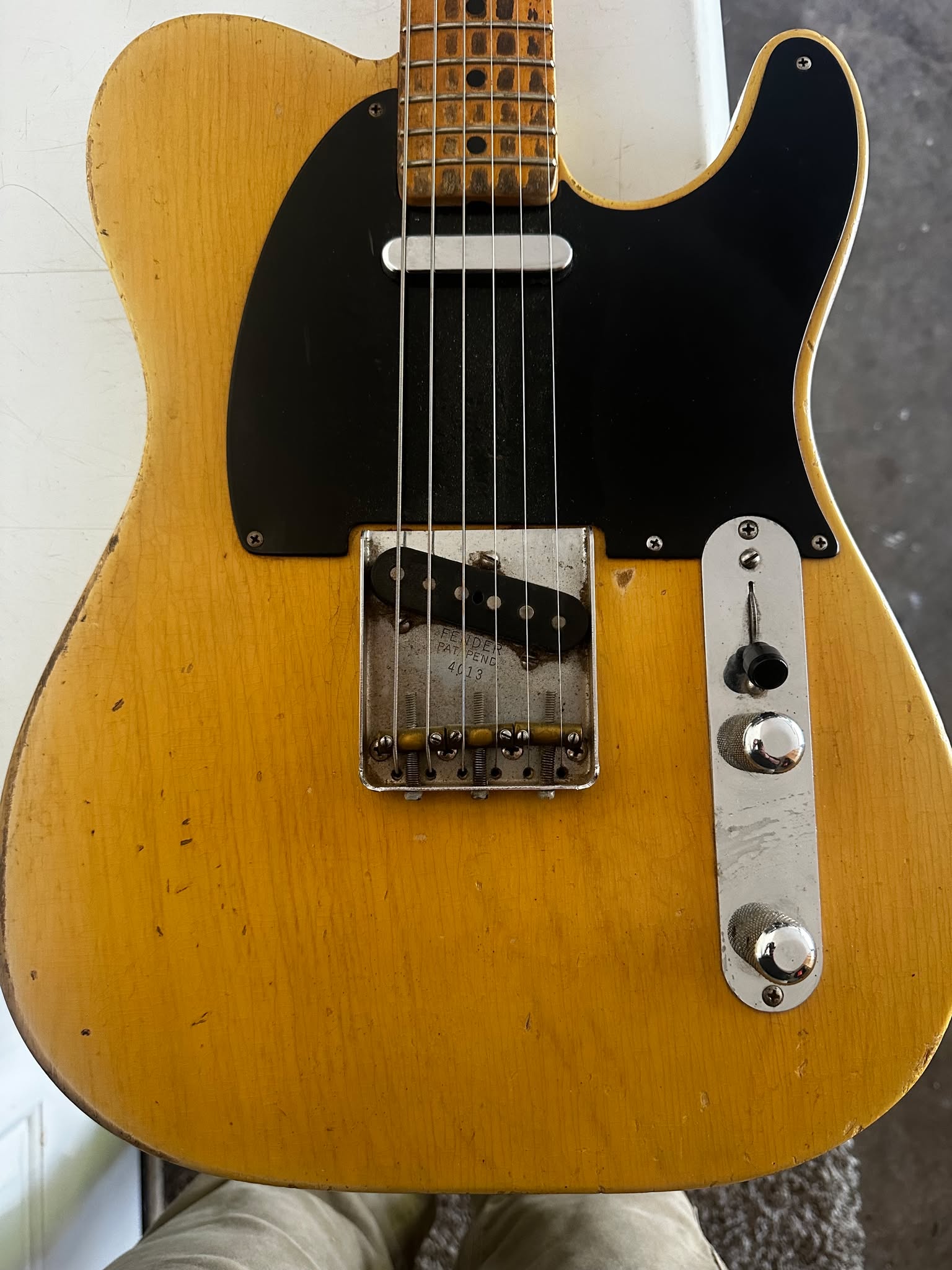
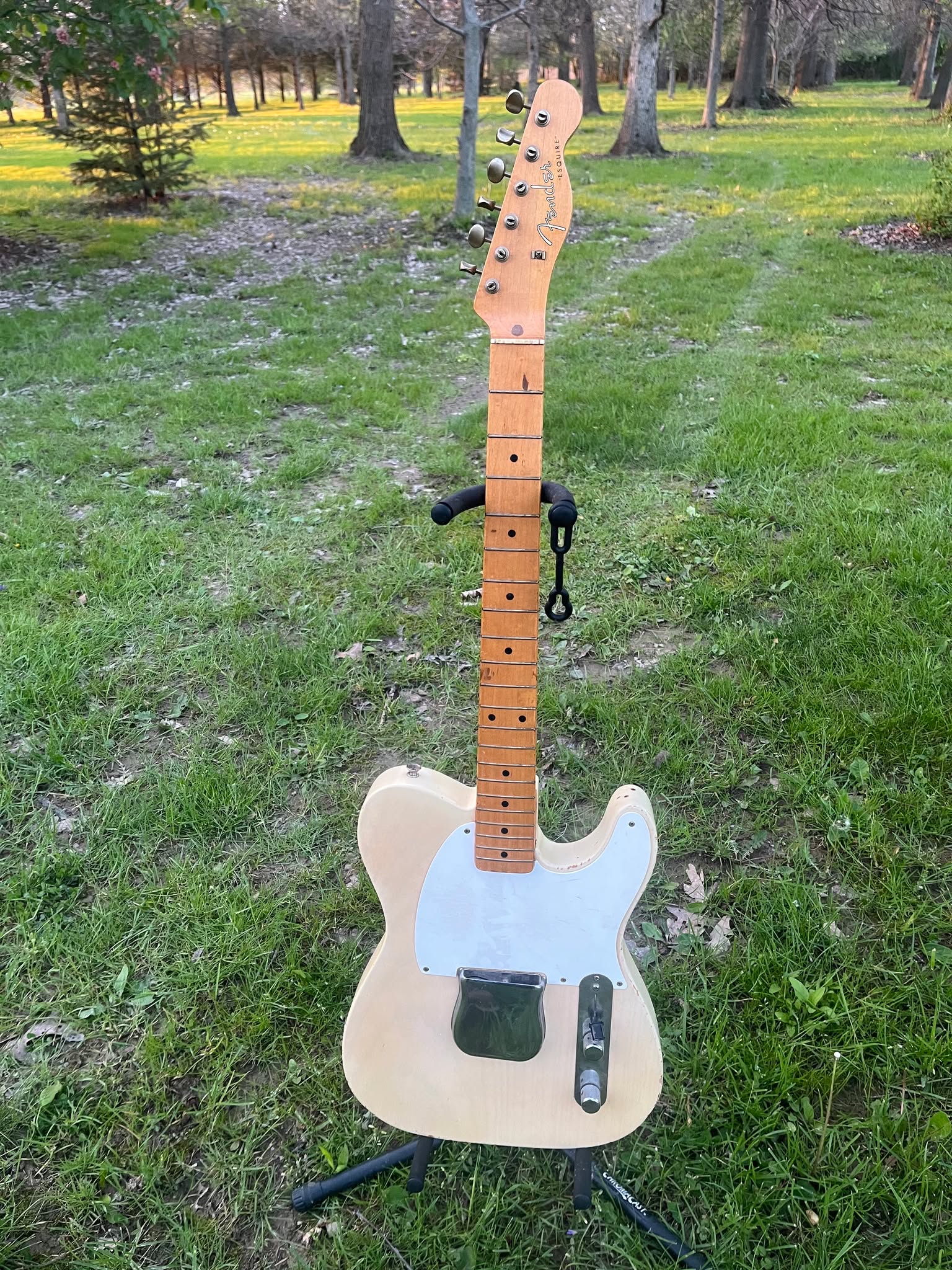
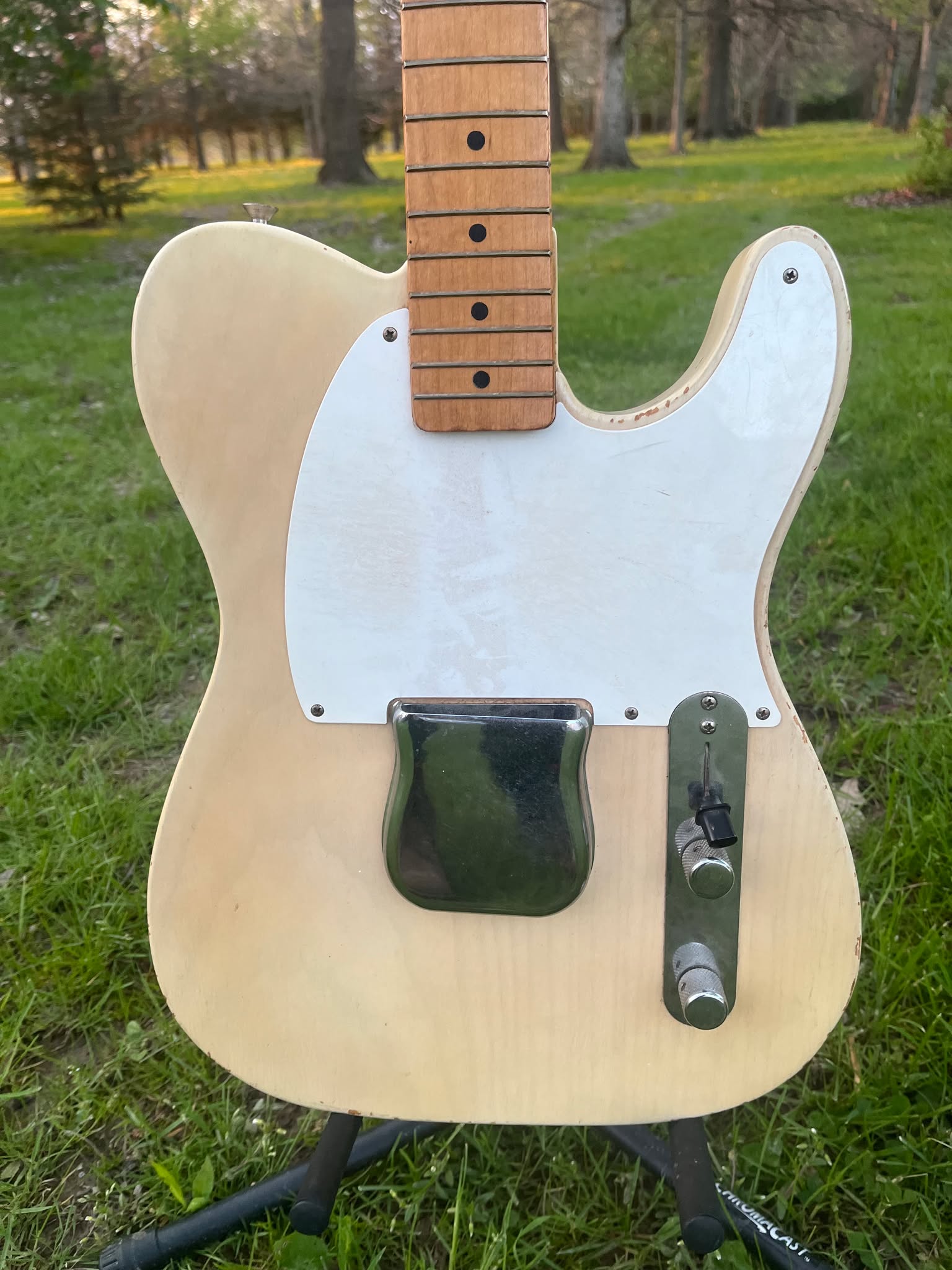
The 1952 Fender Telecaster was the blueprint for the electric guitar, a first-generation blackguard that defined the solidbody. Edgewater Guitars buys vintage Fender Telecasters nationwide with free expert appraisals and same-day cash offers. Call or text (440) 219-3607.
What Makes a 1952 Telecaster Historically Significant?
The 1952 Fender Telecaster represents the first full production year of the world’s first commercially successful solid-body electric guitar under its permanent name. After transitioning from “Broadcaster” (1950) to “Nocaster” (1951), the Telecaster name was established in early 1951, making 1952 the first complete calendar year of Telecaster production, a pivotal moment in guitar manufacturing history.
Quick Identification: A genuine 1952 Telecaster features a serial number between approximately 1500-5000 (stamped on bridge plate), black fiber or Bakelite pickguard, butterscotch blonde ash body, brass bridge saddles, maple neck with black dot position markers, and slot-head screws securing the bridge pickup.
The 1952 Esquire, the Telecaster’s single-pickup sibling, shares identical construction with the bridge pickup only, making it equally significant for collectors seeking early Fender solid-body guitars.
Historical Context: 1952 and the Dawn of the Modern Electric Guitar
Leo Fender’s Revolutionary Design Becomes Established
By 1952, Leo Fender’s radical solid-body design had survived its uncertain debut and proven itself in the marketplace. The controversy over the “Broadcaster” name (disputed by Gretsch over their Broadkaster drums) was resolved, and the Telecaster name, suggested by Fender sales chief Don Randall, was firmly established.
What Made 1952 Special:
First full year under the permanent “Telecaster” name
Refinement of manufacturing processes after two years of production
Establishment of features that would define the model for decades
Growing acceptance by professional musicians
Competition from Gibson still years away (Les Paul launched in 1952 but took time to gain traction)
The Esquire’s Role in Early Solid-Body History
The 1952 Fender Esquire represents an important parallel model in early solid-body guitar development. Introduced before the Broadcaster, the Esquire featured a single bridge pickup and unique switching that proved popular with players seeking simplicity and a distinctive tone.
Esquire Significance:
Technically preceded the two-pickup Telecaster in development
Lower price point made solid-body guitars more accessible
Unique tone that some players preferred over the Telecaster
Same construction quality and materials as Telecaster
Shared serial number sequence with Telecasters
Both models were built on the same production line with identical construction methods, making them equally important to understanding early Fender history.
Comprehensive Identification Guide
Serial Number Verification
1952 Telecaster Serial Number Range:
Approximately 1500 through 5000
Stamped on steel bridge plate
3 or 4 digits typical for 1952
Numbers not strictly sequential (some overlap with late 1951/early 1953)
Serial Number Location: The serial number is stamped into the steel bridge plate on the bass side, between the bridge pickup and the saddles. On some examples, it may be partially obscured by the pickup or difficult to read due to 70+ years of oxidation.
Important Authentication Note: Early Fender serial numbers are notoriously unreliable for precise dating due to:
Parts were not serialized before assembly
Bridge plates were sometimes stamped in batches
Numbers overlapped between years
Some instruments left factory without serial numbers
Always cross-reference serial numbers with other dating methods including body dates, neck dates, and component specifications.
Body Dating Marks
Body Date Location: Most 1952 Telecasters have pencil-written dates inside the body cavity, visible when pickups are removed or when examining through the pickup routes.
Date Format:
Month-day-year (e.g., “3-15-52” for March 15, 1952)
Sometimes abbreviated (e.g., “3-52”)
Handwritten in pencil or grease pencil
Often includes worker initials
May be faint or partially illegible
Neck Date Stamps: 1952 necks typically feature a date stamp on the butt end (visible when neck is removed):
Month and year format
Stamped into wood
“TG” stamp indicates Tadeo Gomez (early Fender employee)
Some necks have no date stamp
Component Authentication
Potentiometer Codes: 1952 Telecasters used potentiometers that can be dated by their manufacturer codes:
Code Format: XXX-YY-ZZ
XXX = Manufacturer code (304 = Stackpole was most common in 1952)
YY = Year (52 or late 51)
ZZ = Week of manufacture
Example: “304-5240” indicates Stackpole manufacture in the 40th week of 1952.
Important Notes:
Pots were often dated months before guitar assembly
A guitar with 1951-dated pots could still be a 1952 instrument
Original pots frequently replaced; period-correct replacements acceptable if disclosed
Physical Specifications: 1952 Telecaster
Specification | 1952 Detail |
|---|---|
Body Wood | Ash (single piece or two-piece book-matched) |
Body Finish | Butterscotch blonde (translucent nitrocellulose) |
Neck Wood | One-piece maple with walnut skunk stripe |
Fingerboard | Maple (integral, not separate board) |
Position Markers | Black dot inlays |
Frets | Small wire, approximately .078” wide |
Nut Width | 1-5/8 inches |
Scale Length | 25.5 inches |
Pickguard | Black fiber (early) or black Bakelite (later) |
Pickguard Screws | 5 screws (configuration varied) |
Bridge Pickup | Single-coil with flat-head slot screws |
Neck Pickup | Single-coil with chrome cover |
Bridge | 3-brass saddle design with steel plate |
Tuners | Kluson Deluxe with “Kluson Deluxe” stamp |
String Tree | Round metal guide (single) |
Control Layout | 3-way switch, master volume, master tone |
Output Jack | Side-mounted cup jack |
Weight | Typically 7-8.5 lbs (ash varies significantly) |
1952 Esquire Specifications
The 1952 Esquire shared nearly identical construction with these key differences:
Feature | Esquire Difference |
|---|---|
Pickups | Bridge pickup only (no neck pickup) |
Switching | 3-position switch with unique wiring |
Pickup Route | Often routed for two pickups anyway |
Tone Control | Special capacitor switching on early examples |
Pickguard | Single pickup cutout |
Esquire Switch Positions (1952 standard wiring):
Position 1: Full bass response with preset tone capacitor
Position 2: Standard lead tone (bypasses tone control)
Position 3: Full treble with tone control engaged
This unique switching gave the single-pickup Esquire remarkable tonal versatility.
Distinguishing 1952 from Adjacent Years
1951 “Nocaster” vs. 1952 Telecaster:
Nocaster: No model name on headstock (clipped decal)
1952: “Telecaster” decal present
Nocaster: Serial numbers 1000-1500 range
1952: Serial numbers 1500-5000 range
Overlap exists in transition period
1952 vs. 1953 Telecaster:
1952: Black pickguard universal
1953: Transition to white pickguard begins (black still common)
1952: Butterscotch blonde standard
1953: Some custom colors begin appearing
1952: Brass saddles standard
1953: Steel saddles begin replacing brass
Finish Authentication
Butterscotch Blonde Characteristics:
The 1952 Telecaster’s iconic butterscotch blonde finish has specific characteristics that help authenticate originality:
Original Finish Features:
Translucent nitrocellulose lacquer tinted yellow/amber
Applied over bare ash (no sealer or primer)
Wood grain clearly visible through finish
Typically 3-5 coats of finish
Natural aging to darker amber/orange tones
UV exposure causes uneven darkening
Checking (fine cracks) develops with age
Ash Wood Grain Pattern:
Wide, open grain structure visible
Book-matched two-piece bodies common
Single-piece bodies exist but less common
Grain orientation typically horizontal
Body weight varies dramatically (ash has wide density range)
Aging Patterns:
Original finishes darken significantly with UV exposure
Uniform darkening suggests less original finish
Wear patterns show lighter bare wood underneath
Forearm wear area reveals original light color
Buckle rash on back is typical
Refinish Red Flags:
Incorrect primer or sealer under finish
Wrong shade of blonde (too light or too dark)
Overspray in cavities or on hardware
Modern polyurethane texture
Filled nail holes or route modifications
Perfectly even color (no natural aging variation)
Wood grain obscured by thick finish
Detailed Hardware Identification
Bridge Assembly
The 1952 Telecaster bridge is one of the most distinctive and historically significant guitar bridges ever designed:
Bridge Plate Specifications:
Stamped steel plate (approximately .050” thick)
Ashtray cover with “Fender Pat. Pend.” stamp
Serial number stamped into plate (bass side)
6 mounting screws through body
Pickup mounting screws through plate
Chrome or nickel plating
Saddle Design:
3 brass barrel saddles
Threaded for height adjustment
Slotted for intonation adjustment
Each saddle accommodates two strings
Brass provides warmer tone than later steel saddles
Natural aging creates green patina
String-Through Design:
Strings pass through ferrules on back of body
Steel ferrules pressed into body
Original ferrules chrome-plated
Body routed with slight angle for string break
Pickup Construction
Bridge Pickup (1952 specifications):
Flat-head slot screws securing pickup to bridge plate
Black fiber bobbin
Alnico magnets (typically Alnico III or V)
Formvar-coated wire winding
Copper-plated steel base plate
Resistance typically 5.5k-6.5k ohms
“Hot” output compared to contemporary guitars
Neck Pickup (Telecaster only):
Chrome metal cover
Mounted to pickguard via two screws
Black fiber bobbin underneath cover
Alnico magnets
Formvar wire winding
Resistance typically 6.0k-7.0k ohms
Slightly warmer tone than bridge pickup
Pickup Wire:
Cloth-covered leads from pickups
Push-back wire style (fabric pushes back to expose conductor)
Black or yellow cloth covering
Routes through body to control cavity
Tuning Machines
1952 Kluson Deluxe Tuners:
“Kluson Deluxe” stamped on housing
Single-line tuners (vertical orientation)
Nickel-plated finish
Press-fit bushings
Oval plastic buttons (cream-colored originally)
15:1 gear ratio
Split-shaft design
Authentication Points:
“Kluson Deluxe” stamp should be clear and properly spaced
Incorrect font or spacing indicates reproduction
Period-correct tuners have specific bushing dimensions
Replacement tuners common but reduce originality value
Electronics and Wiring
1952 Telecaster Wiring:
3-way switch (pickup selector)
Position 1: Neck pickup
Position 2: Both pickups (no phase issues due to wiring method)
Position 3: Bridge pickup
250k ohm volume potentiometer
250k ohm tone potentiometer (affects neck pickup primarily)
.05 mfd capacitor (later changed to .022 mfd)
Cloth-covered wiring throughout
Wiring Route:
Pickup leads route through body channels
Control cavity on bass side of body
Jack cup route on edge of body
Shielding paint in cavities (copper-colored)
1952 Esquire Wiring (Standard Configuration):
3-position switch with unique tone circuit
Position 1: Preset bass boost (capacitor to ground)
Position 2: Direct output (bypasses tone control)
Position 3: Tone control active
Single 250k volume pot
Single 250k tone pot (activated by switch position)
Special capacitor values for position 1
Tonal Characteristics
The 1952 Telecaster Sound
The 1952 Telecaster established the tonal blueprint that defines “Telecaster tone” to this day:
Bridge Pickup Character:
Bright, cutting treble response
Pronounced high-end “snap” and “twang”
Excellent note definition and clarity
Minimal sustain compared to later humbucking designs
Aggressive attack that cuts through band mix
Slightly nasal midrange character
Limited bass response
Neck Pickup Character:
Warmer, rounder tone than bridge
Enhanced bass response
Smoother treble (less aggressive than bridge)
Jazz-friendly warmth with clarity
Still retains Telecaster brightness
Less output than bridge pickup typically
Middle Position Tone:
Hollow, slightly scooped sound
Increased output from both pickups together
Not perfectly balanced (bridge usually dominates)
Unique tonal color useful for rhythm work
Not as commonly used as individual pickup positions
Why 1952 Telecasters Sound Unique:
Brass saddles contribute to warmer tone than later steel versions
Ash body provides bright resonance with defined note separation
One-piece maple neck enhances brightness and attack
Simple wiring preserves pickup character without tone loss
Formvar wire and Alnico magnets create specific harmonic content
Thin nitrocellulose finish allows maximum wood resonance
The 1952 Esquire Sound
The single-pickup Esquire produces a distinctive tonal palette:
Core Tone Characteristics:
Bridge pickup provides all the classic Telecaster bite
Position 1 bass boost creates surprisingly warm rhythm tones
Position 2 delivers maximum clarity and brightness
Position 3 allows traditional tone control shaping
Overall character more focused than two-pickup Telecaster
Simplified signal path may enhance clarity
Musical Applications Then and Now:
Country music (original target market)
Early rock and roll
Rhythm and blues
Modern indie and alternative rock
Rockabilly revival
Any style benefiting from clarity and attack
Common Issues and Modifications
Typical Condition Concerns
Neck Issues:
Twisted or warped necks (one-piece maple sensitive to humidity)
Fret wear significant after 70+ years
Truss rod may be seized or ineffective
Nut wear or replacement common
Finish wear on back of neck (expected player wear)
Headstock cracks or repairs (relatively rare on Telecasters)
Body Condition:
Buckle rash on back (cosmetic, expected)
Forearm wear through finish (shows original color)
Finish checking and crazing (normal aging)
Edge dings and chips (70+ years of use)
Route modifications for humbuckers or additional controls
Stripped screw holes
Hardware Problems:
Bridge saddles often replaced (brass saddles wear over time)
Tuners frequently upgraded or replaced
Pickguard shrinkage, warping, or cracking (Bakelite degrades)
Control knobs replaced (originals are barrel-style)
Output jack cup damage or replacement
Screws replaced with incorrect types
Modifications That Affect Collectibility
Major Value-Reducing Modifications:
Refinishing: Most significant loss of value (40-70% reduction)
Neck Replacement: Changes fundamental instrument character
Route Modifications: Irreversible damage for humbucker installation
Headstock Repair: Structural concern even when well-executed
Bridge Replacement: Losing original bridge/plate significantly impacts value
Common Period-Appropriate Modifications:
Refret: Necessary maintenance, acceptable if done properly
Nut Replacement: Normal wear item, period-correct material acceptable
Tuner Upgrade: Common in playing instruments, reversible
Potentiometer Replacement: Expected after decades, period-correct values important
Saddle Replacement: Wear item, brass replacements acceptable
Modifications to Esquires:
Neck pickup addition (common period modification)
Control plate changes for two-pickup wiring
Pickguard replacement for dual-pickup configuration
These modifications create “Telecasterized” Esquires (documented phenomenon)
Authentication Challenges
Common Fake or Misrepresented Features:
Refinished Instruments:
“Butterscotch blonde” refinishes extremely common
Difficult to detect professional refinishes without removing hardware
Check for overspray, wrong undercoat, modern paint chemistry
UV light examination reveals some refinishes
Professional appraisal recommended for high-stakes purchases
Parts Guitars:
“Correct period parts” doesn’t equal original configuration
Verify body date matches neck date within reasonable range
Check that all components show consistent aging
Look for mismatched wear patterns
Serial Number Issues:
Numbers can be re-stamped or faked
Verify font, depth, and placement
Compare to documented examples
Serial alone should never be sole authentication method
Esquire-to-Telecaster Conversions:
Check for filled neck pickup route
Examine pickguard screw holes for multiple patterns
Look for wiring changes in control cavity
Control plate modifications for two-pickup wiring
Why Collectors Value 1952 Telecasters and Esquires
Historical Significance
Pioneering Design: The 1952 Telecaster represents the first commercially successful solid-body electric guitar in its permanent form. Every solid-body guitar that followed, from Gibson Les Pauls to modern superstrats, traces its lineage to Leo Fender’s revolutionary 1950-1952 design work.
Manufacturing Innovation: Leo Fender approached guitar building like an engineer rather than a traditional luthier:
Bolt-on neck (revolutionary for serviceability)
Flat body surfaces (efficient production)
Standard components (interchangeable parts)
Simple construction (maintainable by working musicians)
Mass production compatible (democratizing electric guitars)
Cultural Impact: 1952 Telecasters were present at the birth of rock and roll:
Early rock and roll recording sessions
Country music’s electric evolution
Rhythm and blues development
Foundation of modern popular music
Playing Characteristics
Playability Features:
Comfortable C-shape neck profile
Lightweight compared to many later guitars
Excellent upper fret access (early design consideration)
Simple, intuitive controls
Reliable hardware and construction
Comfortable body contours (though minimal by modern standards)
Professional Appeal:
Recording studio clarity and definition
Live performance projection and presence
Versatility across musical styles
Roadworthy construction
Easy maintenance and repair
Timeless aesthetic appeal
Investment and Collectibility
Rarity Factors:
Relatively limited 1952 production compared to later years
Survival rate reduced by modifications and player wear
All-original examples increasingly scarce
Both Telecasters and Esquires highly sought
Specific features (brass saddles, black pickguard) desirable
Market Position: 1952 Telecasters occupy a significant position in the vintage guitar market as first-year production instruments with the permanent model name. Esquires from the same year represent equally important pieces of electric guitar history.
Condition Impact:
All-original instruments command significant premiums
Player-grade examples remain accessible to working musicians
Professional restorations can enhance playing while preserving history
Documentation and provenance add value
Selling Your 1952 Telecaster or Esquire
Why Choose Edgewater Guitars
At Edgewater Guitars, we specialize in evaluating and purchasing significant vintage Fender instruments, including early Telecasters and Esquires from the formative 1950-1955 period:
Our Expertise with Early Fender Instruments:
Deep knowledge of 1952 Telecaster and Esquire specifications
Understanding of acceptable period modifications vs. value-reducing changes
Experience with finish authentication and originality verification
Familiarity with serial number systems and dating methods
Network of experts for second opinions on exceptional instruments
Our Value Proposition:
Premium Purchase Offers: Consistently 30-40% higher than typical guitar shops
Expert Authentication Services: Free evaluation of originality and period correctness
Immediate Payment: Cash offers without consignment delays
White-Glove Service: In-person evaluation for significant instruments
Discretion and Security: Private transactions for valuable guitars
Edgewater vs. Alternative Selling Methods
Compared to Local Guitar Shops:
Most shops lack expertise in early 1950s Fender instruments
Retail margins require low wholesale offers
Consignment ties up your instrument for months
We travel to you for valuable instruments
Immediate cash vs. uncertain timeline
Compared to Online Auction Sites:
No listing fees, shipping risks, or buyer disputes
Professional evaluation prevents undervaluation
No public exposure if privacy is important
Secure transaction without internet fraud risk
Expert buyers understand significance and rarity
Compared to Major Auction Houses:
No 15-25% seller’s commission
Payment within days, not 60-90 days post-auction
Personal service throughout process
No reserve price uncertainties
Direct negotiation vs. auction outcomes
Contact Information:
Phone: (440) 219-3607
Request a free evaluation: request a free estimate
Email: edgewatergearvault@gmail.com
Service Area:
Ohio
Michigan
Pennsylvania
Indiana
West Virginia
For exceptional instruments like 1952 Telecasters and Esquires, we provide in-person evaluation at your location, complete documentation, and immediate transaction capability.
Authentication Resources for 1952 Fender Instruments
Free Identification Tools
Edgewater’s Dating Resources:
Butterscotch Blonde Finish Authentication Guide
Related Historical Guides:
Physical Verification Checklist
When authenticating a 1952 Telecaster or Esquire:
Visual Inspection:
[ ] Serial number 1500-5000 range on bridge plate
[ ] Black pickguard (fiber or Bakelite)
[ ] Butterscotch blonde ash body
[ ] One-piece maple neck with black dots
[ ] Brass bridge saddles
[ ] Slot-head screws on bridge pickup
[ ] “Telecaster” or “Esquire” decal on headstock
Date Verification:
[ ] Body date penciled inside (when visible)
[ ] Neck date stamp on butt end
[ ] Potentiometer codes show 1951-1952 dates
[ ] All dates within reasonable range of each other
Hardware Authentication:
[ ] Kluson Deluxe tuners with proper stampings
[ ] Original bridge plate with serial number
[ ] Period-correct control knobs (barrel style)
[ ] Correct pickguard screw pattern
[ ] Chrome or nickel plating showing age-appropriate wear
Finish and Construction:
[ ] Translucent butterscotch showing ash grain
[ ] Natural aging and darkening patterns
[ ] Nitrocellulose checking (fine cracks)
[ ] No evidence of refinishing
[ ] Original routing patterns correct for year
Electronics Verification:
[ ] Cloth-covered wiring throughout
[ ] Period-correct potentiometer values (250k)
[ ] Original switching configuration
[ ] No modern components or modifications
[ ] Shielding paint in control cavity
Frequently Asked Questions
Q: How can I tell if my 1952 Telecaster is original or refinished?
A: Examine the finish closely for signs of refinishing. Original butterscotch blonde is translucent, showing ash grain clearly, with natural darkening from UV exposure creating uneven coloring (lighter under pickguard, darker on top). Check body cavities and under hardware for overspray. Remove the neck to examine the neck pocket: original finish shows natural wear and no overspray. Modern finishes often appear too perfect or use wrong primer. Professional appraisal is recommended for valuable instruments.
Q: What’s the difference between a 1951 Nocaster and a 1952 Telecaster?
A: The primary difference is the headstock decal. Nocasters (produced in 1951) have no model name on the headstock due to the naming dispute with Gretsch. Early 1952 Telecasters have the “Telecaster” decal. Mechanically, they’re nearly identical, with serial numbers overlapping in the 1500-2000 range. Some late Nocasters and early Telecasters are indistinguishable except for the decal presence.
Q: Should my 1952 Telecaster have brass or steel saddles?
A: Original 1952 Telecasters came with brass barrel saddles. Steel saddles were introduced later (beginning around 1953-1954). If your guitar has brass saddles with appropriate wear and patina, they’re likely original. However, brass saddles wear faster than steel, so period-correct replacements are common and acceptable. Green patina on brass indicates age and is considered desirable.
Q: How do I verify the serial number on my Telecaster?
A: The serial number should be stamped into the steel bridge plate on the bass side. Early numbers (1952) are typically 3-4 digits in the 1500-5000 range. However, serial numbers alone are unreliable for precise dating. Always verify with body dates (penciled inside), neck dates (stamped on butt end), and potentiometer codes. Numbers were not always sequential, and plates could be stamped in batches.
Q: What makes an Esquire different from a Telecaster?
A: The Esquire has only a bridge pickup (no neck pickup), though the body is often routed for two pickups anyway. The 3-position switch has unique wiring: Position 1 provides bass boost with a preset tone capacitor, Position 2 gives direct output bypassing tone control, and Position 3 activates the tone control. This gives the single-pickup Esquire surprising tonal versatility. Construction quality and materials are identical to Telecasters.
Q: Can I have my 1952 Telecaster refretted without hurting its value?
A: Professional refret work using period-appropriate wire and techniques is generally acceptable, as frets are considered wear items after 70+ years. However, document the work thoroughly, keep original frets if possible, and ensure the refret is performed by someone experienced with vintage instruments. Improper refret work (wrong wire size, damaged fingerboard, filled slots) can reduce value significantly.
Q: How do I know if my black pickguard is original?
A: Original 1952 pickguards are black fiber (early) or black Bakelite (later in the year). They should show age-appropriate shrinkage, potential cracking, and wear patterns. The screw hole pattern should match period specifications (typically 5 screws, though patterns varied). Reproductions often use modern materials that don’t age the same way. Under magnification, original materials show distinct characteristics in composition and surface texture.
Q: What should I look for in the control cavity?
A: Original 1952 Telecasters should have copper-colored shielding paint in the control cavity, cloth-covered wiring, potentiometers with 1951-1952 date codes (304-51XX or 304-52XX format), and a .05 mfd capacitor (later changed to .022 mfd). Look for penciled body dates, worker marks, or routing codes. Modern wire, plastic-jacketed cables, or electronic components with date codes outside the correct range indicate modifications.
Comparing Early Telecasters: 1950-1954
Model Evolution Overview
Year | Name | Key Features | Serial Range |
|---|---|---|---|
1950 | Broadcaster | First production year, “Broadcaster” decal | 0001-1000 |
1951 | Nocaster | No model name (transition period) | 1000-1500 |
1951-52 | Telecaster | “Telecaster” name established | 1500-5000 |
1953 | Telecaster | White pickguard transition begins | 5000-10000 |
1954 | Telecaster | White pickguard standard, some steel saddles | 10000-15000 |
1952’s Position in Evolution: The 1952 Telecaster represents the establishment of the permanent model identity after the Broadcaster/Nocaster transitions. Features remained consistent with late 1951 production, making this a stable period in the model’s evolution before the pickguard color change in 1953.
Production Details and Rarity
Estimated Production Numbers: While exact 1952 production figures are not publicly documented, serial number progression suggests approximately 3,500 instruments (Telecasters and Esquires combined) in calendar year 1952. This represents modest production compared to later years when Fender expanded significantly.
Survival Rate Considerations:
Working instruments subjected to 70+ years of use and modification
Refinishing extremely common (butterscotch often changed to sunburst or custom colors)
Hardware upgrades and replacements standard
Route modifications for humbuckers in later decades
Natural attrition from damage, neglect, or parts harvesting
Current Rarity: All-original 1952 Telecasters and Esquires are increasingly rare, with most surviving instruments showing some period modifications or part replacements. Completely unmolested examples represent a small percentage of original production.
The 1952 Esquire: Detailed Examination
Why the Esquire Deserves Special Attention
The 1952 Esquire, while sharing construction with the Telecaster, represents an important variant with its own collectible appeal and tonal character.
Historical Significance:
Predated the two-pickup design in development
Represented entry-level solid-body option
Lower original price made electric guitars more accessible
Some players specifically preferred single-pickup simplicity
Unique switching system created distinct voice
Construction Similarities to Telecaster:
Identical body construction and finish
Same neck specifications and profile
Same bridge design and hardware
Same quality standards and materials
Shared serial number sequence
Esquire-Specific Features:
Single bridge pickup only
Unique 3-position switch wiring
Often routed for neck pickup (production efficiency)
Special tone capacitor values for bass boost function
Different pickguard design (single pickup cutout)
Esquire Switching Explained
The 1952 Esquire’s switching system provided surprising versatility from a single pickup:
Position 1 (Bass/Rhythm):
Preset bass boost circuit
.05 mfd capacitor to ground
Rolls off treble for warm rhythm tones
Bypasses tone control
Creates jazz-like warmth
Position 2 (Lead):
Direct output from pickup
Bypasses all tone circuitry
Maximum brightness and output
Pure pickup tone
Preferred by many lead players
Position 3 (Tone Control Active):
Standard tone control function
Allows variable tone shaping
250k tone potentiometer
Most versatile position
Standard Telecaster-like operation
This switching system made the single-pickup Esquire remarkably flexible, suitable for rhythm and lead work across multiple styles.
Esquire Modifications and “Telecasterization”
Common Period Modifications: Many Esquire owners added neck pickups, creating what collectors call “Telecasterized” Esquires. These modifications are well-documented and period-appropriate:
Identifying Telecasterized Esquires:
Body often pre-routed for neck pickup from factory
Control cavity may show modification for added wiring
Pickguard replaced with Telecaster version
Switching converted to standard 3-way Telecaster wiring
Original Esquire parts sometimes included with guitar
Collectibility of Modified Esquires:
Period modifications documented and accepted
Original Esquire configuration more valuable than converted versions
Reversible modifications better than permanent alterations
Documentation of original configuration important
Original Esquire pickguard and wiring (if retained) add significant value
Recent Purchase Example: 1952 Esquire
We recently acquired an all-original 1952 Fender Esquire in exceptional butterscotch blonde finish from an estate in Akron, Ohio. The instrument had belonged to a local musician who purchased it new in 1952 and used it for country music performances throughout the 1950s and early 1960s.
Instrument Details:
Serial number 3,247 (stamped on bridge plate)
Body date: “5-52” (May 1952)
Neck date: “6-52” (June 1952)
All-original black Bakelite pickguard
Original brass saddles with natural patina
Period-correct wiring and electronics
Original hardshell case with pink lining
Light player wear throughout
Finish checking and natural darkening
No structural issues or repairs
Authentication Process: Our evaluation verified originality through multiple indicators: consistent dating across components, period-correct pot codes (304-5218), correct routing patterns, original finish with appropriate aging, and all hardware matching 1952 specifications. The instrument retained the original Esquire switching configuration, making it particularly desirable to collectors.
Transaction: After providing comprehensive documentation and discussing the instrument’s historical significance with the family, we made an immediate cash offer significantly exceeding the valuations from local guitar shops they had consulted. The family appreciated our knowledge, respect for the instrument’s history, and straightforward process.
This transaction exemplifies our approach: recognizing the historical and musical value of significant instruments, providing expert authentication, and offering compensation that reflects true market conditions rather than wholesale pricing.
Own a 1952 Telecaster or Esquire? Contact us for expert evaluation: (440) 219-3607
Preservation and Care Guidelines
Proper Storage for Vintage Telecasters
Environmental Control:
Temperature: 65-75°F stable range
Humidity: 45-55% relative (critical for one-piece maple necks)
Avoid dramatic fluctuations
Use room humidifiers/dehumidifiers as needed
Monitor with quality hygrometer
Case Storage:
Original 1952 cases add historical value (keep even if damaged)
Modern hardshell cases provide better protection
Loosen strings slightly for long-term storage
Include humidity control packets
Store in climate-controlled environment
Maintenance Best Practices
Cleaning:
Use only vintage-safe products (no modern polishes with silicone)
Microfiber cloths for dusting
Preserve original patina and wear
Clean hardware with appropriate metal cleaners
Avoid aggressive cleaning of original finishes
String Changes:
Use appropriate gauge for neck relief
Change strings regularly to prevent corrosion damage
Clean fingerboard during string changes (carefully)
Check tuner function and lubrication
Inspect bridge saddles for wear
Setup and Adjustment:
Have vintage-specialist technician perform setup
Preserve original frets when possible
Document all work performed
Keep replaced parts with instrument
Avoid irreversible modifications
When to Seek Professional Help
Requires Expert Attention:
Neck twist or excessive bow
Fret leveling or replacement
Finish touch-up or conservation
Electronics troubleshooting
Structural repairs
Value appraisal
Finding Qualified Technicians:
Seek vintage guitar specialists
Verify experience with early Fender instruments
Request references from collectors
Avoid general guitar shops for valuable instruments
Document all work with photos
Understanding Market Dynamics
What Drives 1952 Telecaster Values
Originality Premium: All-original instruments command significant premiums over modified examples. Each non-original component reduces value incrementally:
Original finish most important
Original hardware and electronics
Original case and documentation
No structural repairs
Period-correct parts (if replaced)
Condition Factors:
Excellent condition with light wear most desirable
Player wear acceptable and expected
Structural integrity critical
Fret life affects playability premium
Finish condition significantly impacts value
Provenance Impact:
Original purchase documentation
Celebrity ownership or recording history
Magazine features or photographic documentation
Chain of ownership records
Historical significance
Finish and Color: While butterscotch blonde is standard for 1952, custom color examples (extremely rare from 1952) command enormous premiums. Black instruments from 1952 are essentially non-existent in original finish.
Market Trends for Early Telecasters
Current Market Position: Early Telecasters (1950-1954) occupy significant positions in the vintage guitar market as the first commercially successful solid-body electric guitars. The 1952 model year represents established production with the permanent model name.
Long-Term Appreciation: Vintage Fender instruments have shown consistent appreciation over decades, with all-original examples from the early 1950s among the most sought-after vintage guitars.
Player vs. Collector Market:
Modified instruments serve player market
All-original examples appeal to collectors
Player-grade instruments remain accessible
Museum-quality pieces command premium prices
Both markets show strong demand
Taking the Next Step with Your 1952 Telecaster or Esquire
Edgewater’s Evaluation Process
Initial Contact:
Phone consultation: (440) 219-3607
Online evaluation request
Email photos: edgewatergearvault@gmail.com
No obligation to sell
Information Gathering: We’ll ask about:
Serial number and visible dates
Overall condition and originality
Known modifications or repairs
Case and documentation availability
Your location (for potential in-person evaluation)
Preliminary Assessment: Based on initial information and photos, we provide:
Authentication feedback
Originality assessment
Preliminary range discussion
Next steps recommendation
In-Person Evaluation (for significant instruments):
We travel to you
Comprehensive authentication
Detailed condition assessment
Immediate cash offer if purchase agreed
Complete transaction on-site
Our Commitment:
Professional, respectful service
Expert knowledge and authentication
Fair market valuations
Immediate payment
Complete discretion
No pressure or obligation
Why Timing Matters
Current Market Conditions: The vintage guitar market shows strong demand for early Telecasters and Esquires, with collectors actively seeking all-original examples and players pursuing period-correct instruments.
Demographic Shifts: As original owners age, significant instruments enter the market, creating opportunities for sellers to connect with serious buyers who understand historical significance.
Preservation Considerations: If you own a 1952 Telecaster or Esquire but aren’t playing it, professional sale ensures the instrument reaches someone who will appreciate and preserve it appropriately.
Contact Edgewater Guitars
Ready for Expert Evaluation?
Phone: (440) 219-3607
Email: edgewatergearvault@gmail.com
Online form: request a free estimate
Service Coverage:
Ohio
Michigan
Pennsylvania
Indiana
West Virginia
For Premium Instruments: We provide in-person evaluation at your location, complete documentation, expert authentication, and immediate transaction capability.
About the authors
Edgewater Guitars is owned by Stephen Pedone and Gavin Coe. Stephen handles appraisal and authentication and is best known for authenticating pre-CBS Fender guitars and original custom-color finishes. Gavin has bought, sold and appraised vintage guitars for 16 years and does the in-person buying across Ohio and the surrounding states. Together they have bought and appraised more than 1,250 vintage guitars since 2015. Every value question on this site routes to a free appraisal: call or text (440) 219-3607.
Sell your 1952 Fender Telecaster
Edgewater Guitars buys vintage Fender Telecasters and other vintage Fenders nationwide. We give free, honest appraisals and fair same-day cash offers, with local pickup or insured nationwide shipping. Call or text (440) 219-3607 or request a free estimate.
How much is a 1952 Fender Telecaster worth?
Value depends on originality, condition, finish, and whether the pickups and hardware are original. The most accurate way to find out is a free appraisal. Send a few photos and the serial number and we will give you an honest market assessment.
Where can I sell a 1952 Fender Telecaster?
Edgewater Guitars buys them directly, nationwide, with same-day cash offers and no obligation. You can also date yours with our Fender serial number lookup.
Article