• SELLING YOUR GUITAR? We pay top dollar for vintage Fender, Gibson, and Martin instruments.

  • FREE APPRAISALS: Discover what your vintage guitar is really worth with our complimentary valuation service.

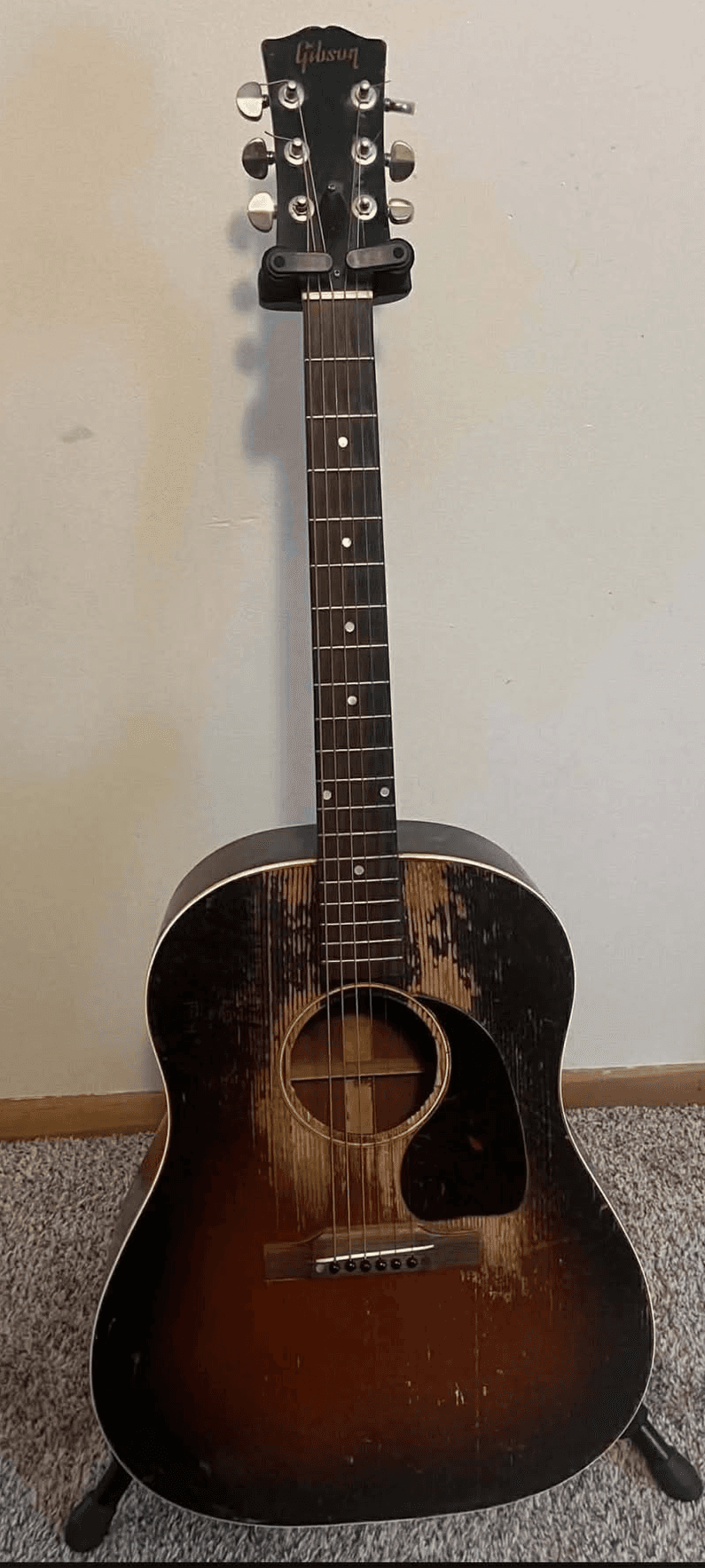
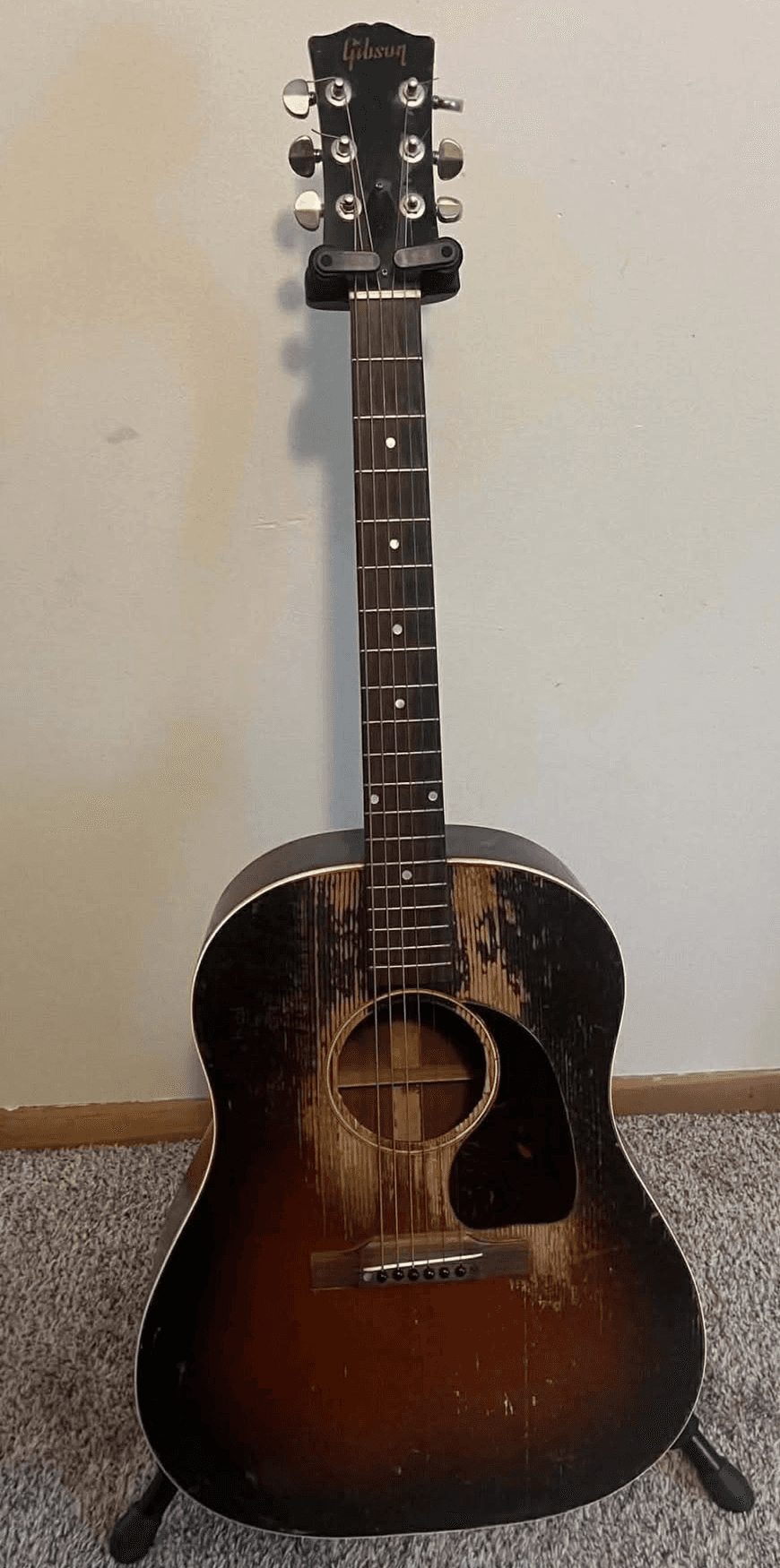
1951 Gibson J-45: The Voice of Post-War American Folk Music

1951 Gibson J-45: The Voice of Post-War American Folk Music

1951 Gibson J-45: The Voice of Post-War American Folk Music

1951 Gibson J-45: The Voice of Post-War American Folk Music

1951 Gibson J-45: The Voice of Post-War American Folk Music

1951 Gibson J-45: The Voice of Post-War American Folk Music

DATE :

Sunday, December 14, 2025

1951 Gibson J-45: The Voice of Post-War American Folk Music

1951 Gibson J-45: The Voice of Post-War American Folk Music

Why the 1951 J-45 Matters

The 1951 Gibson J-45 represents a pivotal moment in acoustic guitar history—the first full year of production following Gibson's transition back to civilian manufacturing after World War II. These instruments bridge the gap between the legendary pre-war era and the modern acoustic guitar, capturing the best of both worlds with wartime-refined manufacturing techniques applied to traditional craftsmanship.

What makes 1951 special:

  • First full peacetime production year after materials restrictions were lifted

  • Adirondack (Red) spruce tops with exceptional resonance and aging characteristics

  • Mahogany back and sides from premium old-growth timber stocks

  • Banner headstock featuring "Only a Gibson Is Good Enough" slogan (discontinued in 1945 but transitional period extended into early 1950s for some models)

  • Sunburst finish that has aged beautifully over seven decades

  • Hand-voiced bracing that allowed individual tonal characteristics

  • Pre-adjustable truss rod construction (most 1951 models)

The J-45 was Gibson's workhorse acoustic, designed as an affordable alternative to the fancier Southern Jumbo, yet it became the sound of American roots music. By 1951, the model had established itself as the guitar of choice for folk, country, and blues musicians who needed projection, warmth, and reliability.

Historical Context: Gibson's Post-War Renaissance

In 1951, Gibson was operating at full capacity for the first time since Pearl Harbor. The Kalamazoo, Michigan factory had spent the war years producing military equipment, and when guitar production resumed in 1945, material shortages and rationing limited what could be built. By 1951, those restrictions had lifted, and Gibson's craftsmen returned to building instruments with premium materials.

Key developments in 1951:

  • Factory expansion allowed increased production without sacrificing hand craftsmanship

  • Access to premium Adirondack spruce stocks from the Northeast

  • Refined hot hide glue application techniques perfected during wartime manufacturing

  • Improved consistency in neck profiles and bracing patterns

  • Better access to Brazilian rosewood for fingerboards

  • Stable workforce of experienced luthiers who had honed their skills since the 1930s

The J-45 occupied a special place in Gibson's 1951 catalog. Positioned below the fancy J-200 and the rosewood J-50, it was marketed to working musicians who needed professional sound quality at an accessible price point. Original retail price in 1951 was approximately $97.50—a significant investment for the average American, but far less than Gibson's premium models.

Notable artists using J-45s in this era:

  • Woody Guthrie (though his famous "This Machine Kills Fascists" guitar was slightly earlier)

  • Early folk revival musicians discovering Gibson's mahogany dreadnoughts

  • Country and western stars who needed projection for live performance

  • Blues musicians transitioning from parlor guitars to larger bodies

Detailed Identification Guide

Serial Numbers

1951 Gibson J-45s typically have serial numbers in the A-8xxx to A-12xxx range, ink-stamped on the back of the headstock. However, Gibson's serial number system from this era can be inconsistent, so always verify with multiple identification points.

Serial Number Location:

  • Stamped in black ink on back of headstock

  • "A" prefix followed by 4-5 digits

  • Some early 1951 examples may not have the "A" prefix

  • Numbers may be faint or partially worn on heavily played examples

Factory Order Number (FON)

The most reliable dating method is the Factory Order Number stamped on the neck block (visible through the soundhole).

1951 FON Format:

  • Three or four-digit number followed by a single-digit batch number

  • Located on the neck block, visible by looking through the soundhole

  • Example: "623 4" would indicate the 623rd guitar order, batch 4

  • FON numbers for 1951 typically range from approximately 500-800

Label Information

1951 J-45s feature the standard orange Gibson label inside the soundhole on the back.

Label Details:

  • Orange rectangular label

  • "Gibson" in script lettering

  • "Kalamazoo, Michigan" location

  • May include "Guarantee" or warranty information

  • Serial number is NOT typically on the label in this era

  • Label condition affects collectibility but not identification

Wood Identification

Top Wood:

  • Adirondack (Red) spruce—identifiable by wider, more irregular grain patterns

  • Grain typically runs straight across the top

  • Often shows distinctive "bearclaw" or "hazel" figuring

  • Color ranges from cream to light amber, darkening significantly with age

  • 1951 tops often show beautiful caramelization after 70+ years

Back and Sides:

  • Solid mahogany, typically Honduran mahogany

  • Straight, even grain on back (usually two-piece book-matched)

  • Three-piece backs are less common but do appear

  • Natural mahogany color with sunburst overspray on back

Neck:

  • Mahogany neck with V-shaped profile

  • Brazilian rosewood fingerboard

  • Ebony fingerboard appears on some examples

Hardware Specifications

Tuners:

  • Kluson Deluxe strip tuners (three-on-a-plate design)

  • White plastic buttons (may have yellowed to cream)

  • Nickel-plated

  • "Kluson Deluxe" or patent numbers stamped on back plates

  • Original tuners are crucial to value

Bridge:

  • Rosewood or ebony belly bridge

  • "Mustache" shape with slight upward curve

  • Original bridges show specific wear patterns under saddle

  • Replacement bridges significantly affect value

Pickguard:

  • Tortoiseshell celluloid (actually cellulose nitrate)

  • Teardrop shape

  • Attached with hide glue (no screws)

  • Original guards often show shrinkage, curling, or cracking

  • Black pickguards appear on some examples from this transition period

Detailed Physical Specifications

Body Dimensions:

  • Lower bout width: 16"

  • Upper bout width: 11.5"

  • Waist width: 9.5"

  • Body depth: 4.75" (at tail block)

  • Round-shouldered dreadnought shape

  • Mahogany back and sides

  • Two-piece book-matched spruce top

Neck Specifications:

  • Scale length: 24.75" (Gibson standard)

  • Nut width: 1-11/16"

  • Neck profile: Full V-shape (chunky by modern standards)

  • 14 frets clear of body

  • 20 total frets (typically)

  • Fingerboard radius: Approximately 12"

  • Dot inlays at frets 3, 5, 7, 9, 12, 15, 17 (single dots)

  • Double dots at 12th fret

Bracing:

  • Scalloped X-bracing pattern

  • Hand-carved and voiced

  • Top bracing lighter than modern production

  • Back may have ladder bracing or transverse bracing

  • Tone bars positioned for optimal resonance

Weight:

  • Typical weight: 4.0-4.5 lbs

  • Lighter than modern J-45s due to thinner finish and lighter bracing

  • Specific weight varies based on wood density

Finish:

  • Sunburst top finish (cherry red fading to orange/amber at edges)

  • Natural mahogany back and sides with dark sunburst overspray

  • Nitrocellulose lacquer (thin by modern standards)

  • Minimal pore filling allows wood grain to show

  • Finish checking and amber tinting are normal aging characteristics

Tonal Characteristics

The 1951 J-45 delivers the quintessential American acoustic sound that defined folk, country, and blues music for generations.

Sound Profile:

  • Fundamental Tone: Warm, balanced, with pronounced midrange presence

  • Bass Response: Full and round without being boomy, thanks to mahogany back/sides

  • Treble Clarity: Clear and articulate but never harsh, courtesy of Adirondack spruce

  • Sustain: Excellent sustain that has improved significantly over 70+ years of play

  • Projection: Remarkable volume and projection for a non-rosewood dreadnought

  • Dynamic Range: Responds beautifully to both light fingerpicking and aggressive flatpicking

Why 1951 J-45s Sound Special:

  • Adirondack Spruce: Stiffer and lighter than modern Sitka spruce, providing faster response and greater harmonic complexity

  • Old-Growth Mahogany: Denser, more resonant than modern plantation-grown wood

  • Aged Tone Woods: Seven decades of aging has crystallized the cellular structure, improving resonance

  • Light Bracing: Hand-scalloped bracing allows the top to move more freely

  • Thin Finish: Nitrocellulose lacquer has thinned with age, allowing better vibration

  • Hide Glue: Traditional hot hide glue joints allow slight movement, contributing to tonal complexity

Recording and Performance Characteristics:

  • Cuts through a mix without competing with vocals

  • Records beautifully with simple microphone placement

  • Ideal for singer-songwriters who need balanced accompaniment

  • Adapts well to various playing styles from fingerpicking to heavy strumming

  • Sounds excellent both solo and in ensemble settings

Comparison to Other Era J-45s:

  • vs. Pre-War J-45s (1942-1945): 1951 models have similar tonal character but slightly more consistency in construction

  • vs. Late 1950s J-45s: 1951 examples often have superior Adirondack tops before Gibson transitioned to Sitka spruce

  • vs. Modern J-45s: Vintage examples have more complex overtones, faster response, and better aging potential

Common Issues & Modifications

When evaluating a 1951 J-45, watch for these typical issues and modifications that affect value and playability:

Structural Issues

Top Cracks:

  • Most common issue on vintage acoustics

  • Top cracks near the bridge from string tension are common

  • Cracks along the grain lines (typically running parallel to the centerline)

  • Professional repairs with proper cleats maintain most of value

  • Poor repairs or unrepaired cracks significantly reduce value

  • Check for cracks under the pickguard area (difficult to spot)

Bridge Issues:

  • Original belly bridges may have "bellied" (warped upward) from string tension

  • Bridge lifting or separation from top is serious and expensive to repair

  • Replacement bridges are common but reduce value by 15-25%

  • Check for excessive saddle height, indicating top bellying

  • Look for signs of previous bridge regluing

Neck Reset:

  • Most 1951 J-45s will need or have had a neck reset by now

  • The neck angle changes over time from string tension

  • Professional neck reset maintains playability and most value

  • Poorly executed resets can damage neck block and heel

  • Check neck angle by sighting down the fretboard

  • Excessive action despite low saddle indicates need for reset

Bracing Integrity:

  • Loose or separated bracing is serious but often repairable

  • Tap test the top to check for loose braces

  • X-bracing separation is most common issue

  • Bridge plate may be cracked from decades of string tension

  • Professional regluing of braces is acceptable if done properly

Finish Issues

Refinishing:

  • Complete refinishes reduce value by 40-60%

  • "Professionally restored" finishes still significantly impact value

  • Check for overspray in soundhole, on binding, or inside body

  • Wrong color sunburst pattern indicates refinish

  • UV light examination can reveal refinish work

  • Original finish checking and crazing is desirable and expected

Overspray and Touch-ups:

  • Minor touch-ups are common and minimally affect value if well-done

  • Extensive overspray on binding or pickguard area indicates refinish

  • "Sunburst enhancement" was common and reduces value

  • Check for consistent finish checking patterns across entire guitar

Hardware Modifications

Replaced Tuners:

  • Original Kluson tuners are frequently replaced with Grovers

  • Replacement tuners reduce value by 10-20%

  • Extra screw holes in headstock from improper replacement reduce value further

  • Modern tuners affect vintage authenticity

  • Original tuners should be saved even if replaced for playing

Bridge Replacement:

  • Many 1951 J-45s have replacement bridges

  • Replacement significantly reduces collector value

  • Modern replacement bridges change tone character

  • Original bridge footprint may be visible even with replacement

  • Ebony replacement bridges are more acceptable than rosewood

Pickguard Replacement:

  • Original celluloid pickguards often shrink, crack, or are replaced

  • Replacement pickguards slightly affect value if properly matched

  • Removal of pickguard and resulting ghost image reduces value

  • Screw-on pickguards (instead of glued) indicate replacement

  • Check for glue residue or discoloration from removed pickguard

Electronics Additions

Pickup Installation:

  • Soundhole pickup installations are reversible and acceptable

  • Bridge pickup installations require routing and significantly reduce value

  • Check for screw holes, routing, or wiring evidence

  • Endpin jack installations are common and minimally affect value if professionally done

Authentication Red Flags

Counterfeit Concerns:

  • 1951 J-45s are less commonly faked than Les Pauls or pre-war Martins

  • Watch for incorrect serial number formats or locations

  • Anachronistic features (adjustable truss rod, modern bracing patterns)

  • Wrong headstock shape or logo placement

  • Incorrect pickguard shape or attachment method

  • Modern wood species (Sitka spruce instead of Adirondack)

  • Finish that doesn't show proper aging characteristics

Why Players and Collectors Value 1951 J-45s

Playing Characteristics

Professional Musicians Love:

  • Balanced, versatile tone suitable for multiple genres

  • Comfortable neck profile for extended playing sessions

  • Excellent recording characteristics

  • Reliable projection for live performance

  • Responsive to various playing dynamics

  • Vintage mojo that inspires creativity

The 1951 Sweet Spot:

  • Early enough to have premium old-growth woods

  • Late enough to have refined post-war manufacturing consistency

  • Not as expensive as pre-war examples

  • Superior construction to later 1950s production increases

  • Hand-crafted character with improved quality control

Collector Appeal

Investment Factors:

  • Steady appreciation over past decades

  • More affordable entry point than pre-war Gibsons

  • Historical significance as post-war transitional model

  • Adirondack spruce tops increasingly rare and valuable

  • Old-growth mahogany no longer available

  • Limited production numbers compared to modern guitars

Historical Significance:

  • Represents Gibson's return to peacetime production

  • Bridge between pre-war and modern eras

  • Used by pioneering folk revival artists

  • Documented in American roots music history

  • Part of Gibson's "Golden Era" narrative

Practical Investment:

  • Can be played and enjoyed while appreciating

  • More stable investment than stocks or bonds for some collectors

  • Emotional and historical value beyond financial

  • Potential for significant appreciation if kept original and well-maintained

Selling Your 1951 Gibson J-45

If you own a 1951 J-45 or have inherited one, Edgewater Guitars offers a superior alternative to local guitar shops, online marketplaces, or auction houses.

Why Sell to Edgewater Guitars?

Premium Valuations:

  • We consistently pay 30-40% more than local guitar shops

  • We understand the subtle details that make 1951 J-45s valuable

  • We recognize premium Adirondack spruce tops and old-growth mahogany

  • We properly evaluate original finish versus refinished instruments

  • We appreciate structural integrity and proper professional repairs

Expert Authentication:

  • Free authentication and appraisal service

  • We verify serial numbers, FON stamps, and construction details

  • We can identify professional repairs versus poor modifications

  • We understand period-correct specifications and features

  • We have relationships with leading vintage guitar experts for consultation on exceptional instruments

Streamlined Process:

  • Immediate cash offers for qualified instruments

  • No consignment fees or waiting periods

  • No listing, photographing, or dealing with tire-kickers

  • We handle shipping and insurance for remote sellers

  • In-person evaluation available for high-value instruments throughout Ohio and surrounding states

Professional Treatment:

  • White-glove service for premium instruments

  • Secure, climate-controlled transportation

  • Discretion and confidentiality for valuable collections

  • Honest assessment even if we don't make an offer

  • We provide detailed documentation of our evaluation

What We Look For

When evaluating your 1951 J-45, we consider:

  • Originality: All-original instruments command highest prices

  • Condition: Structural integrity, finish quality, playability

  • Documentation: Original case, receipts, provenance, photographs

  • Repairs: Professional vs. amateur work, reversibility

  • Tone: We actually play the instruments and evaluate sound quality

  • Market Demand: Current collector interest and comparable sales

Our Service Area

Edgewater Guitars serves guitar sellers throughout:

  • Ohio (Cleveland, Columbus, Cincinnati, Toledo, Akron)

  • Michigan (Detroit, Grand Rapids, Ann Arbor)

  • Pennsylvania (Pittsburgh, Erie)

  • Indiana (Fort Wayne, South Bend)

  • West Virginia (Wheeling, Morgantown)

For exceptional instruments like 1951 J-45s, we travel beyond our standard service area.

Get Your Free Valuation

Ready to sell your 1951 Gibson J-45? Contact Edgewater Guitars today:

Call: (440) 219-3607
Email: info@edgewaterguitars.com
Online: Get Your Free Quote

We respond to all inquiries within 24 hours and can often provide preliminary valuations over the phone with detailed photos.

Related Resources

To help you research and authenticate your vintage Gibson acoustic:

Trust the Experts at Edgewater Guitars

When it's time to sell your 1951 Gibson J-45 or any vintage acoustic guitar, trust the team that understands the history, craftsmanship, and market value of these American treasures.

Edgewater Guitars specializes in purchasing premium vintage guitars throughout Ohio, Michigan, Pennsylvania, Indiana, and West Virginia. For exceptional instruments like 1951 J-45s, we travel to you with professional appraisal services and immediate cash offers.

Contact us today for your free, no-obligation valuation:

Phone: (440) 219-3607
Email: info@edgewaterguitars.com
Service Area: Ohio and surrounding Midwest states

John Thompson, Vintage Guitar Specialist at Edgewater Guitars, has over 20 years of experience evaluating and purchasing vintage American guitars. His expertise in Gibson acoustics from the 1940s-1960s ensures you receive accurate, fair valuations based on current market conditions and historical significance.

Get Your Guitar Valued in Minutes!

No obligation. Free professional appraisal. Quick response guaranteed.

Get Your Guitar Valued in Minutes!

No obligation. Free professional appraisal. Quick response guaranteed.