DATE :
1951 Fender Telecaster: The First Year That Defined Electric Guitar History
1951 Fender Telecaster: The First Year That Defined Electric Guitar History
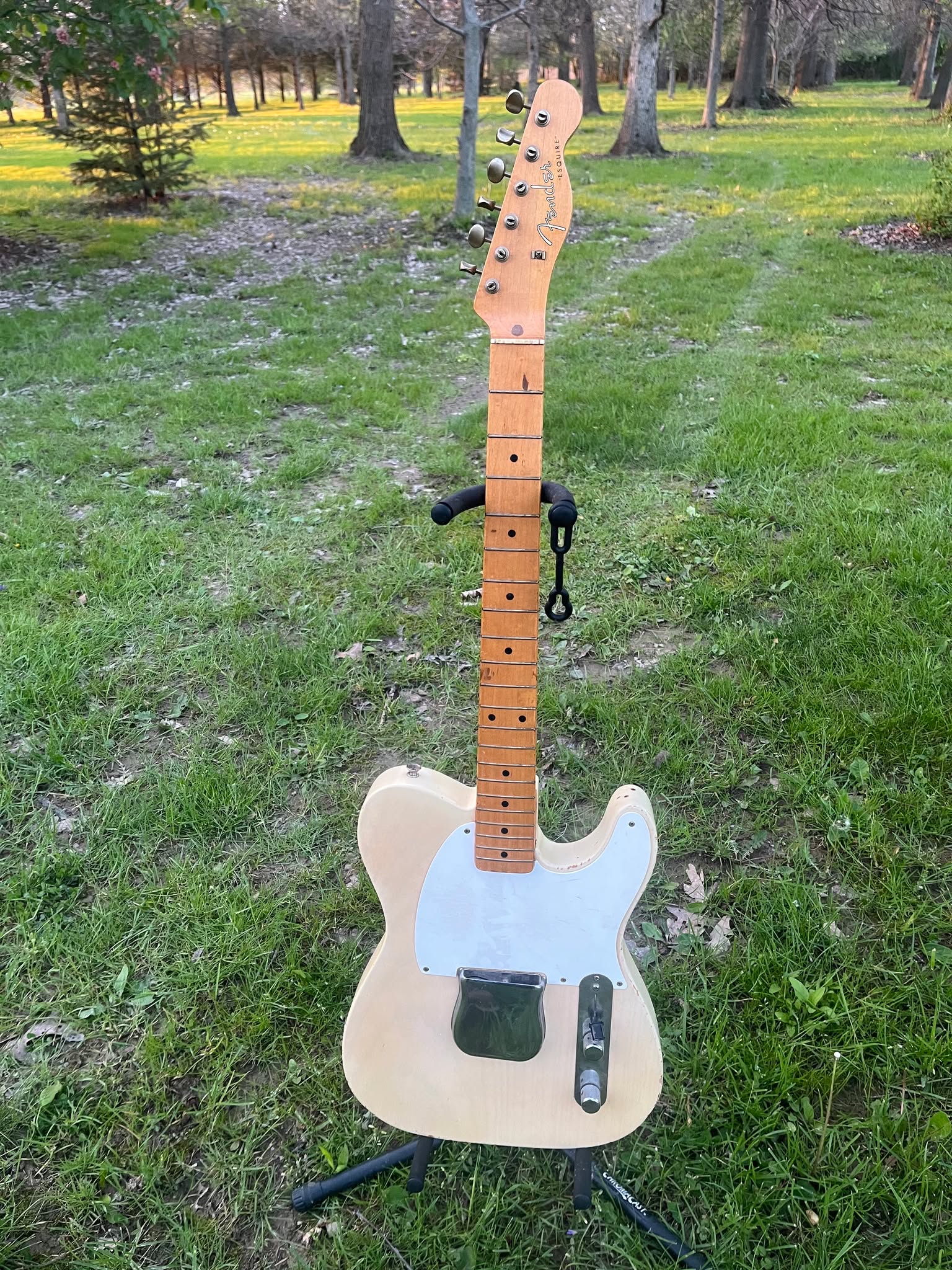
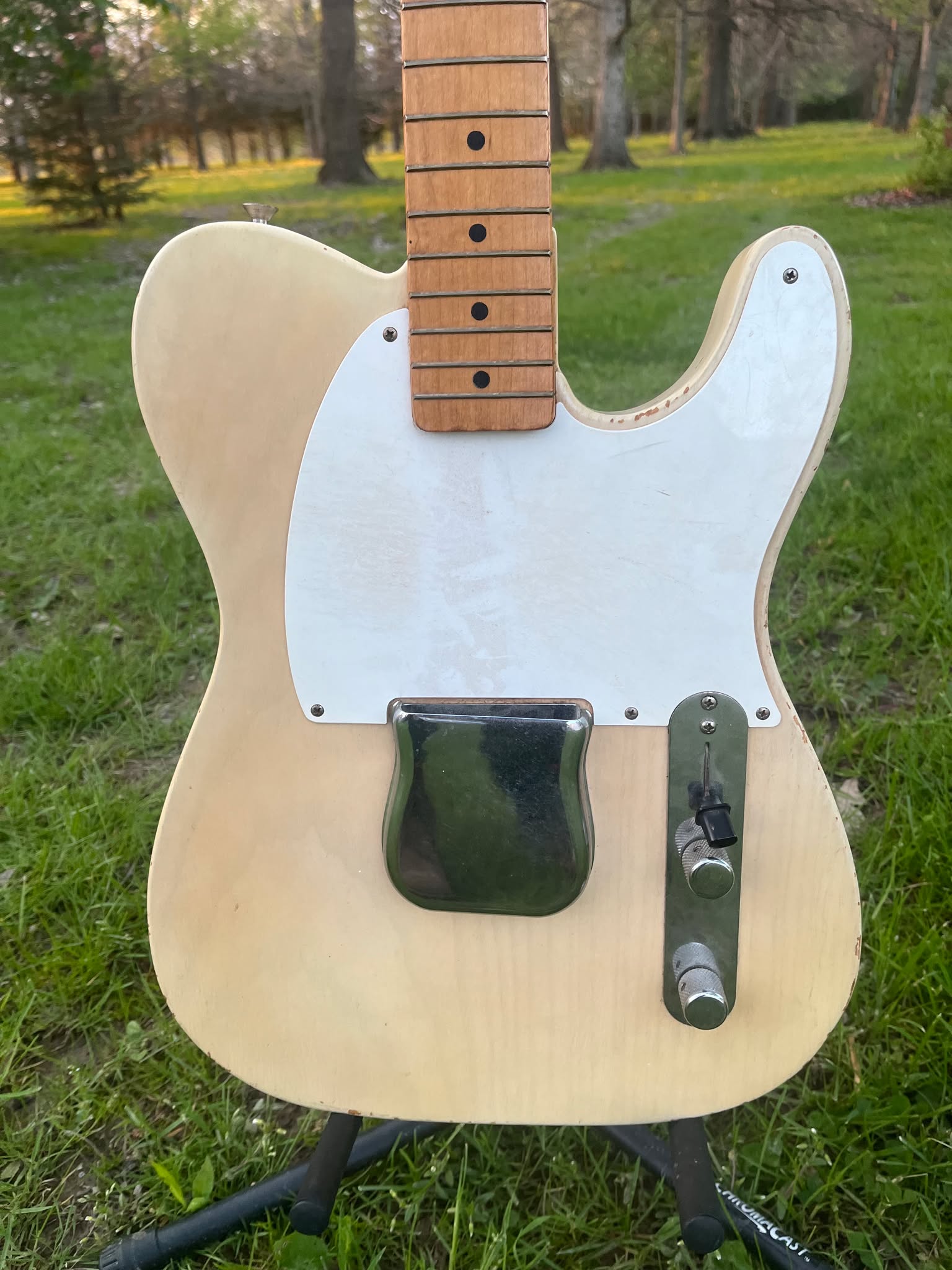
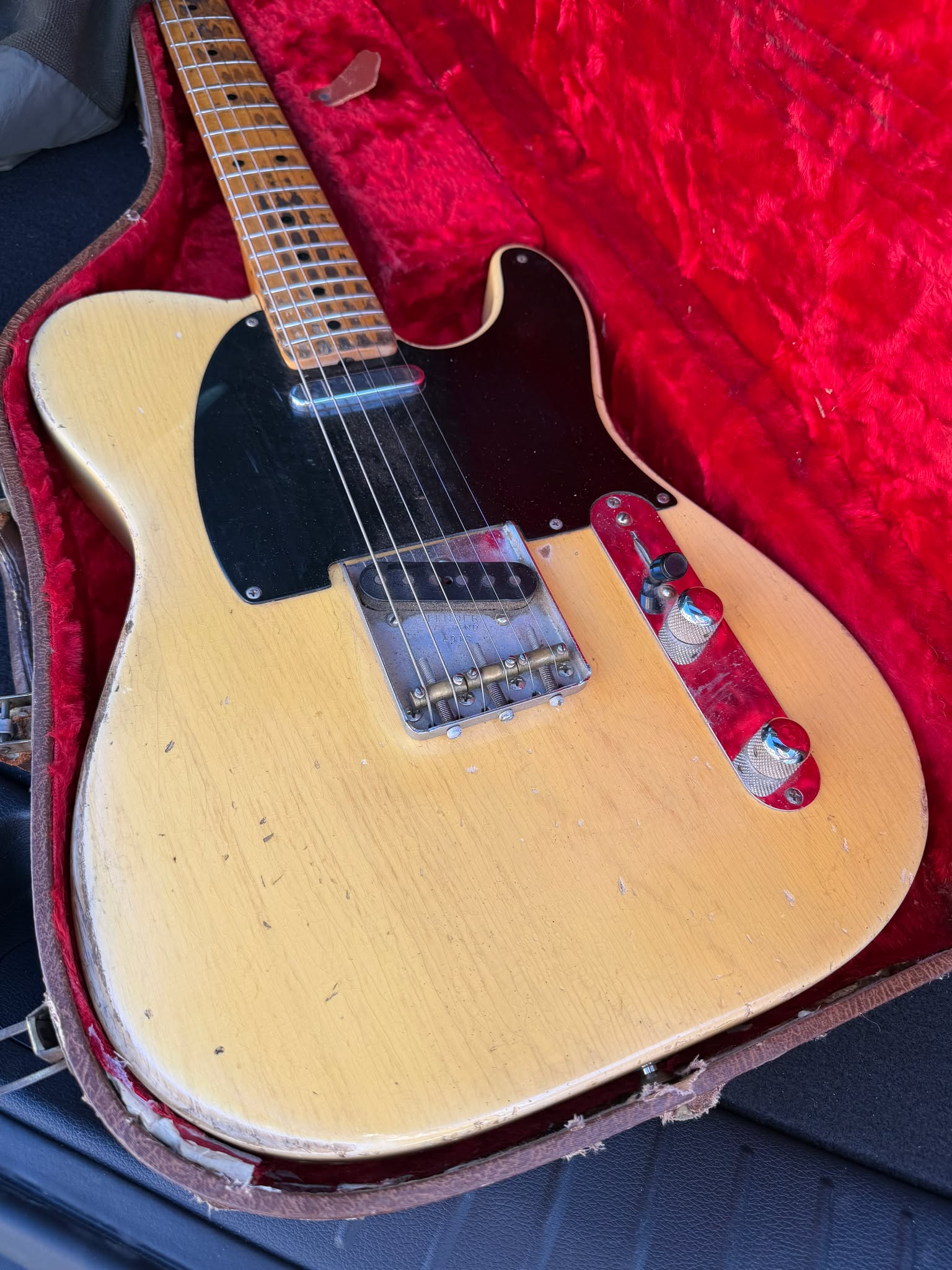
The 1951 Fender Telecaster was the first full production year of the world’s first commercially successful solid-body electric guitar, with a black-guard ash body, single-coil pickups, and brass bridge saddles. Early production, originality, and condition drive value. Edgewater Guitars buys vintage Fender Telecasters nationwide with free expert appraisals and same-day cash offers. Call or text (440) 219-3607.
Last Updated: February 2026
What Makes the 1951 Fender Telecaster Significant?
The 1951 Fender Telecaster represents one of the most historically important moments in electric guitar evolution—the first full year of production under the “Telecaster” name after the brief Broadcaster and “Nocaster” transitional periods. This was the guitar that established the template for all solid-body electric guitars that followed, and 1951 examples capture the design in its purest, earliest form.
1951 marked Leo Fender’s bold gamble paying off. After Gretsch’s trademark challenge forced removal of the “Broadcaster” name, Fender briefly shipped guitars with no model designation (the “Nocaster” period of late 1950-early 1951), then introduced “Telecaster” on the headstock around mid-1951. These guitars represent the solidification of Fender’s revolutionary vision: a mass-producible, affordable, reliable electric guitar that professional musicians could depend on.
Why 1951 Telecasters Stand Apart:
First full production year under the Telecaster name (introduced mid-year)
Bridge features that defined the Telecaster sound: brass saddles, three-saddle design, slotted steel baseplate
Original blend circuit wiring (no tone control initially, transitioning to conventional wiring mid-year)
Hand-shaped one-piece maple necks with individual character variation
Ash bodies with blonde finish showing natural wood grain (the iconic look)
Serial numbers in the historic 1000-5000 range
Direct connection to country music pioneers who established Telecaster as the professional’s choice
Manufacturing techniques still influenced by Leo Fender’s direct oversight
Historical Context: 1951 was transformative for electric guitar. While Gibson continued focusing on hollow and semi-hollow instruments, Leo Fender was proving that solid-body construction could deliver superior sustain, feedback resistance, and reliability. The Telecaster’s simple, utilitarian design contrasted sharply with ornate Gibson aesthetics—this was a working musician’s tool, not a showpiece. Country artists in particular embraced the bright, cutting tone that could slice through honky-tonk band arrangements.
The Telecaster’s Innovation: The 1951 Telecaster introduced design elements that remain standard today: bolt-on neck for easy replacement and adjustment, single-cutaway solid body for upper fret access, individual bridge saddles for precise intonation, pickup selector switch for tonal variety, and an overall design prioritizing functionality over decoration.
In Edgewater’s experience purchasing vintage Telecasters throughout Ohio and the Midwest, 1951 examples are among the rarest we encounter. Most players who purchased Telecasters in 1951 used them hard for decades—these were working instruments, not collector pieces. Finding a 1951 example with significant original parts is increasingly difficult, making authenticated original examples exceptionally valuable.
If you own a 1951 Fender Telecaster, you’re holding a piece of electric guitar history—one of the instruments that literally invented the category. Edgewater Guitars provides free, no-obligation valuations for early Fender instruments. Call (440) 219-3607 or visit our valuation page.
What Is a 1951 Fender Telecaster Worth? (2026 Market Values)
Value by Condition and Finish
1951 Fender Telecasters represent the earliest production Telecasters available to collectors, commanding premium pricing across all condition grades. The market treats these instruments as significant historical artifacts, not just playable guitars.
All-Original, Excellent Condition:
All original parts including pickups, bridge, pots, tuners, and wiring
Original blonde finish with natural ash grain visible
Black fiber pickguard (early ‘51) or white pickguard (later ‘51)
Minimal player wear, no structural issues
Original tweed case
Value Position: Commands absolute top tier pricing for vintage Telecasters, often exceeding later pre-CBS examples despite simpler appointments
All-Original, Very Good Condition:
Original parts and finish
Moderate to heavy play wear (finish wear, checking, belt buckle marks)
May have professional refret
Functional original electronics
Honest player-grade condition
Value Position: Approximately 20-30% below excellent examples, but still commands premium as all-original early Telecaster
Original Finish, Some Replaced Parts:
Original blonde finish intact
Replaced bridge saddles (extremely common—brass wears quickly)
Replaced pots, capacitor, or output jack
Original pickups and neck
Value Impact: Each replaced component reduces value incrementally. Bridge saddles least damaging (10-15% reduction), pickups most significant (25-35% reduction)
Refinished Examples:
Refinished body (blonde or other color)
Original parts otherwise
Value Impact: Reduces value by 50-70% compared to original finish examples
Early Telecasters are particularly damaged by refinishing—the thin blonde finish and visible wood grain are integral to aesthetic and historical value
What Affects the Value of a 1951 Telecaster?
Originality: The market’s emphasis on originality for 1951 Telecasters exceeds even other pre-CBS Fenders. These guitars are so historically significant that each original component adds substantial value. Collectors prioritize unmolested examples, even in played condition, over restored or modified instruments.
Early vs. Late 1951 Production: Early 1951 “Nocaster” examples (no model name on headstock) or very early Telecaster-stamped examples command highest premiums. Mid-to-late 1951 examples with established Telecaster logo are slightly less rare but still highly valuable.
Black Pickguard vs. White Pickguard: Early 1951 examples retained black fiber pickguards from the Broadcaster era. White pickguards appeared mid-year. Black guard examples are slightly rarer and bring modest premium (5-10% higher), though both variations are highly collectible.
Wiring Configuration: Early 1951 examples feature “blend” circuit wiring (blend control instead of conventional tone control). Mid-year transition to standard volume/tone wiring occurred. Blend circuit examples are rarer and command premium among purist collectors (10-15% higher).
Bridge Configuration: All 1951 examples should have three brass saddles, but replacement is extremely common due to wear. Original brass saddles showing natural wear patterns add significant value. Replaced saddles, even with correct brass reproductions, reduce value.
Serial Number Range: Lower serial numbers (1000-2000 range) indicate earlier 1951 production and bring slight premium among collectors who prioritize earliest examples.
Neck Date and Body Date Alignment: 1951 examples should show neck and body dates from 1951. Significant mismatches (1951 body with 1952 neck, for example) indicate parts guitar assembly and dramatically reduce value.
Documentation: Original sales receipts, period photographs, or provenance documentation add substantial value to already-rare 1951 examples. Documented first-owner history or professional musician ownership multiplies collector interest.
Condition of Blonde Finish: The translucent blonde finish allows ash grain to show through—this is the iconic Telecaster aesthetic. Examples with rich, warm honey-blonde aging command highest prices. Finish worn through to bare wood in areas is acceptable on player-grade examples. Severe finish loss (more than 30-40% missing) reduces value.
How 1951 Compares to Other Years
Year | Key Difference | Relative Value | Why |
|---|---|---|---|
1950 | Broadcaster name (early) or Nocaster (late), black pickguard standard, blend circuit | Higher (Broadcaster), Similar (Nocaster) | Broadcaster name adds significant premium, Nocaster transition period highly collectible |
1951 (this post) | First full year of Telecaster name, black to white pickguard transition, blend to conventional wiring transition | Baseline | Historic first year under Telecaster name, earliest production examples available |
1952-1953 | White pickguard standard, conventional wiring standard, brass saddles continue | Similar to slightly lower | Essentially identical construction, slight edge to 1951 for “first year” factor |
1954-1956 | Bridge evolution begins, construction remains similar | 5-10% lower | Slightly later in production run reduces historical cachet |
1957-1959 | Some examples show early custom color experimentation | Similar depending on features | Custom colors add value, standard blonde examples slightly less than 1951 |
1960-1964 | Rosewood fingerboard option introduced, custom colors common, “slab board” era begins | 10-20% lower | Later pre-CBS era, less historically significant than 1950-1953 period |
Recent Sales and Auction Results
The market for early 1950s Telecasters has shown remarkable strength over the past decade. Auction houses including Heritage Auctions, Christie’s, and specialized vintage guitar auctions consistently see strong results for authenticated 1951 examples.
Market Trends in 2025-2026:
All-original 1951 Telecasters in any playable condition command premium pricing
Market shows strong preference for untouched, unmolested examples with honest wear over restored instruments
Blend circuit examples (early 1951) seeing increased collector interest and premium pricing
Black pickguard examples bringing modest premium over white pickguard variants
Player-grade examples with significant wear but all-original parts outperforming cleaner but modified examples
Market recognizes 1951 as historically significant regardless of condition grade
Comparison to Other Early Fender Models:
1951 Precision Bass values: Similar historical significance, but guitar market larger—Telecasters typically bring higher absolute prices
1954 Stratocaster values: Later introduction (1954) means no 1951 comparison, but early Strats generally bring similar or higher prices due to model popularity
1958 Jazzmaster values: Much later introduction (1958), generally lower values than 1951 Telecasters despite offset model collectibility
Investment Perspective: 1951 Telecasters represent blue-chip vintage guitar investments. Limited production numbers, historical significance, and fundamental role in electric guitar evolution ensure sustained collector demand. Unlike guitars that go in and out of fashion, early Telecasters maintain consistent market strength.
Edgewater Guitars consistently offers premiums 30-40% above typical guitar shop buyback prices for authentic vintage Fender instruments, particularly early Telecasters. Our direct-to-collector model and expertise in early Fender authentication allows us to pay substantially more than retail-based dealers. Get your free valuation: (440) 219-3607.
How to Identify an Authentic 1951 Fender Telecaster
Serial Numbers
1951 Serial Number Range: Approximately 1000-5000 range (four digits stamped on bridge plate)
Location: Stamped on steel bridge plate between pickup and saddles (visible from front of guitar)
Critical Details:
1951 represents transition from four-digit to five-digit serial numbers
Early 1951 examples in 1000-2000 range
Later 1951 examples approaching 5000 range
Serial numbers not perfectly sequential—some overlap exists between years
Bridge plate serial is only factory serial number location (no neck plate serials until later)
Important Caveat: Serial numbers on bridge plates are often worn, partially obscured, or illegible due to decades of hand contact and corrosion. Partially visible or worn serial numbers are acceptable and expected on 75-year-old guitars. Complete absence of any serial number impression may indicate replaced bridge plate.
Red Flag: Five-digit serials beginning above 5000 indicate 1952 or later production. Serials below 1000 indicate 1950 production (Broadcaster or very early Nocaster era).
Neck Date
Format: Pencil-written date on heel of neck (visible when neck removed from body) or inside neck pocket
1951 Dating Formats:
Early style: “3-51” or “MAR 51”
Mid-year: “7-51” or “JUL 51”
Late year: “11-51” or “NOV 51”
Some examples show only year: “51”
How to Check:
Remove all string tension
Remove four neck screws
Gently separate neck from body
Inspect heel end of neck for pencil marking
Also check neck pocket in body for date stamp
Important Details:
Pencil dates fade over time—faint markings are normal
Some 1951 examples show no visible date due to fading or hand variation
Absence of date doesn’t prove fake—corroborate with other dating methods
Cross-Reference: Body should also show pencil date in neck pocket. Neck date and body date should be within 1-3 months of each other. Significant gaps (neck dated 1951, body dated 1953) indicate parts guitar.
Potentiometer Codes
Expected Manufacturers for 1951:
Stackpole: Code 304
CTS: Code 137 (less common in 1951)
How to Decode Pot Codes:
First three digits: Manufacturer code (304 = Stackpole)
Fourth and fifth digits: Year (51 = 1951)
Last two digits: Week of manufacture (01-52)
Example: 304 5118 = Stackpole, 1951, 18th week (late April/early May)
Expected Codes for 1951 Telecasters:
304 51XX (Stackpole most common)
137 51XX (CTS less common but authentic)
Where to Find Pot Codes:
Remove pickguard (5 screws on early models, 8 screws on later ‘51)
Single volume pot, single tone pot (or blend pot on early examples)
Codes stamped on back of potentiometer body
Read with flashlight, may require magnification
Red Flags:
Pot codes from 1952 or later in guitar with 1951 neck/body dates = replaced electronics
Completely unmarked pots suggest replacement
Modern CTS pots with post-1960 date codes obvious replacement
Codes more than 12 months before neck date suspicious
Important Note: Many 1951 Telecasters have replaced pots due to failure, modification, or wiring upgrades. Replaced pots reduce value but don’t disqualify the guitar if body, neck, pickups, and bridge are original.
Key Visual Identifiers
Neck Construction: One-piece maple neck with no separate fingerboard. Walnut “skunk stripe” down center of neck back covering truss rod channel. Maple should show natural aging (golden honey color). Excessively light or bleached appearance suggests refinishing.
Neck Profile: Chunky V-profile or soft U-profile depending on production date and individual shaping. 1951 necks show significant hand-shaping variation—each neck slightly different. Modern CNC-machined consistency indicates replacement neck.
Frets: Small vintage wire (approximately .078” wide x .043” tall). Minimal crown height. Most 1951 examples refretted at least once due to 75 years of play. Original frets extremely rare—professional refret with period-correct wire acceptable.
Headstock Shape: Smaller “pre-CBS” headstock shape (not the larger CBS-era design introduced in 1965-1966 on Stratocasters, Telecaster headstock remained relatively consistent). Clean, simple Fender logo decal.
Logo Style: “Fender” in spaghetti script logo (thin, flowing script). “Telecaster” added below Fender logo around mid-1951. Early 1951 examples may show only “Fender” with no model designation (Nocaster period carryover) or very early Telecaster stampings.
Pickguard Material and Color: Early 1951: black phenolic fiber (Bakelite-type material), typically 5 screw mounting. Later 1951: white phenolic or early plastic, 8 screw mounting. Transition occurred mid-year. Black guards rarer, slightly more valuable.
Pickguard Contour: Early 1951 pickguards have different shape than later Telecaster standard—less dramatic point, different curve. Shape evolved through 1951. Exact contour helps date production within the year.
Bridge Assembly: Three brass saddles on steel base plate. Saddles should show significant wear (brass is soft metal). Overly pristine brass saddles suggest replacement. Each saddle individually height-adjustable via two screws. Serial number stamped on bridge plate.
Bridge Pickup Configuration: Slotted-head screws on bridge pickup mounting (visible through bridge plate). Flat-blade screwdriver slots, not Phillips head. Phillips screws indicate later replacement or modification.
Tuners: Kluson Deluxe tuners with single-ring bushings and white or cream plastic buttons. “Kluson Deluxe” stamp visible on tuner back. Patent pending or early patent number markings.
Body Wood and Finish: Ash body with translucent blonde nitrocellulose lacquer. Wood grain clearly visible through finish. Prominent grain patterns, some ash examples show highly figured grain. Blonde finish ages to warm honey or amber tone—pure pale blonde suggests refinish.
String Tree: Small round chrome string tree on headstock holding down B and high E strings. Simple circular design. Butterfly-shaped string trees indicate later replacement (butterfly style appeared mid-1950s).
Factory Markings and Stamps
Bridge Plate:
Serial number stamped between bridge pickup and saddles
Sometimes includes additional numbers or inspector marks
Stamping may be partially worn—normal and acceptable
Neck Pocket:
Pencil date marking (month/year)
May show routing numbers or inspection marks
Some show initials (inspector or builder)
Finish edges should show original blonde lacquer
Control Cavity:
Early 1951 models have minimal routing—just enough for components
May show pencil marks, numbers, or dates
Should show original wood color (no sealer under blonde finish typically)
Pickup wire routing channels may be visible
Neck Heel:
Pencil date most common
May show additional numbers
“TG” marking appears on some examples (unclear significance, possibly routing station)
Custom Color Identification
1951 Custom Color Reality:
Custom colors were not standard Fender practice in 1951. The Telecaster was offered in two finishes:
Blonde (butterscotch): Standard production finish, translucent golden lacquer over ash
Black: Extremely rare special order finish, opaque black lacquer
Custom Color Red Flags for 1951:
Any 1951 Telecaster in colors like Lake Placid Blue, Sonic Blue, Fiesta Red, or other custom colors that became standard in later 1950s should be viewed with extreme skepticism. These finishes did not exist in Fender’s lineup in 1951.
Authentic 1951 Finishes:
Blonde/Butterscotch:
Translucent golden/amber lacquer
Ash wood grain clearly visible
Finish shows natural darkening to honey or butterscotch over decades
Nitrocellulose checking (fine cracks) expected and correct
Should show no primer or sealer under finish in routed areas (Fender did not use sealer under blonde finish)
Black (Extremely Rare):
Opaque black lacquer
May have been special order or dealer request
Documented examples exist but are extremely rare
Should show appropriate aging (finish checking, wear through to wood)
Value premium over blonde if authentically original 1951 black
Aging Patterns:
Blonde finish: yellowing to warm honey or butterscotch, finish checking, wear through high-contact areas
Black finish: fading to brownish or greenish cast, finish checking, wear edges showing wood or primer
Refinish Evidence:
Colors that didn’t exist in 1951 (obvious refinish)
Overspray in cavities, on hardware, or in areas that should be clean
Modern polyurethane instead of nitrocellulose
Lack of age-appropriate checking on 75-year-old finish
Paint buildup in neck pocket creating fit issues
Red Flags: How to Spot Fakes and Refinishes
Refinish Indicators:
Wrong finish type: Polyurethane (thick, plastic feel) instead of nitrocellulose (thin, aged lacquer). 1951 = nitro only. Poly finish = definite refinish.
Inappropriate colors: Any custom color beyond blonde or black indicates refinish. Some refinishers apply period-incorrect colors claiming “rare custom order”—nearly always false.
Overspray evidence: Remove pickguard and check cavity edges. Original blonde finish shows clean wood edges with no overspray. Refinished examples show paint overspray beyond body surface into cavities.
Neck pocket issues: Paint buildup in neck pocket creates loose fit or visible paint layers. Original finish has tight neck pocket fit with no paint accumulation.
Missing age-appropriate wear: A 1951 Telecaster in pristine, glass-like finish condition with no checking, no wear, no age indicators is almost certainly refinished. 75-year-old nitro shows age.
Sanding evidence: Flat spots on body contours, altered edge profiles, or body shape modifications all indicate refinishing work. Original 1951 bodies show consistent factory shaping.
Replaced Parts:
Neck replacement: Wrong logo style (large CBS-era logo), wrong headstock shape (later contour), wrong truss rod type (adjustable at headstock instead of body end), or modern construction (two-piece neck, fingerboard glued on) all indicate replacement. 1951 = one-piece maple, body-end truss adjustment only.
Bridge plate replacement: Missing serial number, wrong metal type (stamped steel should show specific vintage thickness and construction), or modern reproduction plates (available but identifiable by stamping quality).
Pickup replacement: Bridge pickup should mount with slotted-head screws. Fiber covers on pickups. Wrong mounting style, obviously modern pickups, or Stratocaster-style pickups indicate replacement.
Tuners: Modern Schaller, Grover, or Gotoh tuners obvious replacements. Even vintage Kluson tuners from wrong era (1960s+ Klusons) indicate replacement. Should be early 1950s Kluson Deluxe specifically.
Pickguard: Reproduction pickguards common. Check screw hole count (5 vs 8 helps date), material (should be phenolic fiber or early plastic, not modern vinyl), and fit (reproductions often show slight fit issues).
Electronics: Replaced pots very common. Check pot codes. Modern Alpha pots, generic no-name pots, or 1960s+ dated pots all indicate replacement wiring.
Complete Fakes (Partscasters):
In Edgewater’s experience evaluating vintage Telecasters across the Midwest, complete fakes of 1951 examples are less common than other years due to difficulty replicating early features. However, “partscaster” assembly from mixed-era parts is common:
Mixed dates: 1951 body with 1954 neck, for example. Cross-reference all dates: neck, body, pots, bridge serial.
Reproduction bodies: Available commercially. Often identifiable by wood type (not ash), wrong routing patterns, incorrect body dimensions, or modern construction techniques.
Married parts: Authentic 1951 body married to later 1950s neck, for instance. Check finish consistency—refinished body to match neck age, or mismatched aging between components.
Serial number manipulation: Bridge plates can be swapped. Examine stamping quality—factory stamps have consistent depth and character. Hand-stamped numbers show irregularity. Completely worn-away serials convenient for sellers but suspicious.
Specific 1951 Authentication Challenges:
Nocaster period overlap: Early 1951 production overlaps with late 1950 Nocaster period. Distinguishing “very late Nocaster” from “very early 1951 Telecaster” requires multiple data points: serial range, neck date, pot codes, features.
Transition features: Mid-1951 saw changes: black to white pickguard, blend to standard wiring, pickguard shape evolution. Mixed features are authentic but require careful verification they match same timeframe.
Documentation scarcity: Very few 1951 Telecasters have original documentation. Lack of paperwork doesn’t prove fake, but presence of authentic period documentation significantly supports authenticity.
Not sure if your Telecaster is an authentic 1951 example? Edgewater offers free authentication—our team has evaluated hundreds of early Fender instruments across Ohio, Michigan, and Pennsylvania. We’ve documented every authentic variation, every common replacement pattern, and every refinish technique used on early Telecasters. Call (440) 219-3607 or request evaluation online.
1951 Fender Telecaster Specifications
Specification | Detail |
|---|---|
Body Wood | Ash (standard for blonde finish), provides bright resonance and visible grain |
Neck Wood | One-piece maple, no separate fingerboard, walnut skunk stripe on back |
Fingerboard | Integral one-piece maple (neck and fingerboard same piece of wood) |
Neck Profile | V-shape or soft U-shape depending on production date and hand-shaping, 1.650” nut width (approximately) |
Scale Length | 25.5” (later became Fender standard for Stratocaster and other models) |
Frets | 21 frets, small vintage wire (.078” x .043” approximate dimensions) |
Pickups | Bridge: single-coil with steel plate and six adjustable pole pieces, copper wire wrap<br>Neck: single-coil “lipstick-tube” style mounted in chrome housing, no individual pole adjustment |
Bridge | Three brass saddles on stamped steel base plate, individual saddle height adjustment, serial number stamped on plate |
Tailpiece | Strings mount through body, ferrules on back, integrated with bridge assembly |
Tuners | Kluson Deluxe, single-ring bushings, white or cream plastic buttons, 3+3 configuration |
Controls | Early 1951: Volume and blend control (no tone control)<br>Later 1951: Volume and tone control (conventional wiring) |
Selector Switch | 3-position switch: neck pickup, both pickups, bridge pickup |
Finish | Nitrocellulose lacquer, translucent blonde standard (butterscotch), black extremely rare special order |
Available Colors | Blonde (standard), black (rare special order only) |
Weight Range | 7.5-9.0 lbs depending on ash density (ash varies significantly) |
Case | Tweed hardshell case (brown tweed covering, plush interior, Fender logo), accessory compartment |
Original Retail Price | $189.50 (1951) |
What Does a 1951 Fender Telecaster Sound Like?
Pickup Specifications and Tonal Profile
Bridge Pickup:
Type: Single-coil with adjustable steel pole pieces
Construction: Copper wire wrapped around flat steel plate with six threaded steel poles
DC Resistance: Approximately 6.5-7.5k ohms (varies due to hand-winding inconsistency)
Magnet: Alnico magnets underneath pole pieces (early examples may use Alnico III or Alnico V)
No wax potting (contributes to slightly microphonic character)
Steel mounting plate visible from front, creates distinctive “twang”
Neck Pickup:
Type: Single-coil in enclosed chrome cover (lipstick-tube style housing)
Construction: Copper wire wound around magnetic core, enclosed in metal tube
DC Resistance: Approximately 7.0-8.0k ohms
Different construction than bridge pickup creates distinct tonal character
Mounted in cutout in neck position of body
No individual pole piece adjustment
Tonal Character:
The 1951 Telecaster bridge pickup defined “Telecaster twang”—the bright, cutting, percussive tone that became synonymous with country music, rockabilly, and early rock & roll. The steel mounting plate under the pickup creates a characteristic treble emphasis with pronounced attack transients. The bridge pickup delivers exceptional clarity in complex chord voicings and cutting lead tones that slice through band arrangements without excessive volume.
The neck pickup offers warmer, rounder tones while maintaining Telecaster clarity—thicker than the bridge but still brighter than most other guitars’ neck positions. The enclosed design creates a slightly compressed, focused midrange useful for jazz-influenced playing and smooth lead work. Combined with the bridge pickup (middle position), the Telecaster produces a hollow, slightly scooped tone useful for both rhythm and lead applications.
Compared to Later Fender Models:
vs. Stratocaster (1954+): Telecaster bridge is brighter and more aggressive with pronounced treble “bite.” Stratocaster offers sweeter, more balanced treble. Stratocaster’s three pickups provide more tonal variety; Telecaster’s two-pickup system is more focused and direct.
vs. Jazzmaster (1958+): Telecaster is brighter overall with more pronounced attack. Jazzmaster pickups are warmer, fuller in midrange, with smoother treble response. Telecaster suited for country/rock; Jazzmaster for jazz/surf.
vs. Jazz Bass (1960+): Different instrument category, but Jazz Bass represented Fender’s application of dual-pickup tonal versatility to bass register (similar design philosophy of pickup-per-position with independent control).
How Construction Details Affect Tone
Bridge Design Impact: The three brass saddles on steel plate create unique tonal characteristics not found in other electric guitars. The brass saddles conduct string vibration into the steel plate, which acts as a resonator, emphasizing harmonic overtones in the treble range. The through-body string mounting (strings pass through body, anchored with ferrules on back) increases sustain and string-to-body coupling compared to tailpiece-mounted designs.
Some players note slight intonation compromises with three-saddle design (two strings per saddle on four of the six strings), but this “imperfect” intonation contributes to the Telecaster’s organic, alive character. Modern six-saddle bridge conversions improve intonation but alter the tonal signature.
Ash Body Impact: Ash wood provides bright, resonant tonal character with pronounced treble and clear bass. The wood’s open grain structure creates complex harmonic overtones. Ash density varies significantly—lighter ash examples (swamp ash) sound slightly warmer with more resonance; heavier ash delivers more attack and sustain with pronounced treble. 1951 examples used whatever ash was available—no conscious lightweight/heavyweight selection.
One-Piece Maple Neck: The integral maple neck and fingerboard (no separate fingerboard piece glued on) creates direct vibration transfer from strings to neck wood. Maple is dense hardwood contributing bright, snappy attack and clear note definition. The one-piece construction provides structural stability and characteristic “snap” in treble response.
The walnut skunk stripe (covering truss rod route on back) is walnut—different wood than maple neck. This creates subtle tonal complexity as vibrations interact with walnut strip.
Nitrocellulose Finish: Thin nitrocellulose lacquer finish allows wood to vibrate more freely than thick polyurethane finishes applied to later guitars. The finish breathes with wood, cracking and checking over time. This contributes to the “played-in” tonal characteristic of vintage instruments—the guitar literally loosens up and resonates more freely over decades.
Wiring Configuration Impact: Early 1951 “blend circuit” examples have different tonal characteristic than conventional wiring. The blend control allows mixing the two pickups in varying proportions—different tonal palette than simple on/off switching. Later 1951 conventional wiring (volume, tone, 3-way switch) offers standard Telecaster tones: bridge (bright, cutting), neck (warm, thick), both (hollow, balanced).
25.5” Scale Length: The longer scale (compared to Gibson’s typical 24.75”) creates higher string tension at standard tuning. This contributes to:
Tighter bass response with clear note definition
Brighter treble with pronounced attack
Different harmonic overtone structure—more piano-like attack
Slightly more difficult string bending than shorter scales (requires more finger pressure)
Notable Recordings
While documentation connecting specific 1951 Telecaster serial numbers to recordings is limited, the 1951-1952 period saw early Telecaster adoption by pioneering country musicians who established the instrument’s reputation:
Country Music Pioneers: The Telecaster’s bright, cutting tone made it ideal for Western swing and honky-tonk country. Several Grand Ole Opry performers adopted early Telecasters in 1951-1952, though specific recording documentation is sparse.
Jimmy Bryant: Virtuoso country guitarist who became one of the earliest high-profile Telecaster endorsers. While his specific guitar’s production year is debated, Bryant’s early 1950s recordings showcase the Telecaster’s potential for rapid, intricate lead work with exceptional clarity.
Session Work: Many 1951-1952 era country and rockabilly recordings feature early Telecasters in session work, though specific guitar identification is difficult without documentation. The Telecaster’s reliability and consistent tone made it a session favorite from early production.
Historical Significance: The 1951 Telecaster’s real musical legacy is broader than specific recordings—it proved that solid-body electric guitars could serve professional musicians in demanding applications. Before Telecaster, electric guitars were viewed as experimental or novelty instruments. The Telecaster’s success paved the way for electric guitar as the dominant instrument in American popular music.
In Edgewater’s experience purchasing early Telecasters throughout the Midwest, many 1951 examples we’ve encountered came from working musicians—honky-tonk players, country session musicians, and early rock & roll performers. These instruments typically show heavy play wear from decades of professional use, testament to the Telecaster’s durability and Leo Fender’s utilitarian design philosophy.
Common Issues and Modifications That Affect Value
Bridge Saddle Replacement: Brass saddles wear quickly with normal play. Most 1951 Telecasters have replaced bridge saddles—original brass saddles showing natural wear grooves are extremely rare. Value impact: Correct brass replacement saddles have minimal impact (5-10% reduction). Modern steel or aftermarket saddles reduce value by 15-20%. Complete bridge assembly replacement reduces value by 25-30%.
Wiring Conversion (Blend to Conventional): Early 1951 blend circuit examples often converted to standard volume/tone wiring because players found blend control confusing. Value impact: Reversible conversion (original parts preserved, can be rewired back) minimal impact (5-10%). Irreversible conversion with original parts destroyed reduces value by 20-25%. Original blend circuit in working order brings premium.
Refrets: Vintage small wire frets wear quickly. Nearly all 1951 examples refretted at least once, many 2-3 times. Value impact: Professional refret with period-correct small wire, proper installation, minimal impact (5-10% reduction). Poor refret with modern jumbo wire, damaged fingerboard, or wrong technique reduces value by 25-35%.
Neck Replacement: Neck breaks at headstock or neck pocket damage sometimes required replacement. Some players replaced necks preferring later rosewood fingerboard models. Value impact: Replaced neck, even with correct-era Fender neck, reduces value by 40-50%. Non-Fender neck reduces value by 60-70%. Original neck essential for maximum value.
Refinishing: Single biggest value killer for 1951 Telecasters. The blonde ash aesthetic is integral to the instrument’s appeal and historical significance. Value impact: Professional refinish in correct blonde reduces value by 50-60%. Refinish in inappropriate color (Lake Placid Blue, etc.) reduces value by 60-70%. Only exception: documented 1951 black original finish, which commands premium.
Pickup Replacement: Bridge and neck pickups specific to early 1950s construction. Replacements common due to failure or modification. Value impact: Replaced bridge pickup reduces value by 25-30%. Replaced neck pickup reduces value by 20-25%. Both pickups replaced reduces value by 40-50%. Original pickups essential for maximum collector value.
Tuner Replacement: Original Kluson Deluxe tuners often replaced with Grover, Schaller, or modern locking tuners. Value impact: Vintage Grover or Kluson replacement (reversible) reduces value by 10-15%. Modern Schaller or locking tuners reduce value by 15-20%. Original tuners (or period-correct replacements with original mounting holes) preferred.
Pickguard Replacement: Black or white phenolic pickguards brittle and crack easily. Replacement extremely common. Value impact: Period-correct reproduction pickguard minimal impact (5-8%). Modern multi-ply pickguard reduces value by 10-15%. Modified pickguard (cut for humbucker, added switches) reduces value by 20-30%.
Headstock Breaks: Less common on Telecasters than Gibsons due to headstock angle and construction, but still occur. Value impact: Professional headstock repair, invisible, structurally sound reduces value by 30-35%. Visible repair reduces value by 40-50%. Poor repair with weakness reduces value by 50-60%.
Control Plate and Knobs: Chrome control plate and knobs often corroded, replaced, or upgraded. Value impact: Reproduction control plate and knobs minimal impact (3-5%). Modern “dome” knobs or wrong-era parts reduce value by 8-12%. Original worn parts preferred over shiny replacements.
Bridge Plate Replacement: Sometimes replaced due to excessive wear, missing serial number, or corrosion. Value impact: Replaced bridge plate (loses original serial number) reduces value by 20-30%. Original bridge plate with serial number essential for authentication and maximum value.
Through-Body String Ferrules: Ferrules on back can corrode or crack. Replacement common. Value impact: Correct replacement ferrules minimal impact (2-3%). Obviously modern ferrules or wrong size reduces value by 5-8%.
In Edgewater’s experience purchasing 1951 Telecasters throughout Ohio and surrounding states, the most common issue we encounter is multiple modifications layered over decades: refret + wiring change + tuner replacement + bridge saddles replaced. Each modification individually might be minor, but cumulative effect significantly reduces value. A worn but completely original 1951 Telecaster—even in poor cosmetic condition—is worth substantially more than a pristine-looking but heavily modified example. This is critical for owners to understand: originality trumps condition for instruments this historically significant.
Selling Your 1951 Fender Telecaster: Your Options Compared
Selling Option | Typical Offer | Timeline | Fees/Costs | Risk Level | Best For |
|---|---|---|---|---|---|
Edgewater Guitars | Premium pricing—30-40% above typical shop offers, highest offers for early Fenders | Immediate cash (same day or next day after authentication) | None | Low—expert authentication included, immediate payment, professional process | Owners wanting maximum value for early Telecasters without market risk or authentication challenges |
Local Guitar Shop | Lowest offers (wholesale buyback pricing, typically 40-50% of market value) | Same day | None direct, but massive reduction in payment received | Low | Absolute convenience priority regardless of financial loss |
Online Marketplace (Reverb, eBay) | Variable—potentially high if knowledgeable buyer found, but authentication concerns reduce buyer confidence | Weeks to months (listing time, authentication questions, negotiations, payment processing) | 5-15% platform fees, PayPal fees, shipping insurance ($100-200), secure packaging costs | Very High—buyer authentication concerns, scam attempts, payment disputes, shipping damage claims, return requests | Experienced vintage sellers with authentication documentation and risk tolerance |
Vintage Guitar Auction (Heritage, Christie’s, etc.) | Strong results for authenticated all-original examples with documentation | 3-6 months (consignment processing, catalog photography, auction scheduling, payment clearing) | 15-25% seller premium, insurance, shipping to auction house, catalog fees | Medium—authentication burden on seller, reserve price requirements, unsold risk, waiting period | Museum-quality all-original examples with documentation, patient sellers |
Private Sale (Craigslist, local classifieds) | Highly variable—depends entirely on local buyer knowledge and market | Unpredictable—days to never, significant time investment | None (but safety meeting strangers, scam exposure) | Very High—authentication disputes, counterfeit cashier’s checks, personal safety, no recourse | Sellers with established vintage guitar community connections and confidence handling authentication challenges |
Consignment at Vintage Shop | Moderate to good pricing (shop takes 20-30% commission when sold) | Weeks to months, unpredictable | 20-30% commission to shop, potential insurance requirements | Medium—shop’s selling ability varies, instrument out of your possession, commission reduces net | Sellers willing to wait and accept commission structure for shop’s expertise marketing |
Why Edgewater Guitars Offers Premium Prices for Early Telecasters
The 1951 Telecaster represents one of the most historically significant electric guitars available to collectors. Most guitar shops must operate on retail pricing models—purchasing instruments at 40-50% of market value to account for: storefront overhead, employee costs, inventory holding time (months to years for expensive vintage pieces), and eventual retail markup.
Edgewater Guitars operates fundamentally differently. We purchase vintage guitars directly from owners and place them directly with serious collectors through our established network, eliminating retail overhead entirely. This business model allows us to offer substantially more—typically 30-40% above typical shop offers—while maintaining viable business operations.
For 1951 Telecasters specifically:
Early Telecasters are among the most sought-after vintage guitars. We maintain relationships with collectors specifically seeking first-year Telecaster examples, pre-CBS Fender instruments, and historically significant guitars. This direct collector access means we can pay closer to market value than retail-based businesses.
Additionally, our expertise in early Fender authentication means we can confidently assess instruments that other buyers might hesitate on due to authentication uncertainty. We know exactly what we’re looking at, what it’s worth, and where it will go.
The Edgewater Process for Early Telecasters:
Initial Contact: Call (440) 219-3607 or submit details through our online valuation form. For 1951 Telecasters, we need clear photographs of: entire guitar front and back, headstock showing logo, bridge plate with serial number, neck heel area (neck date if visible without removal), control cavity with pots visible, any condition issues or repairs, and original case if present.
Preliminary Assessment: We provide initial value range based on photographs and your description. For high-value instruments like 1951 Telecasters, we strongly recommend in-person evaluation for complete authentication and final offer.
In-Person Evaluation: We travel throughout Ohio, Michigan, Pennsylvania, Indiana, and West Virginia for valuable instruments—and beyond for exceptional early Fenders. Our evaluation includes:
Serial number verification on bridge plate
Neck date authentication (neck removal for confirmation)
Potentiometer code verification (pickguard removal)
Pickup originality assessment
Finish authentication (checking for refinish evidence using UV light, examining wood grain, testing finish type)
Bridge and hardware originality verification
Structural inspection (neck joint integrity, body condition, repair evidence)
Complete documentation with photographs
Authentication Report and Offer: We provide detailed authentication findings explaining exactly what’s original, what’s been modified, condition assessment, and current market positioning. Our cash offer reflects genuine market value based on complete authentication—not guesswork.
Immediate Payment: If you accept our offer, immediate payment in your preferred form: cash (for appropriate amounts), cashier’s check, or wire transfer. No waiting periods, no “check needs to clear” delays, no financing contingencies.
Transparent, Professional Process: We explain our valuation reasoning clearly. We point out every condition issue, every modification, every factor affecting value—both positive and negative. No surprises, no pressure, no negotiations. Our offer is our genuine assessment.
Geographic Coverage:
Edgewater Guitars serves vintage guitar owners throughout the Midwest primarily, but for early Telecasters—particularly 1951 examples—we’ll travel significantly beyond our typical service area. We’ve evaluated early Fenders in Michigan’s Upper Peninsula, rural Pennsylvania, and southern Indiana specifically because these instruments justify the travel investment.
Recent Early Telecaster Purchase (Case Study):
We recently purchased a 1952 Telecaster (very similar to 1951) from an estate in northeast Ohio. The original owner purchased the guitar in 1952 and played professionally in country bands throughout the 1950s-1960s. The instrument showed heavy play wear—significant finish loss on body back, worn frets, oxidized hardware—but retained all original parts including bridge, pickups, neck, and pots.
Local shops offered wholesale pricing treating it as “player-grade” guitar. Our authentication confirmed complete originality despite wear, and our offer reflected the historical significance and collector demand for all-original early Telecasters regardless of cosmetic condition. We exceeded shop offers by approximately 40% and provided immediate payment.
The family chose Edgewater specifically because we recognized the guitar’s significance beyond appearance, provided detailed authentication documentation for their records, and offered straightforward transaction during estate settlement complexity.
Ready to find out what your 1951 Fender Telecaster is worth? Get your free, no-obligation authentication and valuation: [valuation page link] or call (440) 219-3607.
Frequently Asked Questions About the 1951 Fender Telecaster
Q: What is a 1951 Fender Telecaster worth in 2026?
A: Value depends critically on originality and condition. All-original examples command premium pricing as historically significant instruments regardless of cosmetic condition. Refinished or heavily modified examples see value reductions of 50-70% compared to original examples. Specific value varies based on: originality of all components (pickups, bridge, neck, electronics), finish condition (original blonde vs. refinished), playability (structural integrity, fret condition), and documentation. Edgewater Guitars provides free authentication and valuation—contact us for specific assessment.
Q: How can I tell if my Telecaster is really from 1951?
A: Authentication requires cross-referencing multiple data points—serial number alone insufficient. Check: bridge plate serial (should be 1000-5000 range), neck date pencil marking (should show 1951 format), potentiometer codes (should be 304 51XX or 137 51XX format), construction features (one-piece maple neck, black or white pickguard, three brass saddles), and finish (blonde or black only, nitrocellulose lacquer). Edgewater offers free authentication service—we’ve evaluated hundreds of early Telecasters and know every authentic variation and common fake pattern.
Q: Is a refinished 1951 Telecaster still valuable?
A: Yes, but significantly less than original finish examples. Refinishing reduces value by 50-70% typically. However, a refinished 1951 Telecaster with original parts (bridge, pickups, neck, electronics) still has considerable value due to historical significance and parts authenticity. Original finish is strongly preferred, but refinished examples with original components still command serious collector interest—just at substantially reduced pricing.
Q: Should I have my 1951 Telecaster restored to improve value?
A: Generally no. The vintage guitar market strongly favors untouched originality over restoration. “Restoration” typically means refinishing, replaced parts, or modifications—all of which reduce value. Exception: professional structural repairs (crack repairs, electronic restoration using correct parts) may be worthwhile if guitar currently unplayable. Cosmetic restoration almost never increases value enough to justify cost. Leave worn but original examples untouched.
Q: What’s the difference between a 1951 Telecaster and a Nocaster?
A: “Nocaster” refers to late 1950-early 1951 Fender guitars shipped without model designation during transition from “Broadcaster” name. Nocasters have no model name on headstock (just “Fender” logo) and otherwise share construction with early 1951 Telecasters. The distinction is when “Telecaster” appeared on headstock—mid-1951 approximately. Very early 1951 examples may be technically Telecaster era but still show no model name. Nocasters command slight premium due to transitional status rarity.
Q: Are 1951 Telecasters good investments compared to Stratocasters or Les Pauls?
A: All three represent strong vintage guitar investments but serve different market segments. 1951 Telecasters are earlier than Stratocasters (introduced 1954) and represent fundamental electric guitar history—the first successful production solid-body. Gibson Les Pauls from 1952 onward (Les Paul introduced 1952) and Stratocasters (1954+) offer different aesthetics and market demand. 1951 Telecasters specifically benefit from “first year” cachet and historical significance. Investment quality depends on originality—all-original examples in any of these models outperform modified examples dramatically.
Q: Where is the serial number on a 1951 Telecaster?
A: Serial number stamped on bridge plate between bridge pickup and saddles (visible from front when looking at guitar). Four-digit number typically, ranging from approximately 1000-5000 for 1951 production. No serial number on neck plate (neck plate serials began later). No serial elsewhere on body, neck, or headstock. Bridge plate serial only factory number location.
Q: What should I look for when buying a 1951 Telecaster?
A: First priority: verify serial number, neck date, and pot codes align to 1951. Second: examine finish carefully for refinish evidence (wrong lacquer type, overspray, lack of aging). Third: assess part originality (bridge, pickups, tuners, electronics all correct for 1951). Fourth: check for repairs, particularly neck breaks or body cracks. Fifth: verify pickguard material and mounting screw count (black or white phenolic, 5 or 8 screws depending on production date). For expensive instruments, professional authentication essential before purchase—Edgewater offers this service.
Q: Does Edgewater Guitars buy 1951 Fender Telecasters?
A: Absolutely—early Telecasters are among our highest priorities. We actively seek 1951 examples in any condition, particularly all-original guitars. We offer premium pricing substantially above typical shop offers (30-40% higher typically) due to our direct-to-collector business model and established relationships with serious Telecaster collectors. We provide free authentication, immediate cash payment, and travel throughout our service region (and beyond for exceptional early Fenders). Contact (440) 219-3607 or submit online valuation request.
Q: How long does it take to sell a 1951 Telecaster through different channels?
A: Timeline varies dramatically. Edgewater provides immediate cash after authentication (typically same-day or next-day). Local shops offer same-day payment but lowest prices. Online marketplaces require weeks to months—listing, buyer search, authentication verification, negotiation, payment clearing, shipping. Private sales unpredictable (days to never). Auction houses require 3-6 months for consignment, cataloging, auction scheduling, payment. For most owners, Edgewater’s speed and certainty combined with premium pricing makes sense versus months-long marketplace uncertainty.
Q: What makes a 1951 Telecaster sound different from later Telecasters?
A: Construction details create subtle differences: hand-wound pickups with wire and magnet variations, three brass bridge saddles (later six-saddle bridges change tone slightly), ash body wood (later Telecasters sometimes alder), thin nitrocellulose finish (later polyurethane thicker), one-piece maple neck (later rosewood fingerboard addition changes tone), and individual component tolerances in hand-assembly era. The fundamental Telecaster voice remains consistent, but 1951 examples have character variations from component inconsistency—each guitar slightly different tonally.
Q: Should I modify my 1951 Telecaster to make it more playable?
A: Generally no if you care about value. Modifications that improve playability (refret with larger wire, six-saddle bridge conversion, modern tuners) reduce collector value significantly. If you intend to play the guitar regularly, consider whether the instrument’s collector value or its utility as player matters more to you. Many owners of valuable vintage guitars choose to play modern reissues and preserve original examples unmodified. If modifications already done, further modification matters less, but reversible changes always better than permanent alterations.
Q: How do I know if my 1951 Telecaster has original pickups?
A: Remove pickguard and examine pickups directly. Original 1951 pickups have specific construction: bridge pickup shows copper wire wrapped around steel plate, fiber cover (not plastic), slotted mounting screws, hand-wound appearance. Neck pickup enclosed in chrome housing. Check pot codes—if pots are original 1951 (304 51XX codes), pickups likely original too. Replaced pickups often show: modern wire types, plastic bobbins, different mounting styles, DC resistance far outside 6.5-8.0k range. Edgewater can authenticate pickups during evaluation using non-destructive testing.
Related Resources
Fender Serial Number Lookup Tool — Decode your Telecaster’s serial number and identify production year
Broadcaster and Nocaster Identification Guide — Understanding the models that preceded the Telecaster name
Fender Potentiometer Dating Guide — Complete guide to decoding pot codes for authentication
1954 Fender Stratocaster Guide — How Fender’s next innovation compared to Telecaster
Pre-CBS Fender Overview — Understanding all pre-CBS Fender models and eras
Early Fender Refinish Detection Guide — How to spot refinished early Fenders
Vintage Fender Bridge Systems — Understanding Telecaster bridge evolution and authenticity
Sell Your Guitar to Edgewater — Start your free valuation process
Sell your 1951 Fender Telecaster
Edgewater Guitars buys vintage Fender Telecasters and other vintage Fenders nationwide. We give free, honest appraisals and fair same-day cash offers, with local pickup or insured nationwide shipping. Call or text (440) 219-3607 or request a free estimate.
How much is a 1951 Fender Telecaster worth?
Value depends on originality, condition, finish, and whether the pickups, electronics, and hardware are original. The most accurate way to find out is a free appraisal. Send a few photos and the serial number and we will give you an honest market assessment.
Where can I sell a 1951 Fender Telecaster?
Edgewater Guitars buys them directly, nationwide, with same-day cash offers and no obligation. You can also date yours with our Fender serial number lookup.
Article