DATE :
1948 Gibson LG-2: Post-War Acoustic Guitar Excellence
1948 Gibson LG-2: Post-War Acoustic Guitar Excellence
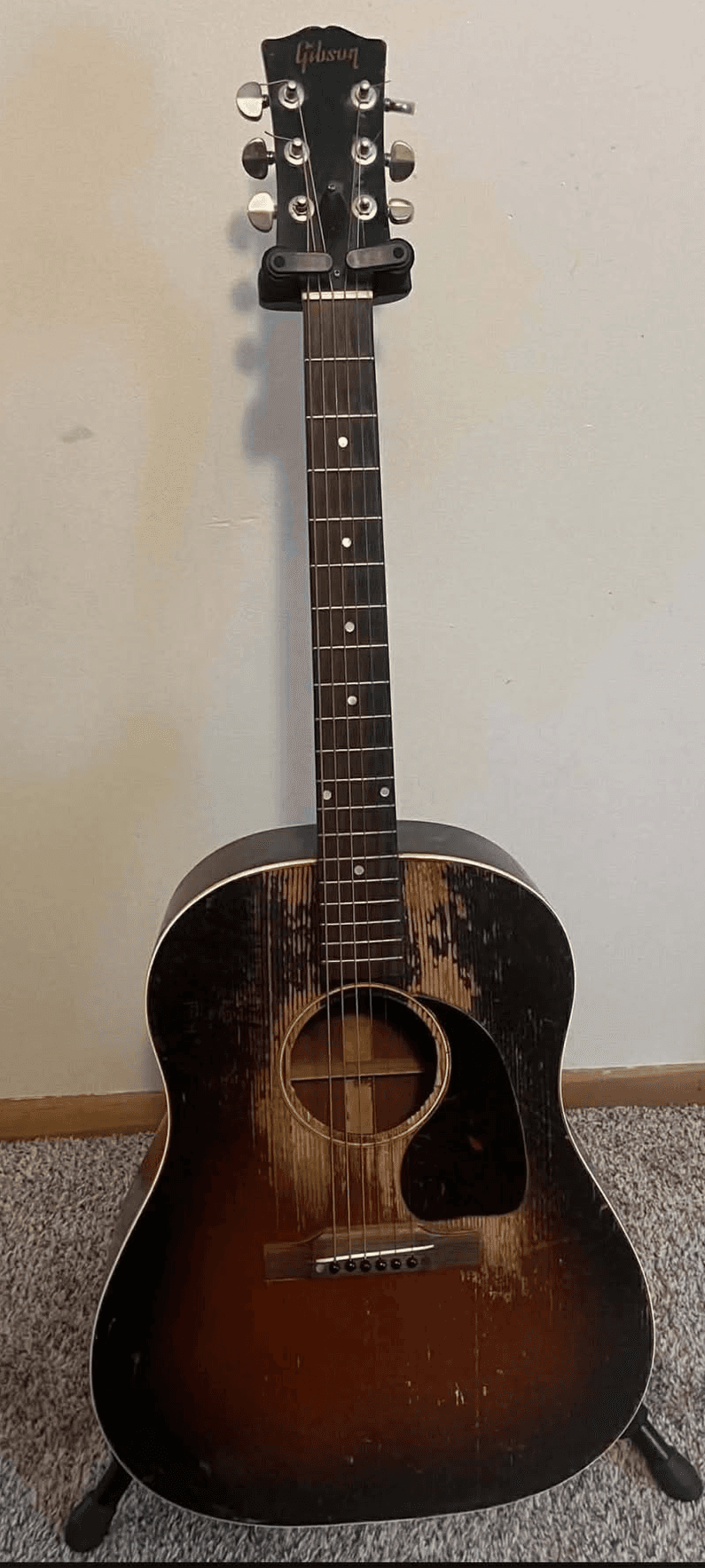
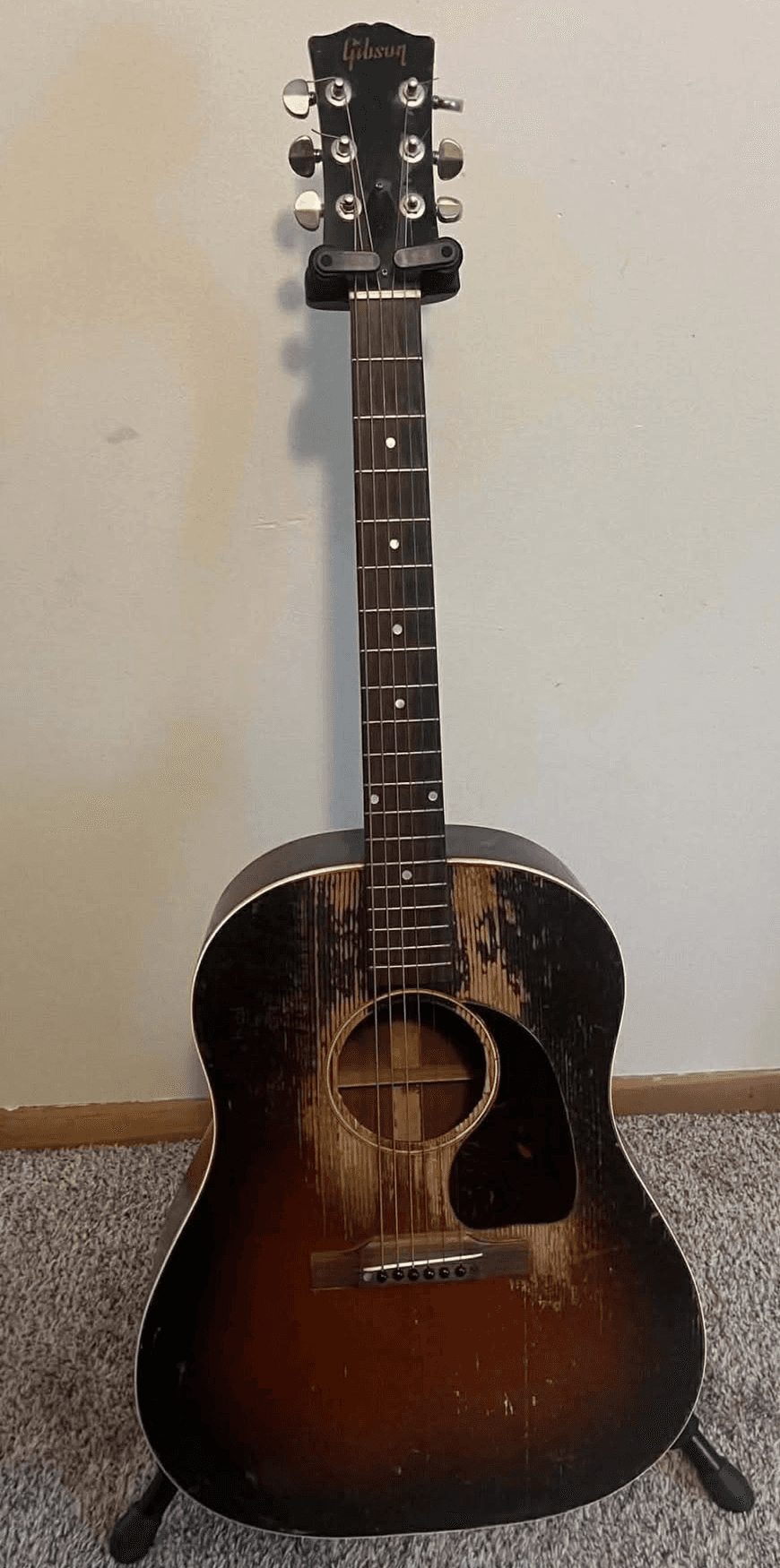
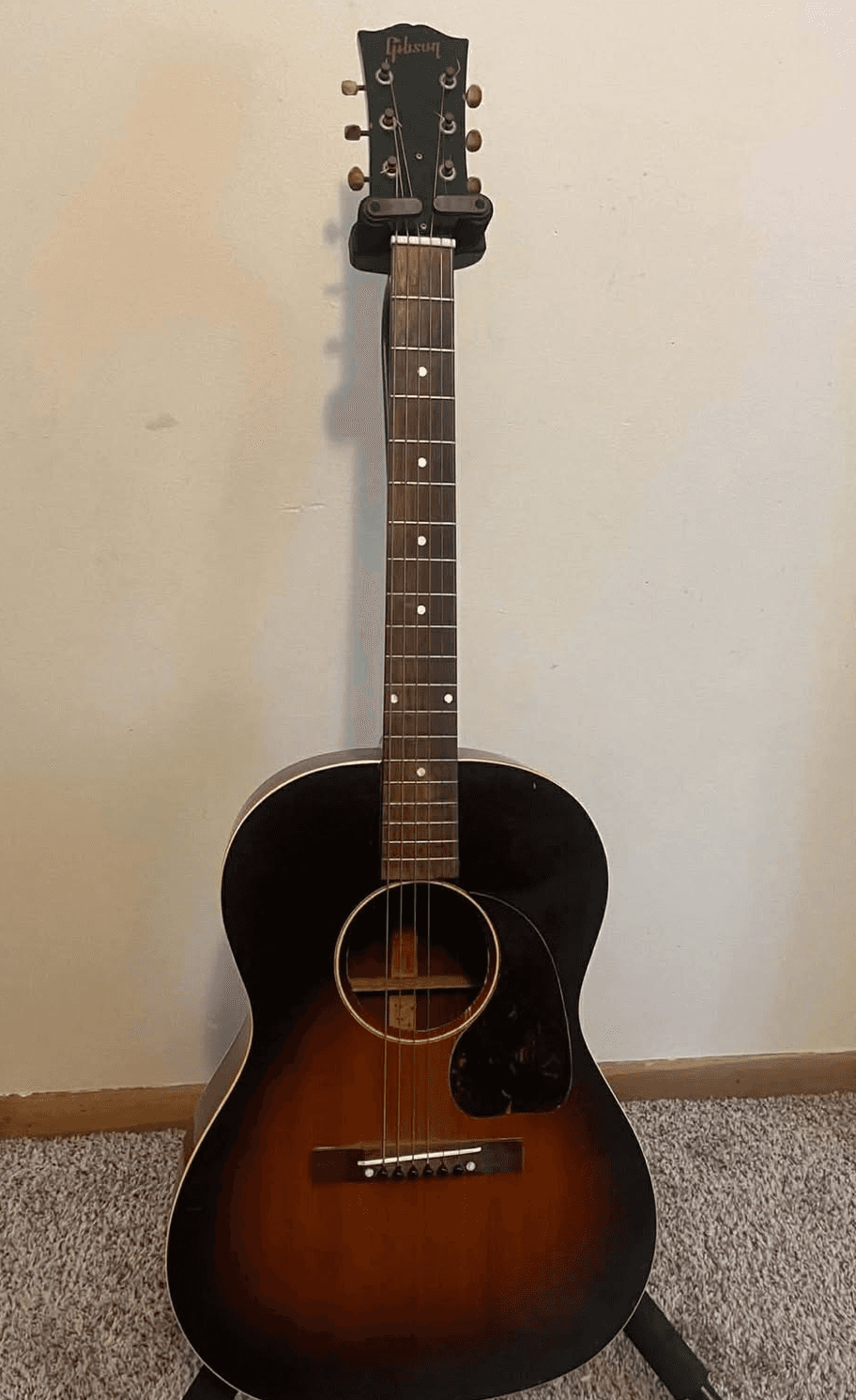
The 1948 Gibson LG-2 is a post-war small-body mahogany flat-top, prized for its warm, focused tone and the build quality of Gibson’s late-1940s Kalamazoo era. Value is driven by originality, top and bracing condition, finish, and whether the tuners and pickguard are original. Edgewater Guitars buys vintage Gibson acoustic guitars nationwide with free expert appraisals and same-day cash offers. Call or text (440) 219-3607.
Why the 1948 Gibson LG-2 Matters
The 1948 Gibson LG-2 represents a pivotal moment in American guitar manufacturing—the transition from wartime scarcity to post-war prosperity. These guitars emerged during Gibson’s return to full production following World War II, when the company resumed using premium materials and refining construction techniques interrupted by the war effort.
What makes 1948 LG-2 guitars particularly significant:
Post-War Manufacturing Renaissance: By 1948, Gibson had fully transitioned back to civilian production, implementing improved construction methods and accessing materials unavailable during wartime rationing. The result was instruments that combined pre-war craftsmanship with post-war refinements.
The “Banner Era” Conclusion: 1948 represents the final year of Gibson’s “banner” headstock logo—the “Only a Gibson Is Good Enough” slogan that appeared during 1943-1947. Some early 1948 examples retained this banner before transitioning to the standard logo, making them transitional pieces sought by collectors.
Working Musician’s Guitar: Unlike Gibson’s luxury models, the LG-2 was designed as an affordable, professional-grade instrument for working musicians. This philosophy resulted in straightforward, robust construction that has proven exceptionally durable over the past 75+ years.
Tonal Foundation: The 1948 LG-2’s combination of mahogany back and sides with Adirondack spruce top created a warm, focused tone that influenced countless recordings during the folk and early rock and roll eras. These guitars punch above their weight class sonically.
Historical Context: Gibson in 1948
Understanding Gibson’s situation in 1948 provides crucial context for appreciating these instruments:
Post-War Production Recovery
Material Availability: World War II ended in 1945, but material shortages continued through 1946-1947. By 1948, Gibson regained consistent access to premium tonewoods, hardware, and finishing materials. This transition is evident in the improved consistency and quality of 1948 instruments compared to 1945-1946 examples.
Factory Expansion: Gibson’s Kalamazoo, Michigan factory operated at full capacity by 1948, with skilled luthiers who had returned from military service. The combination of experienced craftsmen and improved materials resulted in exceptional build quality.
Market Position: Gibson competed primarily with Martin in the acoustic guitar market. While Martin’s Dreadnought models (particularly the D-28) commanded premium prices, Gibson’s LG series provided quality alternatives at lower price points, making professional-grade guitars accessible to more musicians.
The LG Series Philosophy
Gibson introduced the LG (Lone Gibson) series in 1942 as budget-friendly alternatives to their J (Jumbo) series. Despite lower pricing, LG guitars featured solid wood construction and Gibson’s renowned craftsmanship:
LG-0: Entry-level model, mahogany top LG-1: Spruce top, mahogany back/sides, natural finish LG-2: Spruce top, mahogany back/sides, sunburst finish (more appointments) LG-3: Top of the LG line, additional binding and appointments
The LG-2 occupied the sweet spot—professional quality with enough visual appeal for stage use, at prices working musicians could afford.
Transitional Features of 1948
The 1948 model year saw Gibson implementing changes that distinguished these guitars:
Banner Transition: Early 1948 LG-2 guitars may feature the “Only a Gibson Is Good Enough” banner on the headstock, while later 1948 examples transitioned to the standard script logo. Transitional instruments with banner headstocks command collector interest.
Improved Bracing: Post-war production allowed Gibson to optimize X-bracing patterns, with 1948 examples showing more consistent scalloping and wood selection than wartime guitars.
Finish Quality: By 1948, Gibson’s sunburst finish application had returned to pre-war standards, with rich, even color application and properly applied nitrocellulose lacquer.
Current Market Position (2025 Update)
The vintage acoustic guitar market has experienced significant appreciation over the past decade, with post-war Gibson small-body guitars gaining particular attention from players and collectors.
Understanding LG-2 Values
Market Factors Affecting Value:
All-Original Condition: Unmodified 1948 LG-2 guitars with original finish, bridge, tuners, and bracing command premium prices. These instruments represent increasingly rare examples of Gibson’s immediate post-war craftsmanship.
Banner Headstock Premium: Early 1948 examples retaining the “Only a Gibson Is Good Enough” banner headstock command additional value due to transitional year status and collector appeal.
Finish Condition: Original sunburst finish with natural checking and aging patterns supports authenticity and value. Professionally refinished examples maintain playability but command reduced collector value.
Structural Integrity: Guitars without cracks, repairs, or structural issues command the highest prices. Common acoustic guitar issues like top cracks, neck resets, or bridge replacements affect value based on repair quality.
Playability: Unlike some vintage instruments that serve primarily as collectibles, 1948 LG-2 guitars remain highly playable. Examples with good action, straight necks, and proper intonation appeal to both players and collectors, supporting strong values.
Comparison to Other Gibson Acoustics
Relative Value Positioning:
Advanced Jumbo models from 1948 command significantly higher prices due to rarity
J-45 and J-50 models from this era bring moderate premiums over LG-2
Southern Jumbo models (when found) command exceptional prices
LG-2 represents accessible entry into vintage Gibson acoustic collecting
Why LG-2 Values Are Rising:
Increasing recognition of small-body tone quality
Limited production numbers compared to later eras
Original examples becoming scarcer
Growing appreciation for working musician’s instruments
Recording studio preference for focused, controllable tone
Detailed Identification Guide: Authenticating Your 1948 LG-2
Properly identifying a 1948 Gibson LG-2 requires examining multiple features and understanding transitional characteristics specific to this year.
Serial Number Information
1948 Serial Number Range: Approximately A1000 - A4000 range
Serial Number Location: Stamped inside the guitar on the neck block, visible through the soundhole
Important Notes About 1948 Serials:
Gibson’s serial numbering in this era was not strictly chronological
Some overlap exists with late 1947 and early 1949 serial numbers
Serial numbers alone cannot definitively date a guitar
Factory Order Numbers (FON) provide more reliable dating
Factory Order Numbers (FON)
Factory Order Numbers stamped inside the guitar provide the most reliable dating method:
1948 FON Letter Code: “Z” prefix
Format: Z-XXXX (letter followed by 3-4 digits)
Location: Inside the guitar on neck block or top brace, visible through soundhole
Example: A 1948 LG-2 might have FON “Z 2847”, indicating 1948 production, batch 2847
Additional Stamps: Look for model designation (“LG-2”), inspector stamps, or quality control marks
Headstock Features
Logo Identification:
Banner Headstock (early 1948):
“Gibson” in pearl script
“Only a Gibson Is Good Enough” banner below
These transitional examples command collector premiums
Standard Logo (later 1948):
“Gibson” in pearl script without banner
More common configuration for 1948
Headstock Construction:
Straight, non-slotted headstock
Three-on-a-side tuner configuration
Single-ply binding on headstock face
Approximately 14-degree headstock angle
Body Specifications
Size: Small-body 14 3/4” lower bout width
Body Depth: Approximately 4 5/8” at tail block
Scale Length: 24 3/4” (Gibson’s standard acoustic scale)
Bracing: Scalloped X-bracing with Adirondack spruce braces
Top Wood: Solid Adirondack (Red) spruce
Tight, straight grain patterns
Natural aging results in amber/yellow tones
Lighter weight than later Sitka spruce tops
Back and Sides: Solid mahogany
Typically straight-grained
Natural aging darkens to rich reddish-brown
No laminations (solid wood construction throughout)
Binding:
Single-ply white binding on top
No back binding (distinguishes from LG-3)
Single-ply neck binding
Finish: Sunburst finish on top, natural mahogany on back and sides
Nitrocellulose lacquer (thin application)
Dark outer edge transitioning to amber center
Natural checking develops over time
Back typically clear natural finish on mahogany
Neck Specifications
Profile: Soft V to rounded profile
Comfortable for both rhythm and lead playing
Slightly chunkier than modern profiles
Hand-shaped with individual variations
Nut Width: 1 11/16” (standard Gibson acoustic width)
Fingerboard: Rosewood
Typically Brazilian rosewood (pre-CITES restrictions)
20 frets
Unbound fingerboard edges
Slightly radiused (not completely flat)
Inlays: Small pearl dot inlays at 3rd, 5th, 7th, 9th, 12th, 15th frets
Simple, functional design
Clean installation
Dots slightly smaller than later models
Truss Rod: Adjustable truss rod
Access through soundhole (no headstock adjustment)
Critical feature for maintaining proper neck relief
Hardware Specifications
Tuners: Kluson strip tuners
Three tuners on strip (per side)
White plastic buttons
Open-gear design
“Kluson” stamp on tuner plates
Nickel-plated finish
Bridge: Rosewood rectangular bridge
Pinned bridge design (6 bridge pins)
Straight (non-compensated) saddle slot
Rosewood bridge pins with white dots
Original bridges show proper grain orientation
Pyramid bridge shape (pointed ends)
Bridge Saddle: Bone saddle
Straight rectangular design
No compensation (unlike modern saddles)
Original saddles show age-appropriate wear
Nut: Bone nut
Simple rectangular design
Proper slot spacing for 1940s string gauges
Shows age-appropriate wear patterns
Interior Features
Label: Orange/gold oval label inside soundhole
“Gibson” text
“Kalamazoo, Michigan” location
Model designation “LG-2”
Serial number may appear on label
Condition varies (some labels deteriorated)
Bracing Pattern: Traditional scalloped X-bracing
Adirondack spruce braces
Hand-scalloped for optimal vibration
Tone bars running parallel to soundhole
Back bracing visible through soundhole
Construction Quality:
Clean interior with smooth finishing
Neck block reinforcement visible
Tail block properly integrated
No modern production shortcuts
Tonal Characteristics: Why Players Love the 1948 LG-2
Beyond collectability, 1948 LG-2 guitars remain valued for their distinctive sonic properties.
The Classic LG-2 Sound
Overall Character: Warm, focused, and balanced with excellent note definition
Frequency Response:
Bass: Tight and controlled, never boomy despite mahogany construction
Midrange: Forward and present, cuts through mixes naturally
Treble: Clear and articulate without harshness
Balance: Exceptional evenness across the tonal spectrum
Projection: Despite small body size, projects surprisingly well
Focused sound energy results in effective volume
Excels in intimate settings and recording studios
Voice-friendly frequency range sits well in mixes
Why Adirondack Spruce Matters
The 1948 LG-2’s Adirondack spruce top significantly affects tone:
Material Properties:
Higher stiffness-to-weight ratio than Sitka spruce (used post-1946)
Greater harmonic complexity
More immediate response
Ages exceptionally well, improving over decades
Tonal Impact:
Faster attack and note articulation
Enhanced harmonic overtones
Greater dynamic range (responds to playing touch)
Vintage examples show remarkable tonal maturity
Recording and Performance Applications
Studio Favorite: Small-body Gibsons excel in recording:
Focused sound minimizes microphone bleed
Excellent definition in dense mixes
Natural compression characteristics
Voice-friendly frequency response
Live Performance: Despite size, stage-worthy:
Cuts through band mixes effectively
Comfortable for extended playing
Responds well to microphones
Natural feedback resistance
Musical Styles:
Folk and traditional music (natural fit)
Blues (excellent fingerstyle response)
Early country (period-appropriate tone)
Singer-songwriter applications (complements vocals)
Recording session work (controllable, defined tone)
How 1948 Examples Compare to Other Years
Versus 1945-1947 LG-2 Guitars:
Better material consistency post-war
Improved finish quality
More consistent bracing optimization
Generally superior overall construction
Versus 1950s LG-2 Guitars:
1948 examples retain Adirondack spruce (some early 1950s transitioned to Sitka)
Slightly different bracing approaches
Pre-1950s examples show unique manufacturing characteristics
Collector preference for earlier examples
Versus Modern Small-Body Acoustics:
Vintage tone development impossible to replicate
Old-growth tonewood characteristics
Hand-craftsmanship details
Natural resonance from decades of vibration
Common Issues and Condition Factors
Understanding typical issues affecting 75+ year-old acoustic guitars helps evaluate condition and value.
Structural Concerns
Top Cracks:
Most common issue on vintage acoustics
Cracks along grain lines near bridge or soundhole
Professional repairs preserve playability and value
Multiple cracks or poorly repaired cracks reduce value more significantly
Stress cracks from string tension over decades
Bridge Issues:
Original bridges may show lifting or pulling
Bridge plate stress underneath bridge
Previous bridge replacements (common and acceptable if done professionally)
Improper repairs significantly affect value
Neck Reset:
Over decades, neck angles change due to string tension
Professional neck resets are standard maintenance
Properly executed resets minimally impact value
Necessary for optimal playability
Evidence of reset visible at neck-body joint
Back and Side Cracks:
Less common than top cracks
Often result from impact damage or environmental stress
Repair quality significantly affects value
Multiple cracks indicate possible humidity exposure issues
Hardware and Component Issues
Tuner Replacement:
Original Kluson strip tuners often replaced with modern tuners
Replacement reduces collector value
Original tuners (even worn) preferred by collectors
Properly functioning replacements acceptable for players
Bridge and Saddle Modifications:
Original bridges often replaced during neck resets
Saddle slots frequently widened for modern compensated saddles
Original configuration preferred but modifications common
Professional work maintains playability value
Nut Replacement:
Commonly replaced over guitar’s lifetime
Minimal impact on value if properly executed
Original worn nuts typically replaced for playability
Finish Condition
Natural Aging (acceptable and expected):
Finish checking (fine cracks in lacquer)
Ambering of clear lacquer areas
Wear patterns at contact points
Sunburst fading from UV exposure
These characteristics authenticate vintage guitars
Finish Issues (affecting value):
Refinishing (significant value reduction)
Touch-ups or repairs
Water damage or cloudiness
Deep scratches or gouges
Improper cleaning damage
Refinishing Impact: Refinished 1948 LG-2 guitars lose substantial collector value but maintain player value for tone and playability.
Interior Issues
Brace Repairs:
Loose or reglued braces
Replaced braces (affects tone and value)
Cracks originating at brace ends
Professional repairs preserve playability
Top Sinking:
Area between bridge and soundhole may sink over time
Results from decades of string tension
Severe sinking requires professional attention
Affects playability more than moderate sinking
Why Collectors and Players Value 1948 LG-2 Guitars
The 1948 LG-2 occupies a unique position in vintage guitar collecting—accessible yet genuinely desirable.
Collector Appeal
Historical Significance:
Post-war manufacturing renaissance representation
Transitional banner headstock examples
Gibson’s working musician philosophy embodied
Increasingly scarce all-original examples
Relative Affordability:
More accessible than contemporary J-45 or Advanced Jumbo models
Entry point into serious vintage Gibson acoustic collecting
Strong potential for appreciation
Growing recognition of LG series quality
Documentation: These guitars represent well-documented Gibson history with excellent reference materials available for authentication.
Player Appeal
Playability:
Comfortable body size for extended playing
Responsive to fingerstyle and flatpicking
Excellent ergonomics
Suitable for players of various sizes
Tonal Quality:
Exceptional tone-per-dollar ratio
Adirondack spruce top characteristics
75+ years of resonance development
Recording-friendly frequency response
Versatility:
Handles multiple playing styles effectively
Folk, blues, country, singer-songwriter applications
Both rhythm and lead capabilities
Stage and studio appropriate
Investment Potential:
Playable vintage instruments typically appreciate
Growing recognition of small-body acoustic quality
Increasing scarcity of all-original examples
Selling Your 1948 Gibson LG-2
If you own a 1948 Gibson LG-2 and are considering selling, understanding your instrument’s value and finding the right buyer ensures fair compensation.
What Affects Your Guitar’s Value
Originality:
All-original examples command highest prices
Original finish, bridge, tuners, and bracing most important
Even worn original parts preferred over replacements
Documentation of any professional repairs helpful
Condition:
Structural integrity (no cracks or minimal professional repairs)
Finish condition (original finish with natural aging preferred)
Playability (straight neck, proper action)
Hardware function
Banner Headstock:
Early 1948 examples with banner headstock bring premiums
Transitional year status adds collector appeal
Clear, intact banner decal crucial
Provenance:
Original case adds value
Documentation of history
Previous owner information
Any professional appraisals or certifications
Why Choose Edgewater Guitars
When you’re ready to sell your 1948 Gibson LG-2, specialized vintage guitar buyers like Edgewater Guitars offer distinct advantages:
Expert Authentication:
We understand 1948-specific features
Recognition of transitional banner headstocks
Proper identification of original components vs. replacements
Knowledge of acceptable repairs vs. value-affecting modifications
Fair Market Valuation:
Accurate assessment based on current market conditions
Recognition of LG-2’s growing collector status
Understanding of post-war Gibson significance
Fair compensation for original condition and features
Premium Offers:
Consistently 30-40% higher than typical guitar shop offers
Recognition of vintage acoustic guitar value
Appreciation for playability and tone beyond cosmetics
Fair evaluation of repair quality and impact
Streamlined Process:
Quick evaluation and offer
No lengthy online listing process
Immediate payment
Professional handling of vintage instruments
Comparison to Other Selling Options
Guitar Shops:
Typically offer 40-50% of market value
Limited vintage acoustic expertise
May not recognize 1948 significance
Need high retail margins
Online Marketplaces:
Lengthy selling process (often months)
Significant fees (10-15%+)
Shipping risks for 75+ year old instruments
Buyer return possibilities
Authentication challenges
Edgewater Guitars:
Expert evaluation
Fair, immediate offers
No fees or commissions
Secure transaction process
Recognition of all value factors
Preparing to Sell
Documentation to Gather:
Clear photos of headstock (showing logo/banner)
Serial number and FON images
Overall condition photos
Any repair documentation
Original case if available
Previous appraisals
Information to Provide:
Known history and ownership timeline
Any professional repairs or maintenance
Playing condition and setup
Storage conditions
Original purchase information if available
Recent 1948 LG-2 Purchase Example
We recently acquired a 1948 Gibson LG-2 with banner headstock from an estate in Columbus, Ohio. The guitar featured all-original components including factory tuners, bridge, and finish. The family discovered the guitar among their late father’s possessions—a working musician who had purchased it in the early 1950s.
The LG-2 showed typical vintage wear with finish checking and play wear but no structural issues or repairs. The banner headstock transitional feature added significant value beyond a standard 1948 example. Local guitar shops had offered prices that didn’t reflect the guitar’s true value, particularly missing the significance of the banner headstock.
Our expertise in post-war Gibson acoustics allowed us to properly value this instrument, recognizing both its historical significance and excellent original condition. We provided an immediate offer that substantially exceeded local shop quotes, and the family appreciated our transparent explanation of why their father’s guitar held such value.
The transaction completed professionally and respectfully, with the family pleased that their father’s instrument would be valued by someone who understood its significance.
Caring for Your 1948 LG-2
If you’re keeping your 1948 LG-2, proper care preserves both playability and value.
Environmental Control
Humidity:
Maintain 45-50% relative humidity
Use soundhole humidifiers in dry conditions
Monitor with digital hygrometer
Protect from rapid humidity changes
Temperature:
Avoid extreme heat or cold
Keep away from heating vents
Don’t leave in vehicles
Gradual temperature transitions only
Storage:
Store in original case when not playing
Case closed to maintain humidity
Vertical storage preferred
Climate-controlled environment
Playing and Maintenance
String Changes:
Change strings regularly to prevent corrosion
Use appropriate gauge for vintage guitar (lighter than modern standards)
Proper string tension crucial for 75+ year old instrument
Clean fingerboard during string changes
Setup Maintenance:
Professional setup annually
Monitor neck relief
Bridge and saddle inspection
Humidity-related adjustments as needed
Cleaning:
Microfiber cloths only
Vintage guitar-safe polish
No silicone products
Preserve original finish patina
Gentle cleaning to avoid finish damage
Professional Care
When to Seek Professional Help:
Any structural cracks appearing
Bridge lifting or issues
Neck angle or action problems
Unusual buzzing or dead spots
Hardware concerns
Choosing a Luthier:
Experience with vintage Gibsons essential
References from vintage guitar dealers
Understanding of period-appropriate repairs
Commitment to preserving originality
Related Gibson Acoustics from This Era
Understanding related models provides market context:
LG-1 (1948)
Similar construction, natural finish
Mahogany back and sides
Less appointments than LG-2
Slightly lower values but excellent players
LG-3 (1948)
Top of LG line
Additional binding and appointments
Similar tone to LG-2
Higher values due to appointments
J-45 (1948)
Larger body size
More powerful, deeper tone
Higher price point historically and currently
Different market segment
J-50 (1948)
Natural finish J-45 variant
Similar size and construction to J-45
Strong collector market
Moderate premium over LG-2
Frequently Asked Questions About 1948 LG-2 Guitars
How can I tell if my LG-2 is really from 1948?
Check the serial number (A1000-A4000 range) and Factory Order Number (Z prefix) inside the soundhole. Examine for banner headstock (early 1948) or standard script logo (later 1948). Verify construction features match 1948 specifications. For valuable instruments, professional authentication recommended.
What if my 1948 LG-2 has been refinished?
Refinished examples maintain playability and tonal value but command reduced collector prices. Original finish preservation is crucial for maximum value. However, well-playing refinished guitars still offer excellent tone and functionality for players.
Is a neck reset necessary, and does it affect value?
Most 75+ year old guitars eventually need neck resets due to natural body geometry changes from decades of string tension. Professional neck resets are standard maintenance that minimally impacts value while ensuring proper playability. Quality work by reputable luthiers is acceptable and often necessary.
Should I replace the original tuners for better function?
For maximum collector value, retain original Kluson tuners even if worn. For playing purposes, tuner replacement is acceptable, but keep original hardware. If selling, original components command premiums.
What strings should I use on a 1948 LG-2?
Use lighter gauge strings appropriate for vintage guitars—typically .012-.053 or lighter. Heavy modern string gauges stress 75+ year old instruments. Consult with experienced vintage guitar technicians for appropriate string recommendations.
Does the banner headstock significantly affect value?
Yes. Early 1948 LG-2 guitars with “Only a Gibson Is Good Enough” banner headstocks command premiums over standard logo examples due to transitional year status and collector appeal.
Contact Edgewater Guitars
Ready to sell your 1948 Gibson LG-2 or need expert authentication and valuation?
Phone: (440) 219-3607
Service Area: Ohio, Michigan, Pennsylvania, Indiana, West Virginia
What We Offer:
Expert 1948 Gibson authentication
Fair market valuations
Recognition of banner headstock premiums
Premium offers (30-40% above guitar shop prices)
Immediate payment
Professional, respectful service
Free preliminary assessments
Why Sellers Choose Edgewater Guitars
✓ Post-War Gibson Expertise: Deep knowledge of 1948-specific features
✓ Banner Headstock Recognition: Understanding of transitional models
✓ Fair Valuations: Accurate assessment of condition and originality
✓ Quick Process: Days, not months
✓ Zero Fees: No commissions or hidden charges
✓ Professional Service: Respectful handling of family heirlooms
Additional Resources
Complete Gibson Acoustic Guitar Identification Guide
How to Date Gibson Guitars
Gibson LG Series History and Values
Selling Your Vintage Gibson Acoustic
Gibson Serial Number Lookup Tool
The 1948 Gibson LG-2 represents exceptional value in the vintage acoustic guitar market—combining post-war Gibson craftsmanship, Adirondack spruce tone, and increasing collector recognition. Whether you own a banner headstock transitional example or a standard 1948 model, these guitars offer genuine quality and historical significance.
For current owners considering selling, accurate authentication and fair valuation ensure you receive proper compensation for your instrument’s worth. Edgewater Guitars provides expert evaluation and premium offers for 1948 Gibson LG-2 guitars throughout the Midwest.
Contact us today at (440) 219-3607 for a free valuation of your 1948 Gibson LG-2.
By Stephen Pedone, co-owner of Edgewater Guitars. Edgewater is a vintage guitar shop in Valley City, Ohio that buys pre-1970 Fender, Gibson, Martin and Gretsch guitars across Ohio and nationwide. Call or text (440) 219-3607 for a free appraisal.
Sell your 1948 Gibson LG-2
Edgewater Guitars buys vintage Gibson acoustic guitars and other vintage Gibsons nationwide. We give free, honest appraisals and fair same-day cash offers, with local pickup or insured nationwide shipping. Call or text (440) 219-3607 or request a free estimate.
How much is a 1948 Gibson LG-2 worth?
A clean, all-original 1948 Gibson LG-2’s value depends on originality, condition, finish, and whether the bracing, tuners, and pickguard are original. Because Edgewater buys directly and resells, we can typically pay more than local shops or pawn stores. The most accurate way to find out is a free appraisal: send a few photos and the serial number and we will give you an honest market assessment.
Where can I sell a 1948 Gibson LG-2?
Edgewater Guitars buys them directly, nationwide, with same-day cash offers and no obligation. You can also date yours with our Gibson serial number lookup.