DATE :
1947 Gibson LG-2: The First Year of Gibson's Post-War Workhorse
1947 Gibson LG-2: The First Year of Gibson’s Post-War Workhorse
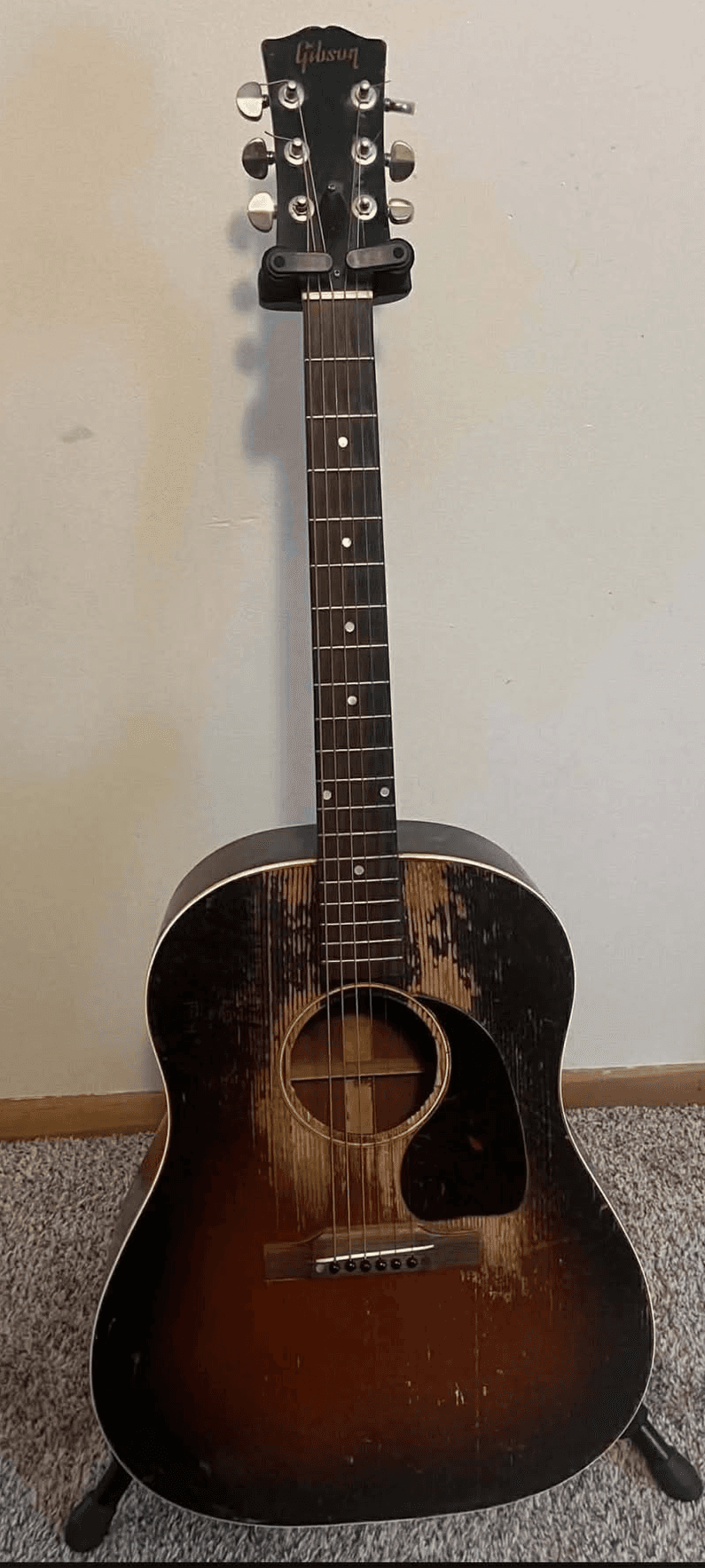
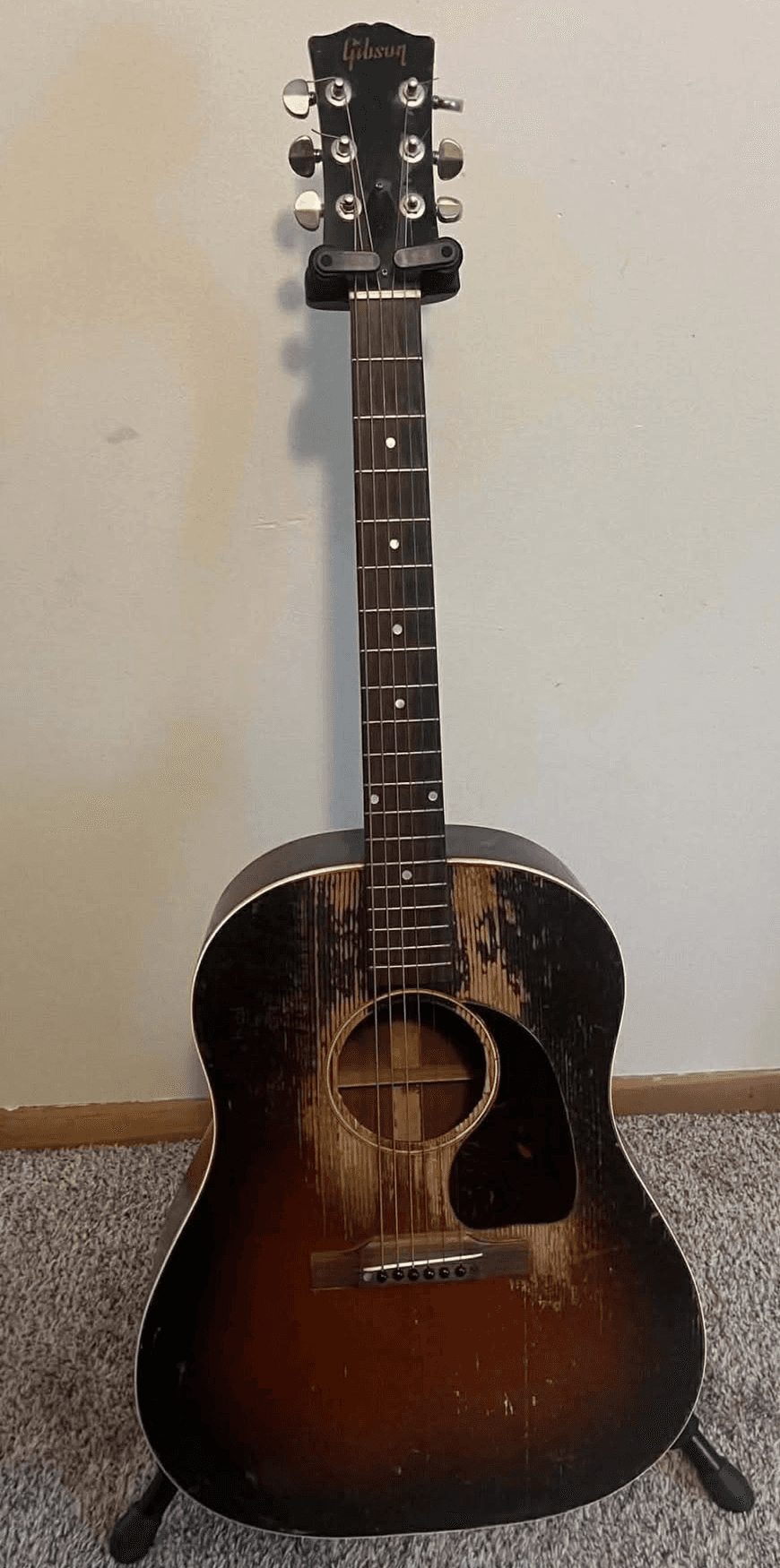
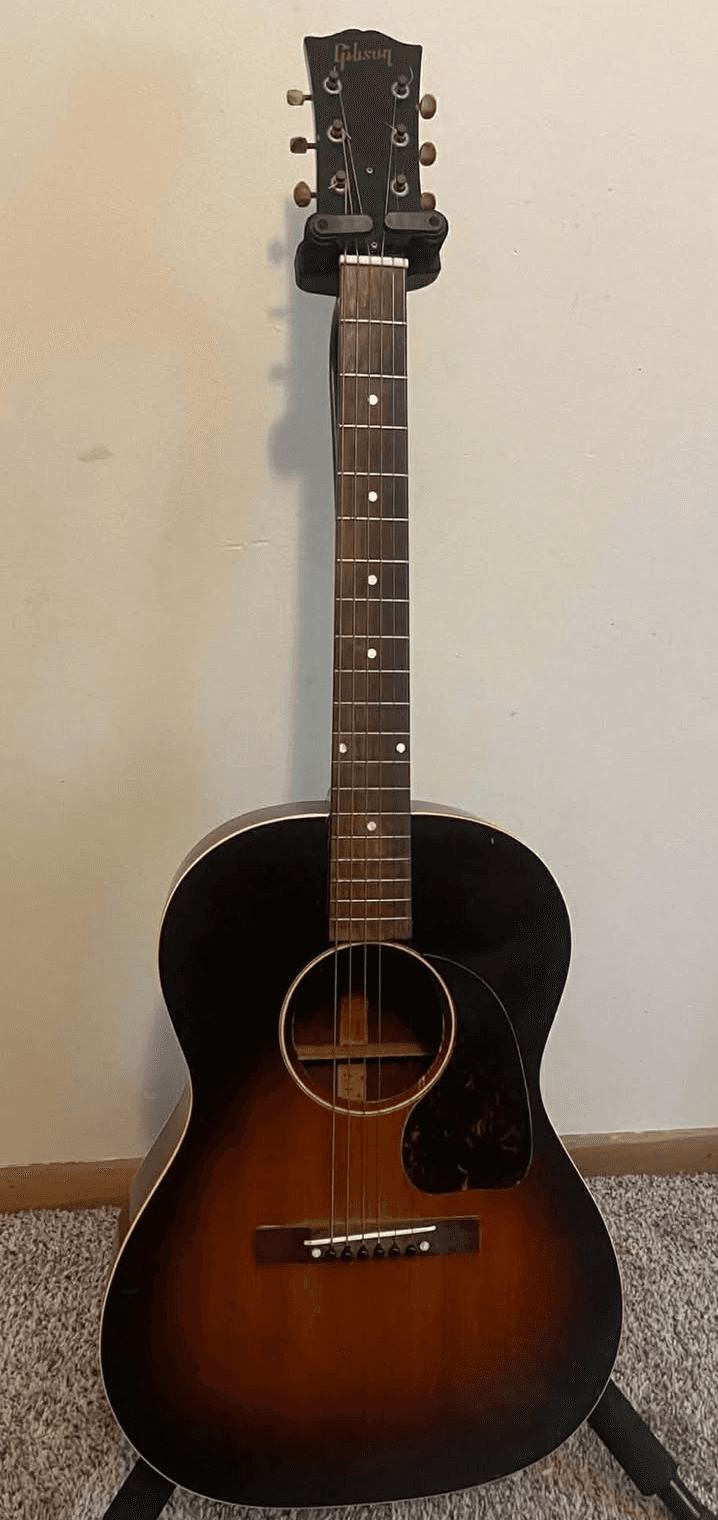
The 1947 Gibson LG-2 was the first year of Gibson’s post-war small-body acoustic workhorse, a mahogany flattop built for working musicians, students, and hobbyists. Originality, bracing, and condition drive value. Edgewater Guitars buys vintage Gibson acoustics nationwide with free expert appraisals and same-day cash offers. Call or text (440) 219-3607.
Why the 1947 LG-2 Matters
The 1947 Gibson LG-2 holds a unique place in guitar history—it represents the very first year of production for one of Gibson’s most important small-body acoustic models. Introduced as materials and manufacturing returned to civilian production after World War II, the LG-2 was Gibson’s answer to the growing demand for affordable, high-quality guitars in post-war America.
What makes 1947 special:
First production year of an iconic model line that would run for decades
Banner headstock era featuring the patriotic “Only a Gibson Is Good Enough” banner logo (1943-1947)
Premium Adirondack (Red) spruce tops before spruce supplies became more limited
Old-growth mahogany back, sides, and neck from pre-war timber stocks
Transition year features bridging wartime and peacetime manufacturing
Hand-built craftsmanship from Gibson’s experienced Kalamazoo workforce
Sunburst finish with nitrocellulose lacquer that has aged beautifully
Smaller, more intimate body than the J-45, ideal for fingerpicking and recording
The LG-2 was designed as an entry-level flattop, positioned below the J-45 in Gibson’s catalog. However, “entry-level” in 1947 meant a professionally-built instrument with solid woods, hand-carved bracing, and meticulous craftsmanship—qualities that make these guitars highly sought after today.
Historical Context: Gibson’s Post-War Relaunch
In 1947, Gibson was emerging from the constraints of wartime production. The Kalamazoo factory had spent 1942-1945 building wooden airplane parts, folding rules, and other military equipment. Guitar production resumed in 1945, but material shortages limited what could be manufactured. By 1947, the factory was returning to full guitar production, though some materials remained scarce.
Key developments in 1947:
Gibson formally introduced the LG-2 as a catalog model (though some late 1946 examples may exist)
Factory production increased as materials became more available
The banner headstock logo was discontinued mid-year (making early 1947s especially collectible)
Access to premium tone woods improved but still relied heavily on pre-war stocks
Returning veterans fueled demand for affordable musical instruments
Competition from Martin, Epiphone, and Kay drove innovation in the affordable guitar market
The LG-2’s Market Position:
The LG-2 filled an important niche in Gibson’s 1947 lineup. With an original retail price of approximately $57.50, it sat below the mahogany J-45 ($97.50) and far below fancy models like the J-200 ($295). This pricing made professional-quality Gibson guitars accessible to working musicians, students, and hobbyists who couldn’t afford the flagship models.
The “LG” designation stood for “L-size, Gut string,” indicating the smaller 14.75” lower bout body designed originally for gut strings (though steel strings were increasingly common by 1947). The “-2” indicated it was the second-tier finish level, with a simple sunburst rather than natural finish.
Musical Context:
Country music was booming in post-war America
Folk music was evolving beyond Woody Guthrie’s dust bowl ballads
Blues musicians were transitioning from acoustic to electric, but acoustics remained essential
Recording technology favored smaller-body guitars that didn’t overpower primitive microphones
Returning GIs sought instruments for entertainment and creative expression
Banner Headstock: Early 1947 examples with the banner logo command 25-35% premiums over non-banner examples
Originality: All-original examples with factory finish worth 50-70% more than refinished guitars
Top Quality: Adirondack spruce tops in excellent condition with minimal cracking add significant value
Structural Integrity: No cracks, no neck resets, original bridge critical to premium pricing
Hardware: Original Kluson tuners and original bridge essential for collector-grade values
Case: Original chipboard case (brown with maroon interior typical) is a desirable original accessory
Documentation: Any original paperwork, receipts, or provenance significantly increases value
Recent Market Trends:
Banner headstock Gibsons have appreciated 20-30% over the past five years
First-year production instruments command growing premiums
Small-body vintage Gibsons increasingly popular with recording artists
Player-grade examples remain accessible to working musicians
Pristine examples reaching new price levels at specialized auctions
Comparative Values:
1947 LG-2 values approaching 1947 J-45 values despite smaller size
First-year LG-2s worth more than mid-1950s examples
Similar pricing to period Martin 00-18 but with different tonal character
Note: At Edgewater Guitars, we consistently pay 30-40% more than typical guitar shops for premium examples. We understand that banner headstock 1947 LG-2s are among the most collectible small-body Gibsons and price our offers accordingly.
Detailed Identification Guide
Serial Numbers
1947 Gibson LG-2s typically have serial numbers in the A-1xxx to A-4xxx range, ink-stamped on the back of the headstock. Gibson’s serial numbering system from this era can be inconsistent, with some overlap between years.
Serial Number Location:
Stamped in black ink on back of headstock (center, below tuners)
“A” prefix followed by 4 digits
Some very early 1947 examples may have inconsistent formats
Numbers often faded or partially worn on heavily played instruments
Serial numbers alone cannot definitively date these guitars—use multiple verification methods
Factory Order Number (FON)
The most reliable dating method is the Factory Order Number stamped inside the guitar on the neck block.
1947 FON Format:
Visible through soundhole on the neck block
Three or four-digit number
May or may not include batch number
1947 FON numbers typically range from approximately 100-400
Some early 1947s may have late 1946 FON numbers due to production timing
To view FON:
Look through soundhole toward neck joint
May require angled light and mirror
Numbers stamped into wood, sometimes faint
Critical for accurate dating when serial number is unclear
Non-Banner 1947 Features:
“Gibson” in script logo only
No banner rectangle
Otherwise identical construction
Wood Identification
Top Wood:
Adirondack (Red) spruce—premium tone wood
Wider grain spacing than Sitka spruce
Often shows figuring, bearclaw, or hazel patterns
Two-piece book-matched construction
Original color: cream to light amber
After 75+ years: rich amber to dark honey color
Grain runs vertically (parallel to centerline)
Back and Sides:
Solid mahogany (Honduras mahogany typical)
Two-piece book-matched back
Straight, even grain patterns
Sunburst finish over natural mahogany
Darker sunburst on back edges
Neck:
Mahogany neck with V-shaped profile
Rosewood fingerboard (likely Brazilian rosewood in 1947)
Glued-in set neck construction
Dowel stick reinforcement (no adjustable truss rod in 1947)
Hardware Specifications
Tuners:
Kluson Deluxe strip tuners
Three-on-a-plate design on each side
White plastic buttons (now yellowed to cream/amber)
Nickel plating (may show wear or tarnish)
“Kluson” or patent stamps on back plates
Original tuners critical to collector value
Bridge:
Rosewood belly bridge (slight upward curve)
Traditional pyramid shape at ends
Through-saddle design
Tied string attachment (no bridge pins)
Bridge may be ebony on some examples
Original bridges show characteristic wear under saddle slot
Pickguard:
Small teardrop-shaped pickguard
Tortoiseshell celluloid material
Glued directly to top (no screws)
Positioned below soundhole
Original guards often show shrinkage, warping, or cracking
Some examples may have black pickguards
Binding:
Single-ply white binding on top edge only
No back binding (cost-saving measure)
Binding may show yellowing or checking
Some shrinkage common after 75+ years
Detailed Physical Specifications
Body Dimensions:
Lower bout width: 14.75” (L-size body)
Upper bout width: 10.5”
Waist: approximately 8.75”
Body depth: 4.5” at tail block
Smaller than J-45 dreadnought
Ladder-braced or X-braced (transitional period—both exist)
Neck Specifications:
Scale length: 24.75” (Gibson standard)
Nut width: 1-11/16”
Neck profile: Full V-shape (substantial by modern standards)
12 frets clear of body (14th fret joins body)
19 total frets (typically)
Fingerboard radius: Approximately 12”
Dot inlays at frets 3, 5, 7, 9, 12, 15, 17
Double dots at 12th fret
Bracing:
Critical detail: 1947 was transitional for LG-2 bracing
Some examples have ladder bracing (traditional)
Some examples have X-bracing (modern)
Both configurations exist in 1947 production
X-braced examples generally more valuable to players
Ladder-braced examples valued by purists and historians
Bracing pattern visible with inspection mirror through soundhole
Weight:
Typical weight: 3.5-4.0 lbs
Lighter than J-45 due to smaller body
Lighter than modern guitars due to thin finish and lighter bracing
Specific weight varies by wood density and bracing pattern
Finish:
Nitrocellulose lacquer sunburst on top
Sunburst back (dark edges, lighter center)
Natural mahogany sides with dark sunburst edges
Thin finish application (much thinner than modern production)
Finish checking, crazing, and amber tinting normal and desirable
Original finish should show consistent aging patterns
Tonal Characteristics
The 1947 LG-2 delivers an intimate, focused tone that has made it a favorite of recording artists and fingerstyle players for decades.
Sound Profile:
Fundamental Tone: Warm, focused, midrange-forward character
Bass Response: Tight and controlled, not boomy—perfect for recording
Treble Clarity: Clear and articulate with vintage sweetness
Sustain: Excellent sustain that has improved with decades of playing
Projection: Surprising volume for a small-body guitar
Dynamic Range: Highly responsive to touch and playing dynamics
Note Separation: Individual notes remain clear in complex fingerpicking
Why 1947 LG-2s Sound Special:
Adirondack Spruce: Lighter, stiffer, more responsive than modern Sitka spruce
Old-Growth Mahogany: Denser, more resonant than modern sustainably-harvested wood
75+ Years of Aging: Wood crystallization improves resonance and complexity
Thin Finish: Nitro finish has thinned over decades, allowing better vibration
Smaller Body: More focused tone, less prone to muddiness than larger guitars
Hand-Voiced Bracing: Individual attention to bracing results in unique tonal character
Hide Glue Construction: Traditional joinery allows optimal vibration transfer
Recording and Performance Characteristics:
Ideal for studio recording—doesn’t overpower microphones
Cuts through mix without competing with vocals
Perfect for fingerstyle blues, folk, and early country styles
Excellent for songwriter demos and intimate performances
Sits beautifully in ensemble settings without dominating
Minimal feedback issues when amplified (due to smaller body)
Bracing Impact on Tone:
Ladder-Braced Examples: Warmer, more “old-timey” character; looser bass response
X-Braced Examples: More balanced, modern sound; tighter bass, better volume
Both configurations have devoted followers
Neither is definitively “better”—tonal preference is subjective
Comparison to Other Guitars:
vs. J-45: More focused, less bass-heavy; better for recording
vs. Martin 00-18: Similar size but warmer, less bright; different midrange character
vs. Later LG-2s: 1947 has superior Adirondack tops and old-growth mahogany
vs. Modern Small-Body Gibsons: Vintage examples have more complex overtones and faster response
Common Issues & Modifications
When evaluating a 1947 LG-2, watch for these typical issues and modifications:
Structural Issues
Top Cracks:
Most common issue on 75+ year old guitars
Cracks often appear along grain lines or near soundhole
Bridge area cracks from string tension stress
Pickguard area cracks (sometimes hidden under guard)
Professional repairs with proper cleats acceptable
Multiple or crossing cracks more serious
Unrepaired cracks significantly reduce value
Bridge Problems:
Bridge lifting or separation from top (serious issue)
Belly warping in bridge from decades of string tension
Replacement bridges common (reduces value 15-25%)
Check saddle height—excessive height indicates top bellying
Look for evidence of bridge regluing
Original tied-string bridges sometimes replaced with pin bridges (reduces value)
Neck Issues:
Neck resets common and often necessary after 75 years
Most 1947 LG-2s will need or have had a neck reset
Professional reset maintains playability without major value loss
Check neck angle by sighting down fretboard
Non-adjustable truss rod means neck must be structurally sound
Neck warping or twisting is serious (no truss rod to correct)
Fingerboard wear from 75+ years of playing
Bracing Integrity:
Loose braces detectable by careful tap testing
Ladder bracing more prone to separation than X-bracing
Bridge plate cracks from string tension
Loose or separated X-braces less common but more serious
Professional regluing acceptable if done properly
Check for loose back bracing (less common but possible)
Finish Issues
Refinishing:
Complete refinishes reduce value by 50-70%
Even “professional” refinishes significantly impact collectibility
Check for overspray inside soundhole
Look for finish buildup on binding
Inconsistent checking patterns suggest refinish
Wrong sunburst pattern or color indicates refinish
UV light examination can reveal refinish work
Finish Wear and Aging:
Natural wear and checking actually increase value
“Honest wear” from playing more desirable than pristine condition
Finish checking normal and expected on 75+ year old nitro
Amber tinting and darkening of finish normal
Play wear on back of neck, top near soundhole expected
Pickguard shrinkage may cause finish cracks (not refinish)
Touch-ups and Overspray:
Minor professional touch-ups minimally affect value if well-done
Extensive touch-up work reduces value
Sunburst “enhancement” common but reduces collectibility
Overspray on original pickguard indicates refinish
Check for consistent patina across entire instrument
Hardware Modifications
Replaced Tuners:
Original Kluson tuners frequently replaced with Grovers
Replacement tuners reduce value 10-20%
Additional screw holes from wrong replacement tuners reduce value further
Modern sealed tuners change vintage aesthetic
Original tuners should be saved even if replaced for playing
Bridge Modifications:
Original belly bridge often replaced with modern bridge
Pin bridge conversions common (significantly reduces value)
Ebony replacement bridges more acceptable than rosewood
Modern compensated saddles change vintage character
Check for enlarged saddle slot indicating multiple saddle changes
Undersaddle pickups require modification (avoid if possible)
Pickguard Changes:
Original celluloid pickguards often shrink, crack, or fall off
Missing pickguard and visible ghost outline acceptable
Replacement pickguards slightly affect value if period-correct style
Screwed-on pickguards (instead of glued) indicate replacement
Larger modern pickguards significantly change appearance
Non-Original Modifications
Strap Buttons:
Period guitars rarely had strap buttons
Added strap buttons common and minimally affect value if professionally installed
Check for cracks around button installation
Tail block button installation preferable to heel installation
Electronics:
Soundhole pickups reversible and don’t significantly affect value
Bridge pickups requiring routing significantly reduce value
Avoid instruments with interior modifications for electronics
Endpin jack installations common and acceptable if professional
Truss Rod Additions:
Some 1947 LG-2s have had truss rods retrofitted
This modification is controversial among collectors
Significantly reduces collector value (30-40%)
May improve playability but destroys originality
Check for filled holes or plugs in headstock
Authentication Red Flags
Counterfeit Concerns:
1947 LG-2s less commonly faked than high-end models
Banner headstock guitars occasionally faked (banner added to non-banner guitars)
Check for incorrect serial number format or placement
Modern features (adjustable saddle, truss rod) indicate fake or heavy modification
Wrong bracing pattern for year
Incorrect headstock shape or logo style
Modern wood species (Sitka instead of Adirondack)
Finish that doesn’t show proper aging characteristics
Incorrect pickguard shape or size
Why Players and Collectors Value 1947 LG-2s
Playing Characteristics
Professional Musicians Appreciate:
Recording-friendly size and tone
Comfortable smaller body for extended playing
Excellent fingerstyle response
Vintage tone that inspires songwriting
Manageable feedback characteristics
Warm, non-aggressive sound perfect for vocals
Lightweight for travel and live performance
The 1947 Sweet Spot:
First production year rarity
Banner headstock collectibility (early 1947)
Premium Adirondack spruce before supplies tightened
Old-growth mahogany no longer available
Transition-era features make each guitar somewhat unique
Hand-craftsmanship before later production increases
More affordable than larger J-45 or fancy models
Collector Appeal
Investment Factors:
First-year production of important model line
Banner headstock rarity (early 1947 only)
Steady appreciation over decades
More accessible than pre-war L-00 models
Historical significance as post-war introduction
Premium tone woods increasingly rare and valuable
Limited production numbers in first year
Historical Significance:
Represents Gibson’s post-war product strategy
Introduction of affordable professional instruments
Part of folk music and recording history
Used by countless session musicians and songwriters
Bridge between pre-war and modern guitar design
Documents Gibson’s Kalamazoo craftsmanship
Practical Investment:
Can be played and enjoyed while appreciating
More stable long-term investment than many alternatives
Emotional and historical value beyond financial
Banner headstock examples show strongest appreciation
Growing recognition of small-body vintage Gibson value
Recording Studio Favorite
1947 LG-2s have become increasingly popular in recording studios:
Perfect size for close-miking techniques
Controlled low-end doesn’t muddy recordings
Focused midrange sits perfectly in mixes
Responds beautifully to various recording techniques
Vintage character adds warmth to digital recordings
Used by contemporary artists seeking authentic vintage tone
Selling Your 1947 Gibson LG-2
If you own a 1947 LG-2 or have inherited one, Edgewater Guitars offers the expertise and fair pricing that these historically significant instruments deserve.
Why Sell to Edgewater Guitars?
Premium Valuations:
We pay 30-40% more than typical guitar shops
We understand first-year production significance
We recognize banner headstock premiums
We properly value Adirondack spruce tops and old-growth mahogany
We appreciate ladder vs. X-bracing differences
We understand how professional repairs affect value vs. poor modifications
Expert Authentication:
Free professional authentication and appraisal
We verify serial numbers, FON stamps, and construction details
We can identify banner vs. non-banner transitions
We recognize period-correct features and anachronisms
We consult with leading vintage Gibson experts when necessary
We provide detailed written appraisals for insurance or estate purposes
Streamlined, Professional Process:
Immediate cash offers for qualified instruments
No consignment fees or lengthy waiting periods
No hassles with online listings or unqualified buyers
We handle secure shipping and full insurance for remote sellers
In-person evaluation available throughout our service area
For exceptional banner headstock examples, we travel beyond our standard region
White-Glove Service:
Climate-controlled transportation for valuable instruments
Discretion and confidentiality for estate sales and significant collections
Honest, transparent evaluation even if we don’t make an offer
Detailed documentation of our assessment process
Referrals to restoration specialists if needed
Fair treatment and respect for your instrument’s history
What We Evaluate
When assessing your 1947 LG-2, we carefully examine:
Banner Headstock: Early 1947 examples command significant premiums
Originality: All-original instruments worth substantially more
Structural Condition: Top integrity, neck condition, bracing soundness
Finish Originality: Original finish vs. refinish dramatically affects value
Hardware: Original Kluson tuners and bridge critical
Bracing Type: Ladder vs. X-bracing (both valuable, different characteristics)
Playability: Neck angle, action, fret condition
Tone Quality: We actually play the instruments
Documentation: Original case, receipts, provenance, photos
Market Comparables: Recent sales and current demand
Our Service Area
Edgewater Guitars purchases vintage guitars throughout:
Ohio: Cleveland, Columbus, Cincinnati, Toledo, Akron, Dayton
Michigan: Detroit, Grand Rapids, Ann Arbor, Flint
Pennsylvania: Pittsburgh, Erie, Allentown
Indiana: Fort Wayne, South Bend, Indianapolis
West Virginia: Wheeling, Morgantown, Charleston
For exceptional instruments like banner headstock 1947 LG-2s, we travel nationally to evaluate and purchase premium examples.
Get Your Free Valuation Today
Ready to sell your 1947 Gibson LG-2? Contact the vintage guitar experts at Edgewater Guitars:
Call: (440) 219-3607
Email: info@edgewaterguitars.com
Online Quote: Get Your Free Valuation
We respond to all inquiries within 24 hours. With detailed photos, we can often provide preliminary valuations over the phone or via email.
Related Resources
To help you research and authenticate your vintage Gibson acoustic guitar:
Complete Gibson Serial Number Lookup Tool
Gibson Acoustic Dating Guide (1940s-1950s)
Understanding Gibson Factory Order Numbers
Banner Headstock Gibson Guide (1943-1947)
Identifying Adirondack vs. Sitka Spruce Tops
How to Spot Refinished Gibson Acoustics
Vintage Gibson Hardware Authentication
Gibson LG-Series History and Evolution
Ladder Bracing vs. X-Bracing in Vintage Gibsons
Trust the Vintage Guitar Experts
When it’s time to sell your 1947 Gibson LG-2—especially rare banner headstock examples—trust the team that understands the historical significance, craftsmanship, and true market value of these post-war treasures.
Edgewater Guitars specializes in purchasing premium vintage guitars throughout Ohio, Michigan, Pennsylvania, Indiana, and West Virginia. For exceptional instruments like banner headstock 1947 LG-2s, we provide professional appraisal services and immediate cash offers—often traveling to you for high-value evaluations.
Don’t settle for low-ball offers from shops that don’t understand vintage Gibson history. Contact the experts who appreciate what makes your 1947 LG-2 special.
Contact Edgewater Guitars Today:
Phone: (440) 219-3607
Email: info@edgewaterguitars.com
Service Area: Ohio and surrounding Midwest states (national travel for premium instruments)
Edgewater Guitars is owned by Stephen Pedone and Gavin Coe. Stephen handles appraisal and authentication and is best known for authenticating pre-CBS Fender guitars and original custom-color finishes. Gavin has bought, sold and appraised vintage guitars for 16 years and does the in-person buying across Ohio and the surrounding states. Together they have bought and appraised more than 1,250 vintage guitars since 2015. Every value question on this site routes to a free appraisal: call or text (440) 219-3607.
Sell your 1947 Gibson LG-2
Edgewater Guitars buys vintage Gibson acoustics and other vintage Gibsons nationwide. We give free, honest appraisals and fair same-day cash offers, with local pickup or insured nationwide shipping. Call or text (440) 219-3607 or request a free estimate.
How much is a 1947 Gibson LG-2 worth?
Value depends on originality, condition, finish, and whether the pickups and hardware are original. The most accurate way to find out is a free appraisal. Send a few photos and the serial number and we will give you an honest market assessment.
Where can I sell a 1947 Gibson LG-2?
Edgewater Guitars buys them directly, nationwide, with same-day cash offers and no obligation. You can also date yours with our Gibson serial number lookup.