DATE :
1937 Martin 00-18: Depression-Era Perfection in American Guitar Craftsmanship
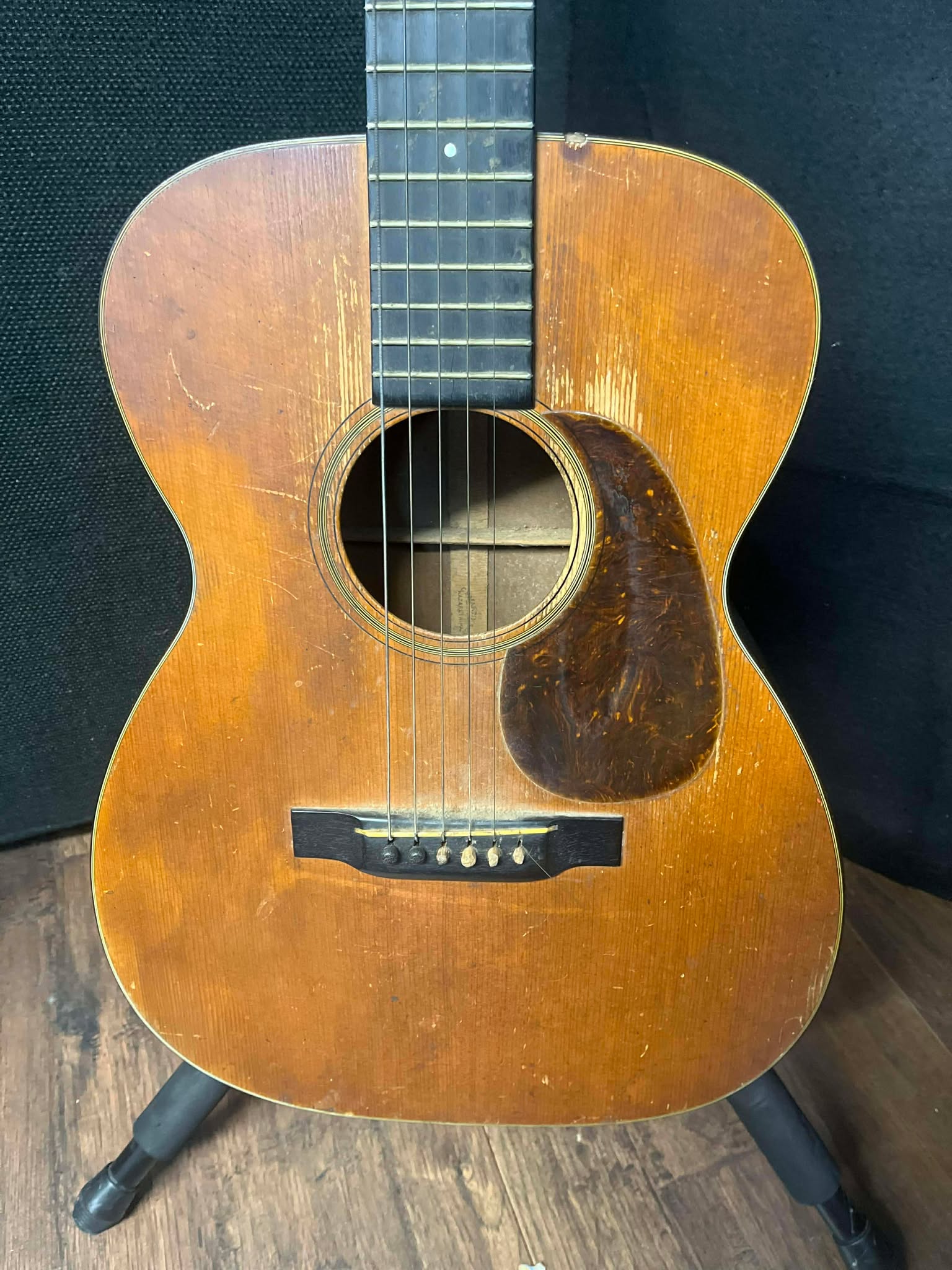
1937 Martin 00-18: Depression-Era Perfection in American Guitar Craftsmanship
The 1937 Martin 00-18 was Depression-era perfection, a mahogany-and-spruce parlor built at the height of Martin’s prewar craftsmanship. Edgewater Guitars buys vintage Martin 00-18s nationwide with free expert appraisals and same-day cash offers. Call or text (440) 219-3607.
Why the 1937 Martin 00-18 Represents the Peak of Pre-War Construction
The 1937 Martin 00-18 stands among the most sought-after vintage acoustic guitars ever produced, representing C.F. Martin & Company’s unwavering commitment to excellence during America’s continued economic struggle. As the Great Depression entered its eighth year, Martin refused to compromise the quality standards that had defined the company since 1833, instead doubling down on craftsmanship and premium materials that would never again be available in guitar manufacturing.
What distinguishes the 1937 00-18 isn’t simply its age—it’s the unrepeatable convergence of materials, techniques, and circumstances. These instruments were constructed with old-growth Adirondack spruce tops and genuine mahogany back and sides that had been aging in Martin’s Nazareth, Pennsylvania factory for years, sometimes decades. The wood came from forests logged before modern forestry practices, cut using methods abandoned generations ago, and seasoned under conditions that modern kiln-drying cannot replicate.
The 1937 production year holds particular significance in Martin’s history. By this point, the company had perfected construction techniques refined over more than a century of guitar building. The 1937 00-18 represents mature Depression-era construction—every detail optimized through years of continuous production, yet still retaining all the premium materials and hand-craftsmanship that would gradually disappear in coming decades.
For collectors researching family heirlooms, musicians seeking exceptional playing instruments, or investors evaluating vintage guitar acquisitions, understanding the 1937 Martin 00-18’s unique characteristics proves essential. This comprehensive guide provides the detailed authentication information, historical context, and technical specifications needed to properly identify, evaluate, and appreciate these extraordinary instruments.
Historical Context: Martin Guitars in 1937
The Economic Landscape
By 1937, America had endured eight years of the Great Depression. While some economic indicators showed improvement—unemployment had fallen from its 1933 peak—the nation still struggled with approximately 14% unemployment and widespread economic uncertainty. Luxury purchases like quality musical instruments required serious financial commitment from working families.
Despite continuing economic challenges, C.F. Martin & Company maintained operations without the dramatic quality compromises seen at other manufacturers. Frank Henry Martin, who led the company during this period, insisted that Martin’s reputation depended on unwavering quality standards. Rather than cheapening construction or substituting inferior materials, Martin built fewer guitars to higher standards, preserving the company’s reputation for future generations.
Martin’s Position in the 1937 Guitar Market
In 1937, Martin competed in an American guitar market dominated by several major manufacturers. Gibson offered competing flat-top guitars, while numerous smaller companies produced budget instruments for price-conscious consumers. Martin’s strategy focused on quality over quantity, positioning their instruments as premium products for serious musicians willing to invest in superior craftsmanship.
The 00-18 occupied a crucial niche in Martin’s 1937 catalog. It represented the company’s “professional working musician’s guitar”—more accessible than ornate rosewood models like the 00-28 or 00-42, yet built with identical fundamental construction principles and premium old-growth tonewoods. The all-mahogany construction reduced costs compared to Brazilian rosewood models while delivering exceptional tone that professional players valued for recording and performance.
1937-Specific Production Details
Martin’s 1937 production showed the company’s mature Depression-era manufacturing approach. By this seventh year of economic crisis, Martin had optimized workflows to maintain quality while managing costs. The guitars built in 1937 benefited from:
Refined Construction Techniques: Seven years of Depression-era production had forced Martin to maximize efficiency without compromising quality. Workers had perfected time-saving techniques that maintained the hand-crafted character essential to Martin’s reputation.
Premium Wood Inventory: Martin’s lumber inventory in 1937 included exceptionally well-seasoned wood. Boards purchased in the prosperous 1920s had now aged 10-15 years, reaching ideal moisture content and stability. This extended seasoning period contributed to superior tonal characteristics impossible to achieve with modern accelerated drying methods.
Established 14-Fret Standard: By 1937, the 14-fret neck design had become fully standardized across Martin’s line. While 12-fret models remained available on special order, the vast majority of 1937 00-18 guitars featured the modern 14-fret configuration that players preferred for increased fretboard access.
Transitional Features: The late 1930s represented a transitional period in Martin construction. Various small changes appeared gradually—different binding materials, evolving bridge designs, hardware variations—creating interesting diversity among 1937 examples. No single “correct” specification exists, as Martin implemented changes throughout the production year.
Musical Context and Notable Players
The 1937 00-18’s musical context shaped its design and capabilities. This was the era of:
Early Recording Technology: Recording studios in 1937 still used relatively primitive equipment by modern standards. The 00-18’s focused midrange and controlled bass made it ideal for recording situations where larger guitars could overwhelm early microphones. Many session musicians preferred 00-size instruments specifically for recording work.
Country and Blues Development: American roots music was developing rapidly in 1937. Country music was evolving from its folk origins, blues was spreading from the Mississippi Delta northward, and folk music was experiencing renewed interest. The 00-18’s balanced tone and comfortable playing feel made it perfect for these emerging styles.
Fingerstyle Techniques: Complex fingerstyle guitar techniques were gaining popularity in 1937. The Carter Family’s innovative bass-melody style influenced countless players, while blues guitarists developed intricate fingerpicking patterns. The 00-18’s clear note separation and balanced response excelled at these techniques.
Material Sources and Availability
The materials used in 1937 00-18 construction came from sources that no longer exist:
Adirondack Spruce: The “red spruce” tops came from old-growth forests in the Adirondack Mountains and similar northeastern regions. These trees had grown slowly over 150-200 years in harsh climates, creating wood with exceptional stiffness-to-weight ratios. By the 1940s, old-growth Adirondack spruce became increasingly scarce due to logging pressure, making pre-war instruments irreplaceable.
Genuine Mahogany: The mahogany used for backs, sides, and necks came from old-growth Central and South American forests. This mahogany exhibited tighter grain patterns, higher density, and different cellular structure than modern mahogany from plantation-grown trees. The specific tonal characteristics of old-growth mahogany cannot be replicated with younger wood.
Brazilian Rosewood Fingerboards: While the 00-18’s body was mahogany, the fingerboard used Brazilian rosewood (Dalbergia nigra)—now a protected species under international law. The specific characteristics of Brazilian rosewood—density, grain structure, tonal properties—differ from modern fingerboard woods.
Traditional Finish Materials: The nitrocellulose lacquer used in 1937 was formulated differently than modern nitro finishes. The thinner application and different chemical composition allowed the wood to resonate more freely while providing adequate protection.
Current Collectibility and Market Position
Why 1937 00-18 Guitars Command Premium Interest
Pre-war Martin guitars from the mid-to-late 1930s represent the pinnacle of collectible vintage acoustics. The 1937 00-18 occupies a particularly desirable position for multiple compelling reasons:
Irreplaceable Materials: The old-growth Adirondack spruce and genuine mahogany used in 1937 production cannot be sourced today. Modern Martin guitars, regardless of price point, use fundamentally different wood from younger, faster-growing trees. No amount of modern craftsmanship can replicate the tonal characteristics of 88-year-old wood that was already premium quality when harvested nearly a century ago.
Historical Authenticity: Depression-era Martins represent American industrial craftsmanship at its finest during one of the nation’s most challenging economic periods. These guitars embody values—uncompromising quality, honest materials, skilled hand-work—that resonate deeply with collectors and players who appreciate authentic historical artifacts.
Superior Playability: Unlike many vintage instruments that serve primarily as collectibles, 1937 00-18 guitars remain outstanding playing instruments. Professional musicians actively use these guitars for recording, performance, and composition. The combination of proper neck geometry, comfortable body dimensions, and fully aged tonewoods creates instruments that often play better than new guitars costing many times more.
Accessible Pre-War Entry Point: Compared to Brazilian rosewood models from the same era, mahogany 00-18 guitars offer more accessible entry into pre-war Martin ownership. This positions them as both serious collector instruments and practical playing guitars—a dual appeal that drives strong market demand.
Fully Matured Tone: Nearly nine decades of aging has brought the wood to peak tonal maturity. The spruce top has completely opened through decades of vibration, the mahogany has developed complex harmonic characteristics, and the entire instrument resonates with a richness that new guitars simply cannot achieve. This tonal development continues throughout the instrument’s life, with well-played examples showing more advancement than guitars stored unplayed.
Factors Influencing Individual Guitar Value
Not all 1937 00-18 guitars hold equal collector appeal. Understanding specific value factors helps owners appreciate their instruments:
Originality: All-original guitars with factory finish, original hardware, tuners, bridge, nut, and saddle command substantial premiums over guitars with replaced components or refinishes. Even professional restoration work reduces value compared to untouched original condition. The vintage guitar market increasingly prizes originality above all other factors.
Structural Condition: Finish checking, top cracks, and play wear are expected on 88-year-old instruments, but structural integrity matters enormously. Professionally repaired top cracks minimally affect value when properly addressed. However, neck breaks, bridge lifting, extensive repair history, or compromised structural integrity significantly reduce desirability and market value.
12-Fret vs. 14-Fret Configuration: While 14-fret models dominate 1937 production, occasional 12-fret examples command special interest due to lower production numbers and retention of more traditional features. However, 14-fret guitars typically offer better playability for modern players and broader market appeal.
Playing Condition: Guitars with straight necks, proper relief, comfortable action, and excellent playability command premiums over instruments requiring extensive setup work or neck resets. Professional players seek instruments they can immediately use for recording or performance without major service work.
Tonal Excellence: Individual guitars vary in tonal quality based on wood selection, aging conditions, and play-in time. Instruments delivering exceptional tone—powerful bass response, crystalline trebles, balanced midrange, and complex harmonics—attract premium interest from both players and serious collectors.
Documentation and Provenance: Verified ownership history, original case, purchase receipts, and authenticated documentation add significant value. Guitars with celebrity ownership or documented use in notable recordings command extraordinary collector interest. Complete provenance becomes increasingly rare and valuable as decades pass.
Comparison to Other Production Years
Understanding how 1937 00-18 guitars compare to other years helps establish their specific appeal:
Versus 1936 Models: 1936 and 1937 guitars share fundamentally similar construction, materials, and characteristics. Subtle variations exist in individual instruments, but year-to-year differences remain minimal. Both years represent peak Depression-era Martin quality with comparable collector appeal and tonal characteristics.
Versus Earlier 1930s Models: Guitars from 1930-1935 may show slightly different construction details, particularly regarding the 12-fret to 14-fret transition. Early 1930s guitars (1930-1933) predominantly featured 12-fret necks, while by 1937 the 14-fret design had become standard. This makes 1937 examples more compatible with modern playing styles.
Versus Late 1930s Models: Guitars from 1938-1941 share similar characteristics with 1937 examples. However, as World War II approached, some materials began showing early signs of wartime scarcity. The 1937 production year predates these pressures, ensuring completely unrestricted access to premium materials.
Versus Post-War Models: Post-war 00-18 guitars (1947 and later) used fundamentally different materials and construction approaches. The shift from Adirondack to Sitka spruce, changes in bracing patterns, different mahogany sources, and modified construction techniques create substantially different instruments. Pre-war examples like the 1937 consistently command 3-5 times the value of similar-condition post-war guitars.
Comparison to Rosewood Models
Versus 00-28 (Brazilian Rosewood): Brazilian rosewood models from 1937 bring higher prices than mahogany 00-18 guitars due to rosewood’s scarcity and collector cachet. However, many professional musicians prefer the 00-18’s focused, balanced tone over rosewood’s broader frequency response. The mahogany guitar offers superior value for players prioritizing musical characteristics over investment potential.
Tonal Differences: Mahogany produces more focused midrange with quicker note decay, while rosewood delivers broader frequency response with longer sustain and more complex overtones. Neither is objectively superior—the choice depends on musical application and personal preference.
Market Position Among Vintage Acoustics
Versus Gibson: Depression-era Gibson flat-tops used different construction philosophies—typically ladder bracing rather than X-bracing. This creates fundamentally different tonal characteristics. Martin’s reputation for structural integrity and lasting quality typically gives pre-war Martins value advantages over comparable Gibson models, though exceptional Gibson examples command strong interest.
Versus Other Manufacturers: Depression-era guitars from smaller manufacturers (Washburn, Regal, Harmony, Kay) were often built as budget instruments with lower-grade materials. Martin maintained premium standards throughout the Depression, creating lasting quality and value differences that remain evident nearly 90 years later.
Investment Perspective
Pre-war Martin guitars have demonstrated consistent value appreciation over decades, often outperforming traditional financial investments:
Supply Constraints: Martin built limited numbers of 00-18 guitars during Depression years. No additional 1937 guitars will ever be manufactured. This absolutely finite supply creates scarcity fundamentals that support long-term value retention.
Increasing Demand: Interest in pre-war Martin guitars continues growing as collectors and musicians recognize these instruments’ special qualities. As knowledge spreads about the material and tonal differences between pre-war and modern guitars, demand pressure increases steadily.
Condition Premiums: The value gap between exceptional examples and average-condition guitars continues widening. Outstanding instruments appreciate faster than guitars showing significant wear, extensive repair history, or originality compromises.
Practical Utility: Unlike purely collectible items, vintage Martin guitars remain functional musical instruments. This dual appeal—both collectible artifact and professional tool—creates broader market demand than purely decorative collectibles.
However, guitars should be valued primarily as musical instruments rather than financial investments. The 1937 00-18’s true value lies in its musical capabilities, historical significance, and the connection it provides to nearly nine decades of American musical history.
How to Identify and Authenticate a 1937 Martin 00-18
Martin Serial Numbers in 1937
Martin’s serial number system in 1937 continued the company’s traditional stamping method, with numbers impressed into the neck block inside the guitar body. Viewing the serial number requires looking through the soundhole at the neck block—the wooden reinforcement where the neck joins the body.
1937 Serial Number Range: Guitars built in 1937 typically carry serial numbers from approximately 63,800 to 66,000. However, Martin’s production system sometimes created overlap between years, as serial numbers were assigned when guitar construction began rather than when instruments were completed and shipped.
Serial Number Location: The serial number appears stamped on the center of the neck block visible through the soundhole. The stamping method used in 1937 created numbers that should appear evenly impressed with consistent depth and aged uniformly with surrounding wood. Modern forgers struggle to replicate the specific appearance and aging characteristics of authentic 1930s Martin stampings.
Critical Serial Number Considerations:
Serial numbers alone cannot definitively authenticate a 1937 Martin
Multiple construction features must align with 1937 production specifications
Some transitional guitars may carry 1936 or 1938 serial numbers while showing 1937 features
Factory production records sometimes show variations in exact dating
Always cross-reference serial numbers with other authentication methods
Be extremely suspicious of guitars where the serial number appears the only “correct” feature
Model Stamp Identification
1937 Martin 00-18 guitars should display a model stamp on the neck block accompanying the serial number. This stamp typically reads “Style 18” or simply “18” and appears above or below the serial number impression.
Authentic 1937 Stamps Display:
Hand-stamped appearance with minor irregularities showing human application
Consistent aging and patina matching surrounding wood
Impression depth comparable to the serial number
Period-correct font style used by Martin during the 1930s
No evidence of restamping, over-stamping, or alteration
Natural wear consistent with 88 years of age
Dating Marks and Notations
Many 1937 Martin guitars contain pencil or ink dates written on various internal surfaces. These handwritten marks can include:
Build completion dates
Shipping dates
Quality control inspector initials
Worker identification codes
Model or specification notations
These markings provide valuable authentication evidence but aren’t universally present. Their absence doesn’t indicate authenticity problems, as not all 1937 guitars received such notations. When present, they should show aging consistent with the instrument and match Martin’s known marking practices from the period.
Body Size and Precise Dimensions
The 00-size Martin body measures 14.25 inches wide at the lower bout, positioning it as Martin’s mid-sized body style. Authentic 1937 00-18 specifications include:
Body Dimensions:
Lower bout width: 14.25 inches
Upper bout width: 10.25 inches
Body depth: 4.375 inches at tail block
Waist width: approximately 9.0 inches
Overall length (14-fret): approximately 38.5 inches
Overall length (12-fret, if applicable): approximately 38 inches
Scale length: 25.4 inches (14-fret) or 24.9 inches (12-fret)
Body Shape Characteristics:
Symmetrical, gently waisted figure-eight profile
Smooth, flowing curves without angular transitions
Precise left-right symmetry
Gentle waist creating comfortable playing position
Classical proportions refined over decades of production
Measurements should fall within typical manufacturing tolerances (approximately ±1/8 inch). Significant deviations suggest modification, misidentification, or forgery.
Top Wood Identification and Verification
Authentic 1937 00-18 guitars feature Adirondack spruce tops with specific visual and physical characteristics distinct from modern woods:
Grain Pattern Analysis: Old-growth Adirondack spruce displays remarkably tight, even grain lines—typically 15-25 grain lines per inch or more. The grain should run parallel to the guitar’s centerline, showing consistent spacing across the entire top surface. Widely spaced grain lines (8-12 per inch) or irregular grain patterns suggest wood substitution with modern Sitka spruce or other species.
Color and Aging: Original 1937 tops have aged to warm amber, golden, honey, or light caramel tones. The aging process creates natural color variation based on light exposure, playing wear, and environmental conditions. Uniform bright white tops indicate refinishing or inappropriate wood species. Dark, heavily yellowed tops may suggest excessive environmental exposure or improper storage.
Bookmatching Quality: The top consists of two spruce pieces joined at the guitar’s centerline, creating mirror-image grain patterns on each side. 1937 construction displays careful bookmatching with minimal visible glue line. The center seam should be virtually invisible and perfectly straight, demonstrating Martin’s meticulous craftsmanship standards.
Surface Texture: Adirondack spruce develops subtle surface texture as it ages, particularly along grain lines. The wood feels silky smooth but shows slight rippling when viewed at angles in proper lighting. Thick, glassy finishes or perfectly smooth surfaces indicate refinishing with modern materials.
Top Thickness: Pre-war Martin tops measure thinner than modern instruments—typically .090-.105 inches. This reduced thickness contributes to exceptional responsiveness and dynamic range but makes the tops more susceptible to cracks and damage. Significantly thicker tops suggest replacement or mis-identification.
Graduation: Martin’s builders hand-carved tops to varying thicknesses, creating gradual transitions from thicker center areas to thinner edges. This “graduation” contributes to the instrument’s tonal complexity and responsiveness.
Back and Side Wood Identification
The 1937 00-18 features solid mahogany back and sides with distinctive characteristics:
Mahogany Species Verification: Martin used genuine mahogany (Swietenia macrophylla or Swietenia mahagoni) from Central and South American old-growth forests. Authentic old-growth mahogany displays:
Straight, even grain patterns with consistent spacing
Reddish-brown to chocolate-brown coloring with natural variation
Subtle figure and color variation within individual boards
Dense, fine-grained structure without visible pores
Natural luster and depth when properly finished
Weight and density greater than modern mahogany
Back Construction Details: The back typically consists of two mahogany pieces joined at the centerline with careful bookmatching. Three-piece backs occasionally appear, particularly when efficient wood usage required during Depression-era production. The back displays slight arching—not flat but gently curved for structural strength and tonal enhancement.
Aging Characteristics: Original finish on mahogany darkens considerably over time, developing rich reddish-brown to deep chocolate tones with warm undertones. Mahogany exposed to light shows more pronounced color development, while areas protected by cases or in shadow may remain lighter. This natural color variation provides authentication evidence—refinished guitars typically show uniform coloring.
Side Construction: The sides are bent from single pieces of mahogany, typically showing continuous grain from top to bottom. The grain should wrap around the body’s curves naturally. Laminated sides or obvious grain discontinuities indicate replacement or different construction.
Neck and Fingerboard Construction Details
The neck construction on a 1937 00-18 displays specific features essential for authentication:
Neck Material and Construction: Solid mahogany neck carved from a single piece of wood, never laminated or reinforced with modern materials like graphite or carbon fiber. The neck wood should match the back and sides in appearance, grain characteristics, and color tone. The one-piece construction demonstrates traditional craftsmanship standards.
Neck Profile Characteristics: 1937 necks show a comfortable modified V-shaped profile, sometimes described as a “soft V.” The profile feels substantial without being clubby, with gentle shoulders on either side of a subtle central ridge. This differs dramatically from modern C-shaped profiles. Individual necks show variation based on the specific craftsman who shaped them, as neck carving remained largely a hand operation in 1937.
Neck Width Measurements: At the nut, 14-fret models typically measure approximately 1-3/4 inches (1.75”), while less common 12-fret examples measure approximately 1-11/16 inches (1.6875”). These measurements provided proper string spacing for fingerstyle playing while accommodating various hand sizes comfortably.
Fingerboard Material: Ebony fingerboard, typically African or Asian ebony rather than the now-protected Madagascan ebony used in modern instruments. The ebony should display:
Deep black coloring, possibly with subtle brown streaking
Dense, fine grain structure with no visible pores
Smooth, glassy surface when well-maintained
Natural wear patterns consistent with decades of playing
Slight darkening in high-wear areas from hand oils
Fret Material and Installation: Original bar frets (also called “bar stock frets”) were installed in 1937. These frets display:
Narrower crown width than modern frets
Lower profile height than contemporary fretwire
Different wire composition than modern nickel-silver
Wear patterns showing decades of playing
Tang (buried portion) that may differ from modern fret tang design
Many vintage guitars have undergone professional refrets—a normal maintenance procedure that minimally affects value when performed correctly. Original worn frets sometimes remain in place on lightly played examples.
Position Marker Inlays: Small pearl dot inlays appear at frets 5, 7, 9, 12, and 15 on 12-fret models, or at frets 5, 7, 9, 12, 15, and 17 on 14-fret models. These dots should appear:
Slightly yellowed or aged pearl rather than bright white
Flush with fingerboard surface or very slightly recessed
Consistently sized and precisely positioned
Showing no signs of replacement or re-inlay work
Possibly with minor age checking in the pearl material
Bridge Design and Authentication
The 1937 00-18 bridge represents one of the most distinctive and important authentication features:
Pyramid Bridge Design: By 1937, most 00-18 guitars featured Martin’s elegant pyramid bridge design with pointed “pyramids” extending upward on either side of the bridge. This graceful design appeared on Martin guitars from the 1920s through the mid-to-late 1930s, with subtle variations by model and production year. Some very late 1937 guitars may show transitional features as Martin gradually moved toward different bridge styles.
Bridge Material and Construction: The bridge is hand-carved from ebony matching the fingerboard material. Authentic bridges display:
Dense ebony with deep black coloring
Hand-carved appearance with subtle tool marks
Pyramids with sharp, well-defined points
Smooth top surface with gentle radius
Proper grain orientation running perpendicular to string pull for maximum strength
Evidence of age including natural wear, finish checking, and patina development
Bridge Pin Holes and Pins: Six evenly spaced holes accommodate bridge pins. Original ebony bridge pins featured white fiber dots on top. The holes should show wear patterns consistent with 88 years of string changes—slight elongation, minor wear around edges, and aging. Bridge pins themselves are commonly replaced consumable components, so modern bone or ebony pins don’t indicate authenticity problems.
Saddle Slot: A straight slot cut perpendicular to the strings houses the bridge saddle. Original saddles were made from ivory (now illegal to sell or transport across state lines) or ebony. Most guitars now feature bone or high-quality synthetic saddle replacements, which represent acceptable upgrades that don’t affect authenticity assessment.
Bridge Positioning and Placement: The bridge’s placement on the top follows precise specifications determined by scale length. For 14-fret models (25.4” scale), the saddle sits approximately 12.7” from the 12th fret. For 12-fret models (24.9” scale), it sits approximately 12.4” from the 12th fret. Incorrect bridge placement suggests replacement or repair work.
Wear Patterns and Age Evidence: After 88 years, original bridges display specific wear patterns:
Deep string grooves worn into the bridge behind the saddle
Pin hole enlargement and wear from repeated string changes
Finish wear where the player’s hand contacts the bridge
Natural age checking in the nitrocellulose finish
Possible professional repairs to cracks at stress points (common and acceptable)
Overall patina consistent with the rest of the instrument
Tuning Machine Identification
1937 Martin 00-18 guitars came equipped with specific tuner configurations:
Standard Equipment: Grover “Sta-Tite” or “Champion” open-back tuners with plastic buttons represented standard equipment. These tuners featured:
3-on-a-plate configuration (three tuners mounted on a single metal plate per side)
Brass or nickel-plated brass construction
White or cream-colored plastic buttons (now aged to yellow, amber, or tan)
Open-back design revealing internal gear mechanisms
“Grover” stamping or engraving on the mounting plates
Individual variation in aging, patina, and wear patterns
Gear Ratio Characteristics: Original 1930s Grover tuners used lower gear ratios (typically 12:1 to 14:1) than modern tuners. This created different tuning feel—more rotation required for pitch changes but also more precision for fine-tuning adjustments.
Common Replacement Scenarios: Many 1937 guitars have received replacement tuners over 88 years of use. Common replacement types include:
Later-model Grover tuners from the 1940s-1960s
Kluson Deluxe sealed tuners
Modern Waverly reproductions
Contemporary sealed tuners (Gotoh, Schaller, etc.)
While original tuners add value and authenticity points, many players prefer modern sealed tuners for superior tuning stability. Original tuners should be retained even if modern replacements are installed for playing purposes, as they represent important historical components.
Internal Bracing Pattern
Understanding internal bracing helps authenticate 1937 00-18 guitars and explains their distinctive tonal characteristics:
X-Bracing Configuration: Martin’s forward-shifted X-bracing pattern was fully standardized by 1937. This pattern features:
Two main braces crossing beneath the soundhole at an angle
The X-intersection shifted toward the bridge rather than centered under the soundhole
Scalloped bracing (carved to reduce weight while maintaining structural strength)
Specific brace dimensions, shapes, and precise placement
Individual variation based on the specific builder’s preferences
Tone Bar Arrangement: Smaller braces called “tone bars” run roughly parallel to the X-bracing:
Upper tone bars positioned above the X-bracing intersection
Lower tone bars positioned below the X-bracing
Each brace carefully hand-scalloped to balance strength and resonance
Precise positioning critical to the instrument’s tonal response and projection
Usually 2-3 tone bars above the X and 2-3 below
Top Thickness Graduation: Martin’s builders carved tops to varying thicknesses across different zones:
Thinner around the perimeter for greater flexibility and responsiveness
Slightly thicker in high-stress areas near the bridge and soundhole
Gradual transitions rather than abrupt thickness changes
Overall thickness typically .090-.105 inches
Hand-carved rather than machine-sanded, creating subtle individual variations
Back Bracing Structure: The mahogany back features simpler bracing architecture:
Typically 3-5 lateral braces running perpendicular to the centerline
Braces curved to follow the slight arch of the back
Less elaborate scalloping than top bracing
Designed primarily for structural support rather than tonal enhancement
Scalloping on back braces became more common in later years
Viewing internal bracing requires specialized inspection mirrors, flexible endoscopic cameras, or removing strings to peer through the soundhole with adequate lighting. Most authentication can occur without internal inspection, but bracing verification provides definitive confirmation for exceptionally valuable instruments or when other authentication factors raise questions.
Binding and Purfling Details
The 1937 00-18 features modest binding appropriate to its position as Martin’s working musician’s guitar:
Top Edge Binding: Single-layer white (ivoroid or grained ivoroid) binding protects and finishes the top edge. This binding:
Protects the vulnerable edge of the thin spruce top
Shows natural aging to cream, yellow, or light tan tones
May display minor age checking, shrinkage, or separation
Should be inlaid precisely flush with the top surface
Shows wear patterns at common contact points
Width typically 1/16 inch to 3/32 inch
Back Edge Binding: Single-layer white binding typically matches the top binding. Some 1937 examples may have no back binding, as this detail varied during the production year and among individual instruments. The presence or absence of back binding alone doesn’t determine authenticity.
No Decorative Purfling: Unlike higher-grade Martins (00-28, 00-42, etc.), the 00-18 typically lacks decorative purfling—the inlaid strips of contrasting material that add visual interest. The simple binding reflects the model’s working musician positioning and Depression-era cost consciousness.
Soundhole Rosette: A simple multi-ring soundhole rosette surrounds the soundhole opening. The 1937 version features:
Multiple thin rings of black and white fiber material
Simple geometric pattern without elaborate herringbone or abalone
Clean, precise installation flush with the top surface
Consistent aging matching surrounding finish
No evidence of replacement or repair
Finish Characteristics and Aging
Understanding original 1937 finishes aids in identifying authentic instruments and detecting refinishing:
Finish Type and Application: Martin used nitrocellulose lacquer in 1937, applied in multiple thin coats that allowed wood to vibrate freely while providing protection. Original finishes display:
Thin application revealing wood grain clearly and crisply
Natural amber or golden tone development over 88 years
Fine checking patterns (crackling) throughout the finish
Wear patterns concentrated in high-contact areas
Possible “buckle rash” on the back from belt buckles contacting the guitar
Color variation based on light exposure and playing wear
Natural Aging Patterns: Eighty-eight years of aging creates distinctive, recognizable patterns:
Fine checking (crackling) throughout all finish surfaces
Darker coloring in less-exposed areas (areas covered by pickguards, under the player’s arm, etc.)
Lighter, more golden coloring in areas exposed to light and air
Possible “sunburst” effect from differential aging creating natural color gradients
Smooth patina with soft sheen rather than high gloss
Natural wear patterns that tell the story of how the guitar was played
Refinish Detection: Refinished guitars reveal telltale signs to trained eyes:
Thick, plasticky finish texture unlike thin nitrocellulose
Overspray on binding, hardware, or inside the soundhole
Uniform color without natural aging variation
Modern polyurethane, polyester, or thick lacquer rather than period-correct nitrocellulose
Absence of proper checking patterns
Visible sanding marks or unnaturally filled grain
Orange peel texture from improper spray technique
Sharp rather than naturally worn edges
Touch-Ups and Repairs: Many original-finish guitars have received minor touch-ups over 88 years:
Filled and color-matched top cracks
Filled dings, dents, or impact damage
Spot color-matching in worn areas
Clear coat applications over specific repair areas
Local finish repairs to address damage
Professional repairs performed to maintain structural integrity while preserving maximum original finish generally impact value significantly less than complete refinishing. The vintage guitar market increasingly values preservation over restoration.
Label Information and Markings
Looking inside the guitar through the soundhole reveals Martin’s paper label and other markings:
1937 Label Style: The label should read: “C.F. Martin & Co. Nazareth, Pa.”
Label Characteristics to Verify:
Aged paper showing natural yellowing or browning
Possible loose edges, minor tears, or lifting (common with age)
Ink that has faded or changed color over 88 years
Possible handwritten information including model, date, or specifications
Stamps or ink notations from factory workers
Natural aging consistent with 88 years in humid guitar interior
May be partially obscured by internal repairs or loose bracing
Label Absence Considerations: Some guitars have lost labels over nearly nine decades. Missing labels don’t automatically indicate problems if all other authentication factors align correctly. Label loss can result from humidity fluctuations, improper repairs, or simply the passage of time.
Physical Playing Characteristics and Specifications
String Action and Playability Factors
A properly maintained 1937 00-18 should offer excellent playability, though certain considerations apply to 88-year-old instruments:
Optimal String Height: With proper professional setup, action should measure:
Approximately .080-.100” (2.0-2.5mm) at the 12th fret on the bass side
Approximately .065-.080” (1.6-2.0mm) at the 12th fret on the treble side
Individual player preferences vary, with some preferring higher or lower action
Vintage guitars may require slightly higher action than modern instruments for optimal tone
Neck Geometry Requirements: The neck should display:
Slight relief (forward bow) of approximately .010-.015” measured at the 7th fret with capo at 1st fret and string pressed at 14th fret
Straight alignment without twists, warps, or side-to-side bending
Proper angle relationship to the body for correct string height
Level frets across the fingerboard width
Smooth, comfortable playing feel up and down the neck
Common Setup Requirements: Vintage guitars frequently require:
Neck reset: After decades of string tension, neck angle often needs adjustment to maintain proper string height at bridge. This is normal maintenance, not a defect.
Refret: Original bar frets typically need replacement after 80+ years of playing wear. Professional refretting is standard vintage guitar maintenance.
Nut replacement: Bone or ivory nuts wear from string friction and usually require replacement or adjustment.
Bridge work: Saddle height adjustment, reshaping, or bridge repositioning to optimize intonation and playability.
Humidity stabilization: Guitars stored in improper conditions may require months of humidity stabilization before optimal setup is possible.
String Compatibility and Recommendations
The 1937 00-18 was designed for gut strings but adapts well to modern string technology:
Historical String Context: Originally, players used:
Gut strings delivering warm, mellow tone
Very light gauges by modern standards (approximately .010-.046 equivalent)
Lower tension significantly reducing structural stress on the guitar
Frequent replacement due to gut strings’ limited lifespan
Modern String Options:
Light gauge phosphor bronze (.012-.053): Most common modern choice, providing good tone and moderate tension
Extra light gauge (.011-.050 or .010-.047): Reduced tension helps preserve vintage instruments while maintaining playability
Silk and steel strings: Lower tension, warmer tone approximating vintage gut string characteristics
Coated strings: Enhanced longevity, though some players avoid them for tonal reasons
String Tension Critical Considerations: The 1937 00-18’s light construction benefits from moderate string tension. Heavy gauge strings (.013-.056 or heavier) create excessive stress that may damage the instrument over time through:
Increased top bellying behind the bridge
Accelerated bridge lifting
Added neck stress affecting stability
Potential structural damage to thin vintage tops
Weight and Balance Characteristics
Physical characteristics significantly affect playing comfort and ergonomics:
Typical Weight Range: A 1937 00-18 weighs approximately:
3.0 to 3.5 pounds total weight
Significantly lighter than most modern guitars (often 4-5 pounds)
Individual variation based on wood density and moisture content
Mahogany models typically weigh less than equivalent rosewood models
Balance Point: The guitar balances naturally at approximately the 12th fret when held horizontally, creating comfortable playing position whether:
Seated with guitar on lap
Standing with strap supporting the instrument
Cradling the guitar against the body
Minimal Neck Dive: The lighter weight and well-balanced design mean minimal “neck dive” when played standing. The guitar maintains comfortable position without constant support from the fretting hand, unlike heavier guitars that tend to rotate forward.
Tonal Characteristics: The 1937 00-18 Voice
The Irreplaceable Sound of Old-Growth Wood
The 1937 00-18’s distinctive tone results primarily from its aged old-growth tonewoods:
Adirondack Spruce Top Characteristics:
Exceptional stiffness-to-weight ratio creates remarkable headroom and projection
Immediate response to even light playing—extremely sensitive to player touch
Complex overtones and rich harmonic content
Clear, articulate note definition with excellent separation
Powerful projection despite relatively small body size
Continues opening up with playing—still developing after 88 years
Old-Growth Mahogany Properties:
Emphasizes fundamental notes rather than overtones, creating focused tone
Warm, woody midrange character that many players describe as “vocal”
Provides exceptional focus and clarity for complex fingerpicking patterns
Delivers punchy attack with relatively quick decay
Sounds drier and more direct than Brazilian rosewood
Ages into progressively richer, more complex tones over decades
Frequency Response and Tonal Balance
The 00-18’s tonal signature shows specific frequency emphasis that defines its musical character:
Bass Response Characteristics:
Present and well-defined but controlled—never boomy or overwhelming
Tight, focused low end that doesn’t muddy the mix
Clear definition of individual bass notes in complex arrangements
Mahogany back provides punchy rather than deep, resonant bass
Appropriate bass response for fingerstyle and light rhythm work
Midrange Presence:
Strong, pronounced midrange presence—the 00-18’s signature characteristic
Vocal quality particularly suited to accompanying singing
Excellent note separation in complex chord voicings
Cuts through mix in ensemble settings without excessive volume
Sweet, singing quality on melody lines
Treble Clarity and Sparkle:
Bright, clear trebles without harshness or piercing quality
Bell-like quality on high notes and natural harmonics
Excellent sustain on treble strings
Sparkle and shimmer that adds presence without being aggressive
Open, airy quality in upper registers
Overall Tonal Balance:
Remarkably even response across all six strings
No dead spots or weak positions on the neck
Consistent volume from string to string
Balanced dynamics across the entire tonal spectrum
Musical, pleasing tone at all dynamic levels
Playing Dynamics and Touch Sensitivity
The 1937 00-18 responds extraordinarily to playing dynamics and technique:
Touch Sensitivity: The thin top and fully aged wood create remarkable sensitivity to playing dynamics. Light fingerstyle playing produces delicate, nuanced tones with subtle overtones. Aggressive flatpicking or strumming delivers powerful projection without harshness. The guitar responds to every subtle variation in attack angle, finger pressure, and picking dynamics, allowing exceptional expressive control.
Volume Range and Projection: Despite the smaller body compared to dreadnoughts, 1937 00-18 guitars project surprisingly well. The efficient coupling between top and back, combined with optimal bracing and thin tonewoods, creates strong volume output. However, the 00-18 doesn’t compete with modern dreadnoughts in pure volume—its strength lies in clarity, tonal richness, and musical quality rather than sheer loudness.
Sustain and Note Decay: Notes bloom beautifully and sustain well, with the 00-size body providing sufficient air volume for good resonance without the extended decay of larger guitars. This characteristic makes the 00-18 ideal for intricate fingerstyle work where notes need to speak clearly without running together into muddy sound.
Dynamic Compression: The guitar compresses naturally and musically when played aggressively, never sounding harsh or brittle. This natural compression contributes to the warm, musical character that players associate with vintage instruments.
Musical Applications and Genre Suitability
The 1937 00-18 excels in specific musical contexts:
Fingerstyle Blues and Ragtime: The focused midrange and exceptional note separation make this guitar nearly perfect for complex fingerstyle patterns. Blues players particularly appreciate the punchy attack and vocal midrange that supports singing. The clear bass notes and articulate trebles allow each element of fingerstyle arrangements to remain distinct.
Folk and Traditional Music: The balanced tone works beautifully for traditional folk music, old-time, and early country styles. Carter Family-style bass runs combined with melody picking sound authentic and clear. The guitar’s voice naturally suits period-appropriate music, having been designed during folk music’s formative years.
Recording Excellence: The 00-18’s focused tone cuts through recordings without requiring heavy EQ. The clear fundamental tones and controlled bass prevent muddiness in mixes. Many vintage recording session players preferred 00-size guitars specifically for their recording-friendly characteristics—a quality that remains relevant today.
Light Rhythm Accompaniment: For gentle strumming and light rhythm playing, the 00-18 provides beautiful, balanced tone. However, players seeking aggressive rhythm guitar for bluegrass, rock, or contemporary country may prefer larger, louder guitars with more bass response.
Solo Performance: As a solo instrument, the 00-18 delivers balanced, musical tone across all registers. Players can execute bass lines, chords, and melody lines simultaneously with each element remaining distinct and clear in the mix.
Intimate Settings: The 00-18 particularly excels in small venues, living rooms, recording studios, and other intimate settings where excessive volume becomes problematic. The guitar’s sweetness and clarity shine in close-quarters musical situations.
Comparison to Other Vintage Acoustics
Understanding how the 1937 00-18 compares contextualizes its unique voice:
Versus Dreadnought Martins: Dreadnoughts like the D-18 or D-28 provide substantially more bass response, greater volume, and stronger low-end punch. The 00-18 offers superior note separation, more balanced tone across registers, and enhanced playability for fingerstyle. Many players find the 00-18 more musical and less physically demanding for extended playing sessions.
Versus OM Models: Orchestra Model Martins share the same 00-size body but feature longer scale length (25.4” on OMs versus 24.9” on 12-fret 00s, though 14-fret 00s also use 25.4” scale). This creates slightly different string tension and tonal characteristics. The OM designation also typically indicates fancier appointments than the basic 00-18 specification.
Versus Gibson L-Series Acoustics: Depression-era Gibson guitars (L-00, L-1, etc.) use ladder bracing rather than Martin’s X-bracing. This fundamental structural difference creates distinct tonal character—Gibsons often sound warmer and darker with less projection, while Martins deliver more clarity, definition, and projection. Martin’s build quality and long-term structural integrity typically surpass comparable Gibson models from the same era.
Versus Brazilian Rosewood 00-28: The mahogany 00-18 sounds more focused and immediate than Brazilian rosewood 00-28 guitars. Rosewood provides broader frequency response with more complex overtones and longer sustain. Many fingerstyle players prefer mahogany’s clarity and note definition, while rhythm players and some flatpickers favor rosewood’s fuller, more complex sound.
How 88 Years of Aging Affects Tone
The nearly nine decades of aging dramatically influence the 1937 00-18’s tone:
Top Opening Process: The Adirondack spruce top has fully opened through decades of vibration and aging. The wood’s cellular structure has fundamentally changed, becoming more responsive and resonant. This process continues throughout the guitar’s life, with well-played examples showing more advanced tonal development than guitars stored unplayed in cases.
Finish Thinning and Permeability: As nitrocellulose finish ages over 88 years, it becomes thinner, more porous, and less restrictive. This allows the top to vibrate more freely and efficiently, enhancing responsiveness and dynamic range. The thin finish also permits more complex resonance patterns across the top surface.
Wood Crystallization: The aging process changes wood’s cellular structure at the molecular level. Lignin breaks down, cellulose fibers rearrange, and resin distribution changes. These chemical and physical changes enhance certain tonal characteristics while reducing others, creating the complex “vintage tone” that players prize.
Harmonic Development: Older instruments develop richer, more complex harmonic structures than new guitars. The fundamental note remains strong and clear, but overtones become more numerous, musical, and beautifully balanced. This creates the three-dimensional, “living” sound impossible to achieve with even the finest new instruments.
Resonance Efficiency: The entire instrument—top, back, sides, neck—vibrates more efficiently after decades of playing and aging. The wood responds more readily to string vibration, sustains notes longer, and produces greater volume with less input energy.
Common Issues and Important Inspection Points
Structural Concerns Specific to 1937 Guitars
Any 88-year-old wooden instrument faces specific structural challenges:
Top Cracks: The thin Adirondack spruce tops crack relatively easily compared to modern guitars with thicker tops. Common crack locations include:
Running from the bridge area toward the soundhole along grain lines
Along grain lines parallel to the centerline
Around the soundhole perimeter, particularly at stress points
At soundhole rosette joints where different materials meet
From the endpin to the tail block
Most top cracks can be professionally repaired with minimal value impact if addressed promptly and properly. Unrepaired cracks may spread and create more serious structural problems requiring more extensive repair.
Bridge-Related Issues:
Bridge Lifting: After 88 years of string tension, bridges sometimes begin separating from the top. Early-stage lifting requires immediate attention to prevent complete failure, which would require bridge removal and regluing.
Bridge Plate Damage: The wooden plate beneath the top that anchors bridge pins sometimes deteriorates, particularly if the guitar has been strung with heavy gauge strings for extended periods.
Bridge Pin Holes: Decades of string changes wear and enlarge bridge pin holes, sometimes requiring bushing installation or, in extreme cases, bridge replacement.
Bridge Cracks: Stress cracks in the bridge itself, particularly at the wings or saddle slot.
Neck Problems:
Neck Angle Issues: Over time, string tension pulls the neck forward, flattening the neck angle. This creates progressively higher action that cannot be corrected through saddle adjustment alone. A neck reset repositions the neck at proper angle—a significant but standard vintage guitar maintenance procedure.
Neck Cracks: Cracks may develop along the neck’s grain lines or at the headstock/neck joint. These require professional repair and may affect value depending on severity.
Warps and Twists: Wood movement can create neck warps (up-bow or back-bow) or twists (side-to-side rotation) that affect playability. Some warps respond to truss rod adjustment or humidity stabilization; others require more intensive professional intervention.
Back and Side Cracks: While less sonically critical than top cracks, back and side cracks require attention:
Cracks along the back centerline from wood movement
Stress cracks near the tail block from string tension
Side cracks at bend points where wood was stressed during original construction
Separation at back/side joints from glue failure
Binding Separation and Shrinkage: The white binding may separate from the body at various points after 88 years. While often cosmetic in nature, binding separation allows moisture entry and should be professionally addressed to prevent further damage.
Finish Problems and Concerns
Original finish on 1937 guitars shows expected aging but sometimes develops problems requiring attention:
Normal, Acceptable Aging:
Fine checking (crackling) throughout all finished surfaces
Amber or golden color development over decades
Worn areas showing bare wood in high-contact zones
Minor dings, scratches, and impact marks
Natural patina development creating soft sheen
Color variation from differential light exposure
Problematic Finish Conditions:
Flaking or lifting finish exposing bare wood
Excessive finish loss leaving wood unprotected from moisture
Incompatible touch-up work using wrong materials or colors
Thick overcoat applications obscuring original finish
Finish contamination from improper cleaning products
Checking so severe that finish structural integrity is compromised
Hardware and Component Issues
Tuner Problems Requiring Attention:
Worn internal gears requiring replacement or rebuilding
Stripped mounting screws preventing secure attachment
Broken or missing tuner buttons
Loose mounting plates requiring refastening
Failed bushings allowing tuner movement
Bridge and Saddle Issues:
Worn saddle requiring replacement or reshaping
Improperly fitted saddle affecting tone and intonation
Missing or broken bridge pins
Saddle slot damage from improper saddle removal
Incorrect saddle height affecting playability
Nut Concerns:
Worn string grooves creating buzzing or intonation problems
Cracked or broken nut requiring replacement
Improperly cut string slots affecting action or causing binding
Lost or missing original nut material
Previous Repairs and Modifications
Many 1937 guitars show repair history that affects both playability and value:
Common Vintage Guitar Repairs (generally acceptable):
Neck reset (very common necessary maintenance)
Top crack repairs with cleats
Professional refret with appropriate wire
Bridge reglue after lifting
Back or side crack repairs
Finish touch-ups in damaged areas
Value-Affecting Modifications:
Added pickguard (period-inappropriate for 00-18)
Pickup installation (many vintage guitars were converted to electrics in the 1950s-1960s)
Bridge replacement with non-period-correct style
Altered neck angle or geometry beyond normal reset
Filled holes from removed hardware
Complete refinishing
Non-reversible structural modifications
Authenticity Red Flags
When evaluating a purported 1937 00-18, watch carefully for:
Serial Number Concerns:
Numbers outside the expected 63,800-66,000 range
Stamp appearance inconsistent with 1930s manufacturing methods
Evidence of restamping, over-stamping, or number alteration
Numbers that don’t align with other period-correct features
Modern stamping tools or techniques
Construction Anachronisms:
Modern bracing patterns or scalloping styles
Incorrect bridge style for the period
Wrong tuner configuration or modern tuners represented as original
Improper neck joint details
Modern materials (non-Adirondack tops, wrong mahogany species, composite materials)
Finish Red Flags:
Modern polyurethane or polyester finish instead of nitrocellulose
Inappropriate aging patterns or artificially created checking
Overspray on binding, hardware, or inside the soundhole
Color inconsistent with natural 88-year aging
Uniform finish thickness and appearance
Documentation Concerns:
Claims of rare features without supporting evidence
Suspicious or unverifiable provenance stories
Altered, forged, or replaced labels
Modified case that doesn’t properly fit the guitar
Inconsistent dating between multiple authentication methods
Why Players and Collectors Value the 1937 00-18
The Playing Experience
Musicians who regularly play 1937 00-18 guitars consistently describe specific characteristics:
Intimacy and Musical Connection: The smaller body size positions the guitar close to the player’s body, creating an intimate playing experience unlike larger instruments. Players report feeling deeply connected to the instrument—every subtle touch, every variation in attack translates directly into musical expression with immediate feedback.
Fingerstyle Excellence: The balanced tone, exceptional note separation, and comfortable neck dimensions make the 1937 00-18 nearly ideal for fingerstyle playing. Complex patterns that sound muddy on larger guitars emerge with crystal clarity on the 00-18. Each note speaks distinctly, allowing intricate arrangements to be heard clearly.
Recording Studio Favorite: Many professional session players and recording artists prefer 00-size guitars for studio work. The focused tone requires minimal EQ processing, the controlled bass prevents mix problems, and the clear midrange cuts through complex arrangements beautifully without excessive volume.
Comfort and Ergonomics: The smaller body reduces shoulder and back strain during extended playing sessions. The moderate neck dimensions accommodate various hand sizes comfortably. The lighter weight (3-3.5 pounds) makes the guitar less fatiguing to play for hours compared to heavier modern instruments often weighing 4.5-5 pounds or more.
Exceptional Dynamic Range: Players particularly appreciate the wide dynamic range—from whisper-quiet fingerpicking to aggressive flatpicking or strumming—all while maintaining tonal integrity and musical quality. The guitar responds proportionally to the subtlest playing variations.
Historical and Cultural Significance
The 1937 00-18 represents multiple converging historical factors:
Depression-Era Manufacturing Excellence: These guitars embody American industrial and artisan excellence during the nation’s most challenging economic period. Martin’s refusal to compromise quality despite severe financial pressure created instruments that stand as testament to old-world craftsmanship values and American manufacturing pride.
Irreplaceable Materials: The old-growth woods used in 1937 simply don’t exist in commercial quantities anymore. Modern Martin guitars, regardless of their price point or quality, cannot access the same materials. This creates fundamental tonal and structural differences that cannot be overcome through modern manufacturing techniques, regardless of skill or investment.
Golden Age of American Guitar Making: The mid-to-late 1930s represent the peak of American acoustic guitar development. Manufacturing techniques had refined traditional methods to near-perfection, but modern mass production hadn’t yet compromised quality for efficiency. The 1937 00-18 captures this perfect moment in manufacturing history.
Living Musical Heritage: These guitars accompanied countless musical performances throughout the 1930s, 1940s, 1950s, and beyond. Some instruments carry playing-in from multiple generations of musicians, each adding to the guitar’s history, character, and tone development.
Collector Perspectives
Serious collectors value 1937 00-18 guitars for specific reasons beyond pure musical considerations:
Authenticity and Genuineness: In an era dominated by mass production and synthetic materials, pre-war Martins represent the genuine article—real old-growth wood, traditional craftsmanship, authentic historical construction. Collectors appreciate owning something authentic and literally irreplaceable.
Investment Quality: Pre-war Martin guitars have demonstrated remarkably consistent value appreciation over decades. The finite supply (no more can be manufactured), steadily increasing demand, and the instruments’ proven quality create strong fundamentals for long-term value retention and appreciation.
Condition Rarity: Finding all-original, well-preserved 1937 guitars becomes increasingly difficult with each passing year. Collectors compete for the best examples, driving values for exceptional instruments while lower-grade examples show less appreciation.
Completeness Premium: Guitars retaining original cases, documentation, hang tags, and accessories command special collector interest. Complete, well-documented examples become increasingly scarce as items separate from guitars over 88 years.
Provenance Value: Instruments with documented ownership history, celebrity connections, or verified use in notable recordings carry special appeal beyond the guitar itself. Collectors value the stories and historical connections as much as the physical instruments.
Investment Considerations
While guitars should primarily be valued as musical instruments, investment aspects merit consideration:
Supply Constraints: Martin built limited numbers of 00-18 guitars during Depression years as economic conditions restricted demand. No additional 1937 guitars will ever be manufactured. This absolutely fixed supply creates scarcity fundamentals that support long-term value.
Demand Dynamics: Interest in pre-war Martin guitars continues growing as collectors, players, and investors recognize these instruments’ special qualities. As knowledge spreads about the irreplaceable material and tonal differences, demand pressures steadily increase.
Condition Impact: The value gap between pristine examples and average-condition guitars continues widening. Exceptional all-original instruments appreciate significantly faster than guitars showing extensive wear, repair history, or originality compromises.
Market Cycles: Like all collectibles, vintage guitar values experience market cycles. However, pre-war Martins have shown remarkable stability compared to other vintage instrument categories, with value corrections typically measured in months rather than years and representing minor rather than dramatic adjustments.
Liquidity Considerations: High-quality pre-war Martin guitars sell relatively quickly when properly marketed to appropriate buyers. The established international collector base and active dealer network create reasonably liquid markets for premium examples.
Professional Evaluation and Expert Appraisal
When to Seek Professional Assessment
Guitar owners should consider professional evaluation under various circumstances:
Before Selling: Professional appraisal establishes accurate market value, documents condition, validates authenticity, and provides credibility when marketing to serious buyers.
For Insurance Coverage: Insurance companies require professional appraisals for valuable instruments. Appraisals should be updated every 3-5 years as values change.
Authentication Questions: If any questions exist about authenticity, construction date, or originality of components, expert evaluation provides certainty and documentation.
Major Repair Decisions: Before undertaking significant repairs (neck reset, extensive crack repair, etc.), professional assessment helps determine appropriate approaches, expected outcomes, and cost justification.
Pre-Purchase Inspection: Buyers considering substantial investment in a 1937 00-18 benefit enormously from pre-purchase professional inspection, potentially saving thousands of dollars by identifying problems or authenticity issues.
Estate Planning: Heirs inheriting vintage guitars need professional valuations for estate tax purposes, equitable distribution among heirs, and proper insurance coverage.
What Comprehensive Professional Evaluation Includes
Thorough professional assessment examines multiple factors:
Authentication Verification:
Serial number validation against factory records
Construction detail confirmation against known 1937 specifications
Materials analysis and wood species identification
Dating verification through multiple independent methods
Originality assessment of all components and hardware
Condition Assessment:
Structural integrity evaluation
Finish condition and originality analysis
Playability assessment and setup evaluation
Previous repair identification and quality assessment
Future maintenance needs prediction
Photographic documentation
Market Valuation:
Current fair market value based on condition and originality
Comparison to recent comparable sales through multiple venues
Specific factors affecting value (both positive and negative)
Insurance replacement value
Potential value range depending on market conditions and buyer type
Written Documentation:
Detailed written report with findings and conclusions
Comprehensive photographs documenting condition and features
Specific feature identification with measurements
Repair history (when determinable)
Recommendations for maintenance, restoration, or preservation
Market analysis and value justification
Selecting Qualified Professional Appraisers
Look for professionals demonstrating:
Extensive specific knowledge of vintage Martin guitars
Membership in professional appraisal organizations (ASA, ISA, etc.)
Established reputation in the vintage guitar community
No conflict of interest (appraisers should not offer to buy the guitar being appraised)
Appropriate credentials, certifications, and verifiable references
Clear, transparent fee structures
Professional liability insurance
Selling Your 1937 Martin 00-18
Understanding Your Selling Options
Guitar owners have several potential selling avenues, each with distinct advantages and challenges:
Private Sale:
Potential advantages: Highest possible price if you locate the ideal buyer
Significant challenges: Extremely time-consuming process, difficulty finding qualified serious buyers, payment security concerns, shipping complications and risk, substantial fraud risk, no recourse for problems
Best suited for: Sellers with extensive market knowledge, time to invest in the lengthy process, and risk tolerance
Consignment Through Retail Shop:
Potential advantages: Shop handles marketing and selling process
Substantial challenges: Very high commission fees (typically 20-40%), extended timeframes often lasting months, guitar tied up during entire consignment period, no guarantee of sale, potential for damage while on display
Best suited for: Sellers willing to wait indefinitely for maximum possible price without active personal involvement
Auction (Heritage, Christie’s, etc.):
Potential advantages: Broad international buyer exposure, competitive bidding among motivated buyers
Significant challenges: Substantial fees (buyer’s premium plus seller’s commission totaling 25-35%+), no minimum price guarantee, inflexible auction house timelines, shipping requirements and risk
Best suited for: Exceptionally rare or celebrity-owned instruments likely to generate intense competitive bidding
Direct Sale to Specialized Buyer:
Major advantages: Immediate payment without waiting, no commission fees or deductions, expert evaluation and authentication, dramatically simplified process, no shipping concerns or risks, personal interaction with knowledgeable professionals
Trade-off: Slightly lower price than theoretical maximum private sale price
Best suited for: Sellers prioritizing speed, security, convenience, and certainty over maximum possible price
Why Edgewater Guitars Provides Superior Value
Edgewater Guitars specializes in purchasing vintage Martin guitars throughout Ohio, Michigan, Pennsylvania, Indiana, and West Virginia. Our approach differs fundamentally from traditional guitar shops and provides significant advantages:
Expert Valuation from Martin Specialists: Our team includes vintage Martin specialists with decades of combined experience authenticating and appraising pre-war instruments. We recognize original features, subtle construction details, and appropriate market values that general music stores frequently miss, often leading to their low-ball offers.
Premium Purchase Offers: Unlike retail shops requiring 40-60% profit margins to cover overhead and operating expenses, we typically pay 30-40% more than local music stores. Our specialized focus, established collector relationships, and direct-to-end-buyer network eliminates multiple middleman markups.
Immediate Cash Payment: We provide immediate payment via cash or bank transfer. No waiting weeks or months for buyers, no uncertain consignment periods, no payment delays or complications. The transaction completes on your timeline.
Complimentary Professional Authentication: We provide expert authentication and comprehensive condition assessment at no charge—services that would cost several hundred dollars if purchased independently from qualified appraisers.
White-Glove Service for Valuable Instruments: For high-value instruments like 1937 Martins, we travel to your location for in-person evaluation. We handle all logistics, documentation, and security concerns. The process is designed around your convenience and comfort level.
Zero Fees or Commissions: Unlike auction houses (25-35% total fees) or consignment shops (20-40% commission), we charge absolutely no seller fees. Our cash offer is your final payment—no surprises, deductions, or hidden charges.
Complete Transparency: We explain our evaluation methodology in detail, show relevant market comparisons, and provide clear reasoning for our offers. You’ll understand exactly how we determined value and why our offer is fair and competitive.
The Edgewater Selling Process
Selling your 1937 Martin 00-18 to Edgewater follows a straightforward, professional process:
Step 1: Initial Contact and Information Gathering
Call us directly at (440) 219-3607 or submit information through our website contact form
Provide basic guitar details (model, approximate year, condition, any known history)
Send clear photos showing the guitar from multiple angles
Receive preliminary assessment and confirmation of our serious interest
Step 2: Detailed Professional Evaluation
For valuable instruments like 1937 Martins, we schedule in-person evaluation at your location
Our vintage Martin specialist thoroughly examines all authentication points
We assess condition, originality, playability, and specific features
We answer all your questions about the guitar’s history, features, and market position
The evaluation process is educational and pressure-free
Step 3: Offer Presentation and Discussion
We present a comprehensive written offer based on our evaluation
We explain the detailed valuation methodology and market analysis
We provide relevant market comparisons and supporting documentation
You have ample time to consider the offer without any pressure
We’re available to answer questions and discuss any concerns
Step 4: Transaction Completion
Upon offer acceptance, we provide immediate payment via your preferred method
We handle all necessary paperwork and documentation
We carefully pack and transport the instrument with appropriate insurance
The entire transaction typically completes within 24-48 hours of offer acceptance
You receive payment before the guitar leaves your possession
Preparing Your Guitar for Best Evaluation
To facilitate the most accurate evaluation and strongest possible offer:
Gather Available Documentation:
Original purchase receipts or invoices
Previous professional appraisals
Repair receipts documenting work performed
Provenance information or ownership history
Original case and any included accessories
Any certificates of authenticity
Provide Clear, Comprehensive Photography:
Full front and back views in good lighting
Headstock showing serial number area clearly
Close-up of label visible through soundhole
Bridge, tuners, and hardware details
Any damage, repairs, or wear areas
Interior views if possible
Understand and Disclose Condition:
Note and honestly disclose any known repairs or modifications
Identify any damage or significant wear
Provide previous ownership information if known
Describe current playing condition and setup status
Mention any included accessories or original parts
Locate Original Components:
Original case and any case candy (hang tags, literature, etc.)
Removed original parts (tuners saved when upgrading, original bridge pins, etc.)
Any documentation, certificates, or authentication materials
Period-appropriate accessories
Important Questions to Ask Any Potential Buyer
When considering selling to any buyer, ask these critical questions:
What is your specific experience with pre-war Martin guitars?
How did you determine the value you’re offering?
Can you provide references from previous sellers?
What is your payment method and exact timeline?
Do you charge any fees, commissions, or deductions of any kind?
How do you handle packing, shipping, and logistics?
What happens if authentication raises questions during evaluation?
Are you purchasing for your own inventory or representing other buyers?
What insurance coverage protects the guitar during transportation?
Preservation and Care for Your 1937 00-18
Optimal Storage Conditions
Maintaining stable environmental conditions protects your vintage Martin from damage:
Temperature Requirements:
Ideal range: 65-75°F (18-24°C)
Critical: Avoid rapid temperature changes
Major risk: Extreme cold causes wood contraction and finish checking; extreme heat causes expansion, glue failure, and finish damage
Storage location: Keep away from heating vents, air conditioning ducts, direct sunlight, and windows
Humidity Control (Most Critical Factor):
Ideal range: 45-55% relative humidity
Essential: Use quality digital hygrometer to monitor conditions
Dry conditions: Use guitar-specific humidifiers during winter months and dry climates
Humid conditions: Use dehumidifiers or silica gel packets during summer and humid climates
Serious risk: Too-dry conditions (below 40%) cause cracks, shrinkage, and structural damage; too-humid conditions (above 60%) cause swelling, glue failure, and finish damage
Proper Case Storage:
Always use quality hardshell case for protection
Store case flat or standing on end, never at angles
Keep case latched to protect against accidental opening
Check regularly for moisture buildup inside case
Replace deteriorating case materials (especially foam that breaks down)
Consider case humidifier for dry climates
Display Considerations (if displaying outside case):
Monitor environmental conditions extremely closely
Absolutely avoid direct sunlight (causes finish fading, checking, and wood damage)
Avoid proximity to heat sources, fireplaces, radiators
Use proper wall hangers specifically designed for valuable vintage guitars
Consider UV-filtering glass or acrylic for display cases
Remember that displayed guitars face greater environmental risk
Cleaning and Regular Maintenance
Proper cleaning and maintenance preserve finish and playability:
After-Playing Cleaning:
Wipe down entire guitar after each playing session
Use clean, soft microfiber cloth
Remove hand oils, perspiration, and environmental contamination
Pay particular attention to neck and body contact points
Wipe strings to extend life
Finish Care:
Use only products specifically designed for vintage nitrocellulose finishes
Absolutely avoid silicone-based products (damage finish)
Avoid harsh chemical cleaners
Preserve original patina—don’t over-clean or attempt to restore “like new” appearance
Consider professional consultation before using any products on valuable instruments
Less is more with vintage finish care
String Changes:
Change strings regularly (every 2-3 months for moderate playing)
Use appropriate gauge strings (light or extra-light recommended)
Consider coated strings for extended longevity
Clean fingerboard when strings are removed
Never leave guitar completely unstrung for extended periods (maintain some neck tension)
Fingerboard Maintenance:
Clean ebony fingerboard when changing strings
Use specialized fingerboard cleaner or pure lemon oil very sparingly
Gently remove buildup and accumulated grime
Avoid over-oiling (causes damage to neck binding and finish)
Preserve natural ebony appearance without excessive treatment
When Professional Service Is Required
Certain maintenance requires professional expertise—don’t attempt DIY repairs on valuable vintage instruments:
Regular Professional Setup (Recommended Annually):
Neck relief adjustment for optimal playability
Action optimization for your playing style
Intonation check and compensation adjustment
Fret leveling if showing wear
Nut and saddle evaluation and adjustment
Immediate Professional Attention Required For:
New cracks appearing anywhere on the instrument
Bridge showing any lifting or separation
Loose braces (indicated by buzzing or rattling sounds)
Neck angle changes affecting playability
Tuner failures or excessive play
Significant finish deterioration
Any structural concerns
Major Restoration Decisions: Before undertaking any significant restoration work:
Consult multiple vintage guitar specialists
Get diverse opinions on controversial repairs
Fully understand value implications of proposed work
Consider reversibility of all proposed modifications
Thoroughly document guitar condition before and after any work
Use only repair professionals with extensive vintage Martin experience
Playing Considerations
Regular playing actually benefits vintage guitars when done appropriately:
Benefits of Regular Playing:
Keeps wood vibrating and resonant
Prevents deterioration from extended stagnation
Continues the break-in and tone development process
Maintains mechanical components in working condition
Preserves playability through regular use
Playing Precautions:
Always wash and dry hands thoroughly before playing
Absolutely avoid eating or drinking while playing
Remove rings, watches, and jewelry that might damage finish
Support neck properly when moving guitar
Use quality strap for added security when playing standing
Avoid extreme playing styles that stress vintage construction
Be mindful of belt buckles and buttons contacting the back
Related Resources and Further Research
Serial Number and Dating Resources
For detailed Martin serial number information and dating guidance:
Edgewater Guitars Martin Serial Number Lookup Tool: Comprehensive database covering all Martin production years with detailed dating information
Martin Guitar Dating Guide: In-depth information on dating methods beyond serial numbers
Vintage Martin Identification Guide: Complete overview of authentication techniques, features, and specifications
Authentication and Identification Guides
Learn more about identifying and authenticating vintage Martins:
Pre-War Martin Authentication Guide: Detailed examination of pre-1946 construction features and details
Martin Bridge and Tuner Identification: Hardware-specific dating and authentication methods
Reading Martin Labels and Internal Stamps: Understanding factory markings and their significance
Martin Finish Guide: Understanding original finishes and detecting refinishing
Current Market Information
Stay informed about vintage Martin values and market trends:
Vintage Guitar Magazine: Monthly publication with market reports and analysis
Gruhn’s Guide to Vintage Guitars: Industry-standard reference for specifications and features
The Official Vintage Guitar Price Guide: Annual guide with current market values
Vintage guitar dealer websites: Carter Vintage, Gruhn Guitars, Elderly Instruments for market comparisons
Martin Guitar History and Research
Deepen your knowledge of Martin’s heritage:
C.F. Martin Company Archives and Museum
Books on Martin history and instrument development
Historical Martin catalogs and original price lists
Martin Museum in Nazareth, Pennsylvania (factory tours available)
Vintage Martin owner forums and communities
Contact Edgewater Guitars Today
If you own a 1937 Martin 00-18 or any pre-war Martin guitar, Edgewater Guitars would be honored to evaluate your instrument and make you a fair, competitive offer. We provide:
Complimentary expert authentication and professional appraisal
Premium purchase offers typically 30-40% above local music store offers
In-person evaluation service for high-value instruments
Immediate payment with absolutely no fees or commissions
Professional, respectful service from experienced vintage guitar specialists
Geographic Service Area: Ohio, Michigan, Pennsylvania, Indiana, West Virginia (we travel to you for valuable instruments)
Contact Information:
Phone: (440) 219-3607 (call anytime for immediate discussion)
Website: [Contact form for detailed submissions]
Email: [Contact email address]
We understand that selling a vintage Martin guitar represents a significant decision, often involving family history and personal attachment. Whether you ultimately choose to sell to Edgewater Guitars or another buyer, we’re genuinely happy to answer questions, provide information, and help you make informed decisions about your valuable instrument. Our goal is ensuring you understand your guitar’s significance, value, and options.
About the Author
Edgewater Guitars is owned by Stephen Pedone and Gavin Coe. Stephen handles appraisal and authentication and is best known for authenticating pre-CBS Fender guitars and original custom-color finishes. Gavin has bought, sold and appraised vintage guitars for 16 years and does the in-person buying across Ohio and the surrounding states. Together they have bought and appraised more than 1,250 vintage guitars since 2015. Every value question on this site routes to a free appraisal: call or text (440) 219-3607.
This comprehensive guide to the 1937 Martin 00-18 represents current knowledge and market understanding as of 2025. Vintage guitar markets fluctuate based on economic conditions, collector trends, and supply/demand dynamics. Individual instruments vary significantly in condition, originality, and specific features. For personalized professional evaluation of your specific guitar, contact Edgewater Guitars for expert authentication and appraisal services.
Sell your 1937 Martin 00-18
Edgewater Guitars buys vintage Martin 00-18s and other vintage Martins nationwide. We give free, honest appraisals and fair same-day cash offers, with local pickup or insured nationwide shipping. Call or text (440) 219-3607 or request a free estimate.
How much is a 1937 Martin 00-18 worth?
As a real reference point, Edgewater recently paid $11,000 for a clean, all-original 1937 Martin 00-18. Condition, originality, and finish move that figure up or down, so the most accurate number for your specific guitar is a free appraisal. Send a few photos and the serial number and we will give you an honest assessment.
Where can I sell a 1937 Martin 00-18?
Edgewater Guitars buys them directly, nationwide, with same-day cash offers and no obligation. You can also date yours with our Martin serial number lookup.
See also: Vintage Martin 0-18, 00-18 & 000-18 Value Guide and our Martin 0-18, 00-18 and 000-18 dating guide.