DATE :
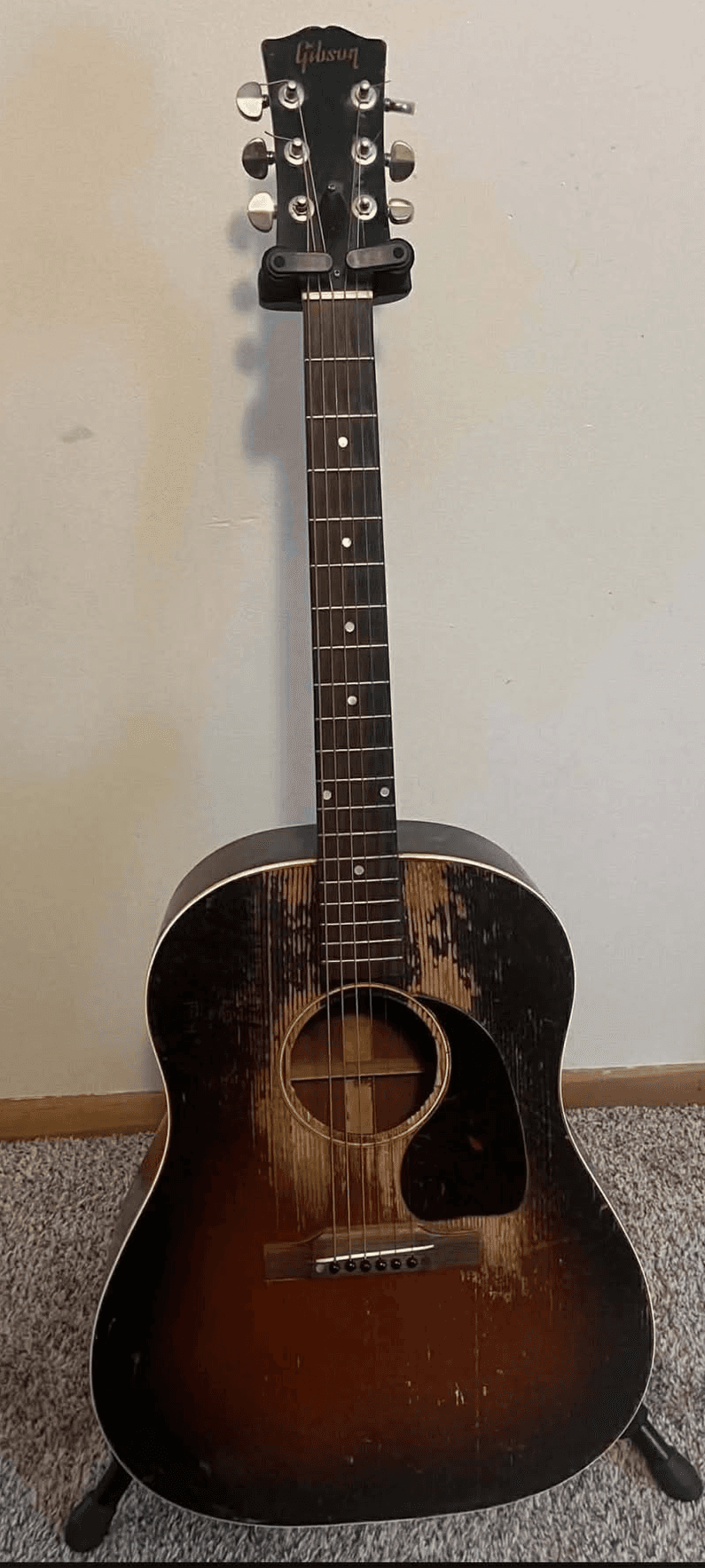
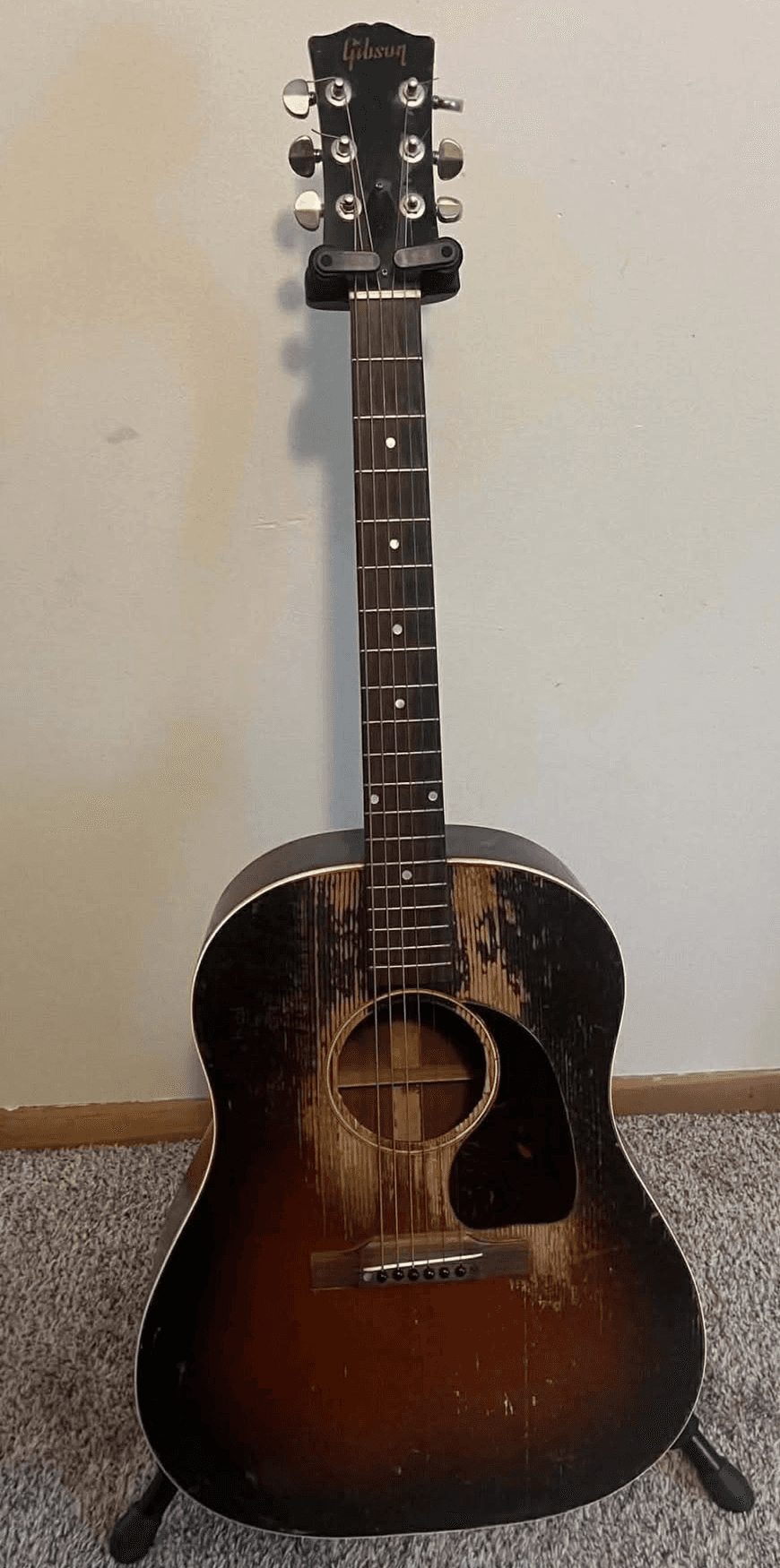
1935-1936 Gibson Roy Smeck Stage Deluxe: The Grande Dame of Pre-War Archtops
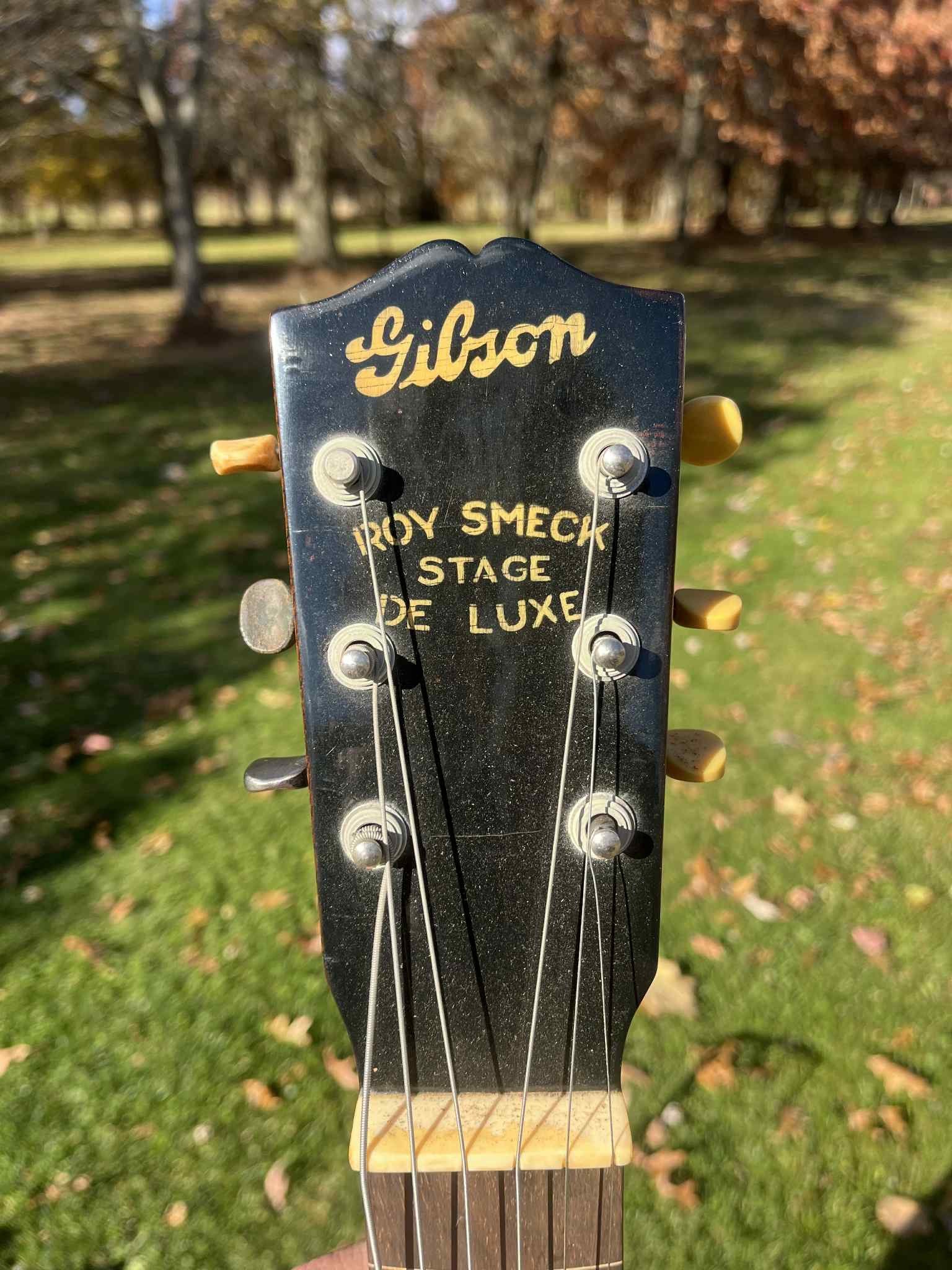
1935-1936 Gibson Roy Smeck Stage Deluxe: The Grande Dame of Pre-War Archtops
Why the 1935-1936 Roy Smeck Stage Deluxe Matters
The Gibson Roy Smeck Stage Deluxe represents one of the most ambitious and ornate acoustic guitars ever produced during the golden age of American guitar manufacturing. Introduced in 1934 and reaching its pinnacle in 1935-1936, this instrument was Gibson’s answer to the growing demand for professional-grade archtop guitars that could project in large venues before amplification became standard.
Named after vaudeville performer and multi-instrumentalist Roy Smeck—known as “The Wizard of the Strings”—this model showcased Gibson’s finest craftsmanship during the pre-war era. The 1935-1936 examples are particularly sought after because they represent the height of the model’s production before the economic pressures of the late Depression era began affecting specifications and materials.
What makes the 1935-1936 Roy Smeck Stage Deluxe special:
Massive 18-inch lower bout designed for maximum acoustic projection
Triple-bound top, back, and f-holes with elaborate celluloid binding
Engraved tailpiece featuring Roy Smeck’s signature
Premium figured maple back and sides with stunning sunburst finish
Hand-carved solid spruce top with parallel tone bars
Ornate pearl and abalone fingerboard inlays
Built during Gibson’s Kalamazoo factory’s most skilled craftsmanship period
Represents the peak of acoustic archtop design before the rise of electric guitars
Historical Context: Depression-Era Excellence
The mid-1930s were challenging years for American guitar manufacturers. The Great Depression had severely impacted musical instrument sales, yet Gibson continued producing instruments of exceptional quality for professional musicians who could still afford premium instruments. The Roy Smeck Stage Deluxe, priced at $125 in 1935 (equivalent to approximately $2,800 in today’s dollars), was positioned as a professional touring instrument.
Roy Smeck himself was at the height of his popularity during this period, having appeared in numerous film shorts and radio programs. His endorsement gave Gibson significant marketing leverage among professional musicians who needed instruments capable of cutting through in vaudeville theaters, radio broadcasts, and early recording sessions.
The 1935-1936 production years saw Gibson’s master craftsmen perfecting the archtop design that would influence guitar construction for decades. These instruments were built entirely by hand, with each builder responsible for the complete assembly of individual instruments—a practice that ensured exceptional quality control.
During this period, Gibson was experimenting with various bracing patterns and construction techniques. The parallel tone bars used in the Roy Smeck models were designed specifically for maximum acoustic volume, making these guitars among the loudest acoustic instruments available before amplification.
Serial Numbers
1935-1936 Gibson Roy Smeck Stage Deluxe guitars typically have serial numbers in the following ranges:
1935: Approximately 91400-94000
1936: Approximately 94000-96500
The serial number is factory-stamped on the back of the headstock and should match a Factory Order Number (FON) stamped inside the body, visible through the bass-side f-hole.
Factory Order Numbers
The FON provides more precise dating than serial numbers. Look inside the bass-side f-hole for a number stamped on the center block or neck block:
1935: FON numbers in the 900-1200 range (approximate)
1936: FON numbers in the 1200-1500 range (approximate)
Visual Identification Features
1. Headstock:
Elaborate “Gibson” pearl script logo
“The Gibson” inlaid in pearl
Triple-bound headstock with white-black-white binding
Individual Grover Imperial tuners (15:1 ratio)
2. Fingerboard Inlays:
Elaborate “flowerpot” or “tree of life” pearl and abalone inlays on the fingerboard
Inlays at frets 1, 3, 5, 7, 9, 12, 15, 17, and 19
Block pearl inlays with floral abalone decoration
3. Body Binding:
Triple-bound top (white-black-white celluloid)
Triple-bound back
Bound f-holes
Seven-ply top binding extending around the entire body
4. Tailpiece:
Engraved “flowerpot” design
“Roy Smeck” signature engraved on the tailpiece
Raised center section with decorative engraving
5. Pickguard:
Elevated tortoise-shell celluloid pickguard
Mounted on a metal bracket to the neck extension
“Gibson” logo engraved on the pickguard
6. Bridge:
Height-adjustable rosewood bridge with individual saddles
Compensated saddle design for improved intonation
Detailed Physical Specifications
Body Dimensions:
Lower bout width: 18 inches
Upper bout width: 13 inches
Body depth: 3.75 inches at tail
Body depth: 3 inches at neck joint
Neck Specifications:
Scale length: 25.5 inches
Nut width: 1-3/4 inches
Neck profile: Rounded V-shape (early 1935) transitioning to softer C-shape (late 1935-1936)
Fretboard radius: Relatively flat (approximately 12” radius)
Frets: 20 frets total
Neck joint: Dovetail at 14th fret
Materials:
Top: Hand-carved solid spruce with parallel tone bars
Back and sides: Solid maple (typically highly figured)
Neck: Mahogany with two-piece construction
Fretboard: Ebony with elaborate pearl/abalone inlays
Bridge: Adjustable rosewood
Binding: Multi-ply celluloid (white-black-white pattern)
Weight: These large archtops typically weigh between 5.5-6.5 pounds, with variation based on wood density and moisture content.
Original Finish: Sunburst finish applied over maple back and sides, with natural spruce top shaded to amber/brown at the edges. The finish is nitrocellulose lacquer, which shows distinctive aging characteristics including fine checking and color ambering.
Tonal Characteristics
The Roy Smeck Stage Deluxe was designed as a loud, projecting instrument for professional performance, and its tonal characteristics reflect this purpose:
Acoustic Projection: The massive 18-inch body combined with the parallel tone bar bracing creates exceptional volume and projection. These guitars were among the loudest acoustic instruments available in the mid-1930s, designed to cut through in vaudeville theaters and early radio broadcasts without amplification.
Tonal Balance:
Strong midrange presence with clear note definition
Balanced treble response without harshness
Solid bass fundamentals, though less pronounced than modern archtops
Excellent note separation when playing complex chord voicings
Responsive to pick attack dynamics
Construction Influence on Tone: The hand-carved solid spruce top and parallel bracing contribute to the instrument’s characteristic sound. Unlike the X-braced patterns used on flat-top guitars or the later arched-bracing patterns Gibson would develop, the parallel bracing provides a distinctive voice with strong fundamentals and excellent clarity.
The large body dimensions and relatively shallow arch of the top create a sound that sits between early acoustic archtops and later jazz boxes—powerful enough for rhythm playing but with enough clarity for lead work.
Common Issues & Modifications
When evaluating a 1935-1936 Roy Smeck Stage Deluxe, pay careful attention to these common issues:
1. Top Cracks and Structural Issues
Pre-war Gibson archtops frequently develop cracks radiating from the bass-side f-hole or near the tailpiece. These are often caused by decades of string tension and humidity changes. Small, stable cracks that have been properly repaired do not dramatically affect value, but unrepaired cracks or poor repairs significantly reduce worth.
2. Neck Reset
Many examples have required neck resets due to neck angle changes over 85+ years. A properly executed neck reset by a qualified luthier does not substantially decrease value, as it’s considered standard maintenance for instruments of this age. However, poor-quality neck resets or multiple resets can be problematic.
3. Missing or Replaced Tailpiece
The elaborate engraved Roy Smeck signature tailpiece is one of the most distinctive features of these guitars. Unfortunately, it’s also frequently lost or replaced over the decades. An original tailpiece adds significant value—approximately 15-20% premium—while replacement tailpieces substantially reduce collectibility.
4. Binding Deterioration
The multi-ply celluloid binding on these guitars often shows shrinkage, cracking, or separation after 85+ years. While binding replacement is possible, original binding in good condition is always preferred and adds to value.
5. Finish Checking and Wear
The nitrocellulose lacquer finish on pre-war Gibsons develops fine checking (a network of fine cracks in the finish) as it ages. This is expected and considered desirable by collectors, as it’s a sign of authenticity. However, finish touch-ups, overspray, or complete refinishes dramatically reduce value—often by 50% or more.
6. Bridge Replacements
The original adjustable rosewood bridge is sometimes replaced with incorrect bridges or modified bridges. Original bridges in good condition are valuable; inspect carefully to ensure originality.
7. Pickguard Issues
The elevated pickguard and its mounting bracket are often damaged, missing, or replaced. Original pickguards in good condition with intact “Gibson” engraving are increasingly rare.
Why Players and Collectors Value the Roy Smeck Stage Deluxe
Historical Significance
The Roy Smeck Stage Deluxe represents a specific moment in American guitar history—the peak of pre-war acoustic archtop design before electric amplification changed the instrument forever. These guitars embody the craftsmanship and design philosophy of Gibson’s golden era in Kalamazoo.
Roy Smeck himself was one of the most famous string instrumentalists of the 1930s, appearing in early sound films and radio broadcasts. His endorsement made the Stage Deluxe a professional’s instrument, and today, the historical connection adds significant collector appeal.
Craftsmanship
Every aspect of these instruments showcases hand craftsmanship that’s increasingly rare in modern guitar manufacturing:
Hand-carved tops requiring weeks of skilled work
Elaborate pearl and abalone inlay work
Multi-ply binding applied and scraped by hand
Individual builder responsibility for complete instruments
Premium materials selected for tone and appearance
Playing Characteristics
Despite being nearly 90 years old, well-maintained examples remain exceptional playing instruments:
Comfortable neck profiles that accommodate modern playing styles
Excellent note definition for chord melody playing
Sufficient volume for acoustic jam sessions
Responsive dynamics that reward skilled playing
Distinctive vintage tone that can’t be replicated by modern instruments
Investment Potential
Pre-war Gibson instruments have shown steady appreciation over the past several decades. The Roy Smeck Stage Deluxe, while not commanding the stratospheric prices of L-5s or Super 400s, has shown consistent value growth as collectors recognize the exceptional quality and relative rarity of these instruments.
Selling Your 1935-1936 Gibson Roy Smeck Stage Deluxe
If you own a Gibson Roy Smeck Stage Deluxe from this era, Edgewater Guitars offers specialized expertise in evaluating and purchasing pre-war Gibson archtops.
Why Sell to Edgewater Guitars?
Expert Authentication: Pre-war Gibson instruments require specialized knowledge to properly authenticate and evaluate. We understand the nuances of factory specifications, legitimate repairs versus problematic modifications, and the subtle details that affect value.
Premium Valuations: We consistently pay 30-40% more than typical guitar shops for pre-war Gibson archtops. We recognize the value of original parts, proper documentation, and the historical significance of these instruments.
Streamlined Process: Selling a valuable vintage instrument shouldn’t be complicated. We provide:
Free initial evaluation and authentication assistance
Transparent pricing based on current market conditions
In-person evaluation for high-value instruments
Immediate cash offers with no consignment waiting periods
Professional handling and secure transactions
Geographic Service Area: We purchase vintage guitars throughout Ohio, Michigan, Pennsylvania, Indiana, and West Virginia, and we travel to you for valuable instruments like pre-war Gibson archtops.
Ready to sell your vintage Gibson? Get your free valuation or call us directly at (440) 219-3607.
Related Resources
Authentication and Dating Guides:
Complete Gibson Serial Number Lookup Tool
Gibson Factory Order Number Dating Guide
Pre-War Gibson Identification Guide
How to Spot Refinished Gibson Archtops
Related Model Information:
1930s Gibson L-5 Advanced Jumbo Guide
1930s Gibson Super 400 Buyer’s Guide
Pre-War Gibson Archtop Comparison
Sell Your Vintage Gibson Guitar
Contact Edgewater Guitars
Edgewater Guitars specializes in purchasing premium vintage guitars throughout Ohio, Michigan, Pennsylvania, Indiana, and West Virginia. We have deep expertise in pre-war Gibson instruments and understand the factors that make guitars like the Roy Smeck Stage Deluxe valuable to collectors and players alike.
Whether you’re considering selling, need authentication assistance, or simply want to understand the value of your vintage Gibson, we’re here to help with no-obligation consultations.
Stephen’s expertise: With years of experience in vintage guitar authentication, specification verification, and market analysis, I’ve worked extensively with pre-war Gibson archtops and understand the details that distinguish exceptional examples from average ones. I’m passionate about these instruments and committed to providing fair valuations that reflect their true market worth.
Contact us today for your free, no-obligation valuation of your Gibson Roy Smeck Stage Deluxe or other vintage instruments.
Edgewater Guitars - Valley City, Ohio - Serving the Midwest Region