DATE :
Sunday, May 24, 2026
Schecter Guitar Serial Number Lookup: Complete Dating & Identification Guide
Schecter Guitar Serial Number Lookup: Complete Dating & Identification Guide
Last Updated: March 2026
Schecter Guitar Research has operated under three distinct ownership eras since its founding in Van Nuys, California in 1976, with serial number systems that changed multiple times across the brand's history. The original Van Nuys Schecter (1976–1983) produced high-end replacement parts and custom guitars used by Mark Knopfler, Pete Townshend, Tom Petty, and Ronnie Wood — a chapter often overshadowed by Schecter's modern reputation as a rock and metal brand. Today's Schecter encompasses USA-made Custom Shop instruments alongside Korean and Indonesian production through the Diamond Series line.
This guide is provided as a free resource for Schecter owners and collectors researching their instruments. It explains Schecter's complex era-by-era history, the multiple serial number systems used, where to find your serial number, the meaningful tier distinctions between Custom Shop, Diamond Series, and SGR production, and which Schecter models carry sustained collector interest.
Quick Answer: How to Date a Schecter Guitar by Serial Number
Schecter dating depends on which corporate era and production tier produced your instrument:
1976–1983 (Original Van Nuys, California): Hand-numbered serials without consistent date encoding. Dating requires cross-referencing with construction features and catalog appearance.
1983–1986 (Texas era): Variable serial conventions under Texas investor ownership.
1987–present (Hisatake Shibuya / modern Schecter): Multiple serial systems across Custom Shop, Diamond Series, and SGR production tiers.
The most important data point on any modern Schecter is identifying the production tier: USA Custom Shop, Diamond Series (Korean/Indonesian), or SGR (Chinese, entry-tier). Production tier affects value, collectibility, and authentication approach more than any other single factor.
About Schecter: A Brief History
Schecter Guitar Research was founded in 1976 by David Schecter in Van Nuys, California. The company's history breaks into three distinct eras that fundamentally changed the brand's identity:
Era 1: Van Nuys Original Schecter (1976–1983)
David Schecter founded the company as a high-end replacement parts maker, producing premium-quality necks, bodies, pickups, and hardware for Stratocaster and Telecaster-style guitars. Schecter parts quickly developed a professional reputation for superior fit, finish, and electronics quality compared to original Fender parts of the late 1970s.
Notable users of Van Nuys Schecter parts and complete instruments:
Mark Knopfler (Dire Straits): Used Schecter Strat-style instruments extensively during the band's peak era
Pete Townshend (The Who): Played Schecter Telecaster-style guitars during Who tours
Tom Petty: Used Schecter guitars on multiple recordings
Ronnie Wood (Rolling Stones): Schecter custom instruments
Yngwie Malmsteen: Played Schecter early in his career
Robben Ford and other professional session players
Around 1979, Schecter began producing complete custom guitars under the Schecter name, including the celebrated Dream Machine series — high-end Strat- and Tele-derived instruments with premium tonewoods, custom finishes, and elevated construction. Van Nuys-era Schecters were built in limited quantities and command top-tier collector valuations today.
Era 2: Texas Era (1983–1986)
David Schecter sold the company in 1983 to a group of Texas investors who relocated production to Dallas, Texas. The Texas era continued producing high-end guitars but is less documented than the Van Nuys period. Texas-era Schecters carry collector interest among enthusiasts familiar with this transitional chapter.
Era 3: Hisatake Shibuya and Modern Schecter (1987–Present)
In 1987, Japanese investor Hisatake Shibuya acquired Schecter and began the transformation into the modern brand. Production gradually shifted overseas to Japan and later to Korea and Indonesia. The Schecter Custom Shop was established in Burbank, California, providing USA production for top-tier instruments while overseas factories produced the volume-tier Diamond Series.
Modern Schecter built its reputation primarily on rock and metal-oriented instruments — particularly extended-range 7-string and 8-string guitars — with a major signature artist roster including Synyster Gates (Avenged Sevenfold), Jeff Loomis, Keith Merrow, Nick Johnston, Jerry Horton (Papa Roach), and Dan Donegan (Disturbed).
Why Schecter Serial Numbers Are Complex
Three factors make Schecter dating more challenging than dating most brands:
Three distinct corporate eras with different ownership, different factories, and different serial conventions
Multiple production tiers within the modern era — USA Custom Shop, Diamond Series (Korean and Indonesian), and SGR (Chinese) — each with different serial systems
Limited public documentation of historical serial number conventions, particularly for the Van Nuys and Texas eras
The result: Schecter serial numbers alone rarely provide a complete date and origin picture. Production tier identification, country-of-origin stamping, and construction feature cross-referencing are essential.
Schecter Serial Number Systems by Era and Tier
1976–1983: Van Nuys Original Era
Original Van Nuys Schecter instruments were built in limited quantities with hand-applied serial numbers that don't follow a clear date-encoding system. Many Van Nuys-era complete guitars from the late 1970s and early 1980s carry serial numbers on the neck plate or stamped into the neck heel.
Dating Van Nuys Schecters requires:
Cross-referencing the serial with construction features
Identifying the headstock logo style (which evolved during this period)
Matching hardware specifications to known catalog appearances
Consulting with collector communities that have built informal databases of Van Nuys-era instruments
Many Van Nuys Schecters were assembled from Schecter parts by retailers and custom shops rather than built as complete factory guitars, adding another layer of complexity for collectors trying to establish original specifications.
1983–1986: Texas Era
Texas-era Schecter serial numbers used variable conventions under the Dallas-based ownership. These instruments are less common in the market and dating typically requires hands-on inspection and feature cross-referencing.
1987–Present: Modern Schecter Serial Systems
Modern Schecter uses different serial number conventions across its three production tiers:
Schecter USA Custom Shop (Burbank, California):
Hand-numbered with documented build sheets
Lower serial number ranges reflecting limited production
Often include "USA" or "Custom Shop" markings on the neck plate or headstock
Build documentation typically available for original-owner purchases
Schecter Diamond Series (Korea and Indonesia):
Multiple serial conventions used across production years and factories
Common formats include letter-prefix codes indicating the factory and year
W prefix typically indicates World Musical Instruments factory (Indonesia)
I prefix typically indicates Indonesian production
K or KW prefix typically indicates Korean production
Following digits encode year and production sequence
Schecter SGR Series (China):
Entry-tier production
Different serial conventions from Diamond Series
Country-of-origin stamping confirms Chinese production
The Diamond Series specifically has used multiple serial formats over the years, and exact format-to-year decoding requires reference to manufacturer documentation or community-maintained databases. The general pattern combines factory letter, year digits, and production sequence digits.
Where to Find Your Schecter Serial Number
The serial number location varies by model and era:
Bolt-On Neck Models (C-Series, S-Series, Most Diamond Series)
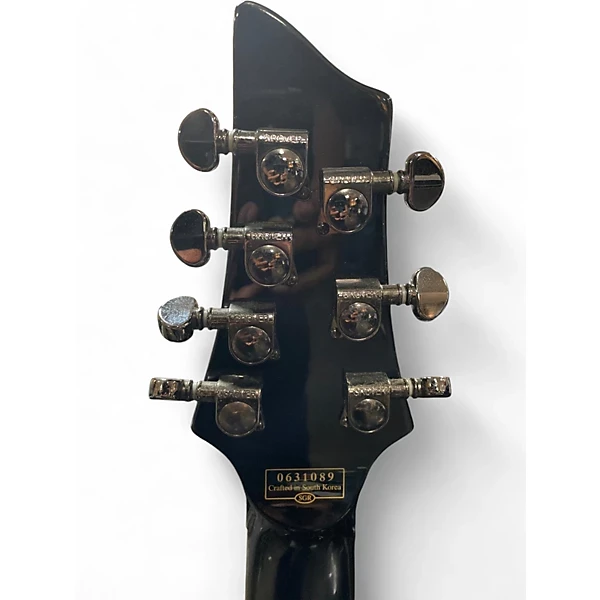
Back of headstock — most common location for stamped or printed serials
Neck plate — some models, particularly USA Custom Shop instruments, carry the serial on the metal neck plate
Set-Neck and Neck-Through Models (Solo-II, Hellraiser variants, signature models)
Back of headstock — primary location
Some examples carry additional documentation on the truss rod cover or interior
Original Van Nuys-Era Schecters
Neck plate — common location for Van Nuys-era serials
Neck heel stamp — some instruments
Various locations depending on the specific model and build configuration
USA Custom Shop Instruments
Neck plate — typically with USA designation
Sometimes additional documentation on the truss rod cover or interior cavity
The Three-Tier Production System Explained
Understanding Schecter's modern tier system is essential for accurate identification and valuation:
Schecter USA Custom Shop (Top Tier)
Built in Burbank, California, USA Custom Shop instruments represent Schecter's premium production. These guitars feature:
Hand-selected tonewoods
Custom finish options including elaborate quilted and figured maple tops
Premium hardware (often Floyd Rose Original tremolos, Sperzel locking tuners, etc.)
Custom pickup options including Lundgren, EMG, Bare Knuckle, and other premium brands
Build documentation and limited production runs
Premium tier valuations comparable to other USA-made boutique guitars
Schecter Diamond Series (Mid Tier)
The volume tier of modern Schecter production, built in Korean and Indonesian factories with substantial quality control oversight. Diamond Series instruments include:
The flagship C-1 series (C-1 Hellraiser, C-1 Custom, C-1 Platinum, various artist signatures)
Hellraiser family (Hellraiser, Hellraiser Hybrid, etc.)
Damien series
Omen series
Sun Valley Super Shredder series
Solo-II carved-top set-neck guitars
Keith Merrow signature instruments
Synyster Gates signature models
Extended-range 7-string and 8-string production across multiple series
Diamond Series instruments occupy the upper-mid tier in collector valuations, with specific signature models and premium variants commanding upper-tier prices within the Diamond catalog.
Schecter SGR Series (Entry Tier)
The SGR Series is Schecter's entry-tier line, built in Chinese factories at accessible price points. SGR instruments feature simplified specifications and entry-level hardware compared to Diamond Series equivalents.
Most Collected Schecter Models
These Schecter models carry the strongest current collector and player interest across the brand's history:
Original Van Nuys era (1976–1983):
Dream Machine series Strat- and Tele-style guitars: Top-tier collector demand among Van Nuys Schecter enthusiasts. Premium tier valuations for clean original-condition examples with documented provenance.
Mercury and F-series instruments
Schecter PT (Pete Townshend-influenced Telecaster variants)
Pre-Dream Machine custom builds with Schecter parts: Variable collector interest depending on documentation and configuration.
Modern USA Custom Shop:
USA Production Custom Shop instruments: Premium tier modern collectibility, particularly limited-edition runs and artist-affiliated models
Custom Shop reissues of Van Nuys-era designs
Modern Diamond Series flagship and signature models:
C-1 Hellraiser: The flagship modern Schecter rock/metal instrument
Synyster Gates signature (Synyster Custom, Custom-S): Strong sustained demand within the Avenged Sevenfold fan base and metal community
Keith Merrow KM-6 and KM-7 signature instruments: Premium Diamond Series with collector following
Jeff Loomis signature models
Nick Johnston Traditional signature: Departure from Schecter's metal-focused mainline, with broader collector appeal
Extended-range Hellraiser variants (Hellraiser Hybrid C-7, C-8): Strong demand among 7-string and 8-string players
Red Flags: Authentication and Identification Issues
Common issues to watch for when researching a Schecter:
Van Nuys-era misrepresentation. Original Van Nuys Schecters are sometimes misidentified by sellers who don't recognize the brand's pre-1983 history. Verify with construction features, headstock logo style, and serial number conventions consistent with the Van Nuys era.
Custom Shop misrepresentation. Diamond Series Korean or Indonesian production is sometimes represented as USA Custom Shop. Verify country-of-origin stamping and look for explicit "USA" or "Custom Shop" markings.
Refinishes. Aged finishes on vintage Van Nuys instruments should show natural wear and finish character consistent with the build period. Refinished examples significantly reduce collector value. Faded, naturally aged finishes are correct and desirable.
Modified electronics. Many Schecter Diamond Series instruments came with EMG or Schecter-branded active pickups. Replacements with aftermarket pickups reduce originality value, particularly on collectible signature and limited-edition examples.
Floyd Rose modifications. Many Schecter rock/metal models came with specific Floyd Rose configurations. Modifications or replacements affect value, particularly on guitars where the original Floyd Rose was upgraded or downgraded.
Cross-era confusion. The dramatic difference between Van Nuys-era and modern Schecter means that descriptions of "vintage Schecter" can be misleading. Verify the specific era and production tier before assuming value.
What Affects a Schecter's Collector Value
Era and production tier: Original Van Nuys Schecters (1976–1983), particularly Dream Machine series instruments, sit at the top tier of Schecter collector valuations. Modern USA Custom Shop instruments command premium modern valuations. Diamond Series occupies the upper-mid tier, with specific signature and flagship models commanding higher prices within the Diamond catalog. SGR Series occupies the entry tier.
Player association (Van Nuys era): Documented provenance from Mark Knopfler, Pete Townshend, Tom Petty, Ronnie Wood, or other notable Van Nuys-era users produces significant value multipliers. Even non-provenanced instruments from this era benefit from the cultural association.
Player association (modern era): Signature models tied to Synyster Gates, Keith Merrow, Jeff Loomis, Nick Johnston, and other endorsed artists benefit from sustained cultural demand within their respective audiences.
Originality: All-original examples with original pickups, original hardware, original tremolo systems, and original finish command meaningful premiums over modified examples.
Limited edition designation: Schecter has produced numerous limited-edition runs across both USA Custom Shop and Diamond Series production. Documented limited editions command premium valuations relative to standard production equivalents.
Condition: Crack-free finishes, intact original electronics, clean fingerboards, functional original tremolo systems, and original cases all contribute to upper-tier valuations.
Further Research Resources
For deeper Schecter research, the following community resources are valuable:
Schecter's official website maintains documentation on current model lines and limited edition runs.
Schecter forum communities including the Schecter Guitars Forum and dedicated subreddits maintain catalog archives and member-contributed serial number observation databases.
Van Nuys-era collector communities track pre-1983 Schecter instruments specifically, with significant member-contributed knowledge about Dream Machine variants and other original-era models.
Vintage guitar publications including Vintage Guitar magazine have published occasional features on the Van Nuys Schecter era and its cultural significance.
Signature artist documentation for modern Schecter signature models provides production specifications and run information.
Frequently Asked Questions About Schecter Serial Numbers
How do I tell what year my Schecter guitar was made? Schecter dating requires identifying which corporate era and production tier produced the instrument. Original Van Nuys Schecters (1976–1983) used hand-applied serials without clear date encoding and require feature-based dating. Modern Schecter Diamond Series uses letter-prefix codes indicating factory (W for Indonesia, I for Indonesia, K for Korea) followed by year and production digits. USA Custom Shop instruments carry build documentation supporting accurate dating.
Are old Schecter guitars valuable? Yes, particularly original Van Nuys-era Schecters from 1976–1983. The Dream Machine series and other custom guitars from this era are highly collected, especially examples with documented provenance from notable players. Modern USA Custom Shop Schecters command premium valuations within the modern market. Diamond Series and SGR Series occupy mid-and entry-tiers respectively.
Where are Schecter guitars made? Schecter has used multiple production locations across its history. Original production was in Van Nuys, California (1976–1983). After the Texas era (1983–1986), production gradually moved overseas. Modern Schecter operates a USA Custom Shop in Burbank, California, alongside Diamond Series production in Korean and Indonesian factories and SGR Series production in Chinese factories.
What is the difference between Custom Shop, Diamond Series, and SGR Schecter? The three tiers represent different production locations, build quality levels, and price points. Custom Shop instruments are built in Burbank, California with hand-selected materials and premium components, commanding premium tier valuations. Diamond Series instruments are built in Korean or Indonesian factories with substantial quality control, representing Schecter's mid-tier volume production. SGR Series instruments are built in Chinese factories at entry-tier price points with simplified specifications.
Where is the serial number on a Schecter guitar? On most Schecter guitars, the serial number is stamped or printed on the back of the headstock. Some models, particularly USA Custom Shop instruments, carry the serial on the metal neck plate. Van Nuys-era Schecters typically carried serials on the neck plate or stamped into the neck heel.
What is a Van Nuys Schecter? A Van Nuys Schecter is a guitar produced by the original Schecter Guitar Research between 1976 and 1983 at the company's Van Nuys, California facility. This era includes Schecter's high-end replacement parts production and the celebrated Dream Machine series of complete custom guitars. Van Nuys Schecters were used by Mark Knopfler, Pete Townshend, Tom Petty, Ronnie Wood, and other notable players. These instruments are highly collected and represent Schecter's most prestigious production era.
Related Resources
This Schecter serial number guide is part of Edgewater Guitars' collection of vintage guitar identification resources:
Gibson Serial Number Lookup Tool — edgewaterguitars.com/guitar-serial-number-lookup/gibson
Fender Serial Number Lookup Tool — edgewaterguitars.com/guitar-serial-number-lookup/fender
Gretsch Serial Number Lookup Guide
Rickenbacker Serial Number Lookup Guide
Yamaha Serial Number Lookup Guide
Aria Serial Number Lookup Guide
Guild Serial Number Lookup Guide
Ibanez Serial Number Lookup Guide
Takamine Serial Number Lookup Guide
Edgewater Guitars publishes free identification resources for guitar owners and collectors. This Schecter guide is provided as a research reference. Edgewater Guitars specializes in purchasing premium vintage American-made guitars throughout Ohio, Michigan, Pennsylvania, Indiana, and West Virginia — including Gibson, Fender, Martin, Gretsch, and Epiphone instruments.